Showing posts with label Magazines. Show all posts

Friday, December 31, 2021

National Geographic: Can COVID-19 alter your personality? Here's what brain research shows.

By Sharon Guynup

    We all know that COVID-19 has myriad health impacts, ranging from the lungs and heart to other areas of the body. But new symptoms and patients have revealed that it can also affect cognitive function.
    This was first noticed in patients after they returned to their daily lives and began experiencing side effects like loss of memory, bad mood, anxiety, among other symptoms that suggested brain damage had occurred. The symptoms were similar to those seen in patients of other neurological diseases such as Parkinson's and Alzheimer's.
    COVID-19 most likely causes these changes because of the immune response to the virus. When the immune system fights a virus, one of the cells it releases is an inflammatory cell. These are released into the bloodstream, and when they end up in the brain for a prolonged time, it can cause neurons to die, block capillaries, and create other side effects. In addition, the virus can also infect brain cells directly, also causing them to die.
    Brain damage has been seen to be most impactful on those with long fights with the virus, since prolonged sickness increases the amount of inflammation that occurs. Scientists have yet to find a definitive way to stop these effects, but antivirals like Remdesevir can help patients recover more quickly, and other drugs target specific areas in the brain. Researchers hope to be able to study these effects from the coronavirus to dig deeper into neurodegenerative diseases.

Sunday, November 28, 2021

Time: World on Alert as U.K. Reports Cases of Omicron COVID-19 Variant

By Jerome Delay

    The UK has become the latest country to report cases of the new omicron variant of COVID-19, which is believed to be more resistant against the protections provided by existing vaccines. The two reported cases were both linked to travel from southern Africa. The UK Health Secretary added more countries in the southern African region to the British travel restriction list, meaning that travelers from those countries will now have to quarantine
    Pharmaceutical companies were optimistic that they could update their vaccines for the new variant in due time. Despite all the travel restrictions already in place across the European continent, cases and variants are continuing to spread. Many variants are emerging from Africa as a result of the poor vaccination rate in the continent.

Saturday, July 24, 2021

The New Yorker: The Tokyo Olympics' Unquiet Moment of Silence

By Louisa Thomas

    At the 2020 (yes, still called 2020) Tokyo Summer Olympics Opening Ceremony yesterday, the 1,000 spectators in attendance stood and were silent. It was a moment of silence for the lives lost during the pandemic. Then, a minute later, the music, shows, flags, and even a flying drone globe resumed, and Naomi Osaka lit the Olympic flame.

    Moments of silence, which occur far too often these days, represent an acknowledgment of the tragedy - but also an understanding that the game must go on. But as the music died down, you could hear protestors outside, demanding that the Games be stopped. Interestingly enough, the protests are for the same reason as the silence. In Japan, less than 30% of the population is vaccinated, and brining in 11,000 athletes, many of whom are unvaccinated, could be a health issue. The majority of the country's populace does not want the Games to be held now, and sponsors who have paid hundreds of millions bailed out. More than a hundred people associated with the Olympics have tested positive for COVID-19.
    

    The Games were originally supposed to be a "beacon of hope", symbolizing the world's return from the pandemic, which was also why the name 2020 was kept. Instead, it seems like a curse, a discombobulated affair with fewer athletes and almost completely empty stands. So what would it take for the Olympics to be canceled? They've often been called "too big to fail", even continuing two days after 11 Israeli athletes were killed by Palestinian terrorists.

    Perhaps the best reason to continue is the athletes, and the paths they pave. There have already been stories of recovery and devastating defeat on Day 1. After the moment of silence, the Games would go on.

Sunday, July 18, 2021

National Geographic: How the Rosetta Stone unlocked the secrets of ancient civilizations

By Erin Blakemore

    In 1799, the Rosetta Stone was discovered in Egypt. But it wasn't an archaeological dig; instead, it was dug up by French soldiers creating defenses for an Ottoman attack. They tore down a nearby wall and found a stone fragment with three types of writing, including ancient Greek. Today, we know that it is an inscription affirming King Ptolemy V's royal cult.
    When the French invaded Egypt in 1798, they brought scientists and archaeologists with them to pick out objects of interest and take them back to France. But the British ultimately defeated the French for control of Egypt and took the artifacts, including the Rosetta Stone, to England, where it resides in the British Museum to this day.
    Scholars across Europe raced to decipher the stone, and notable contributions came from Thomas Young and Jean-François Champollion. Young, a scientist, looked at it as a mathematical problem. comparing other hieroglyphic texts to match phonetic sounds and piece words together. Champollion, who became known as the founder of Egyptology, cracked the code in 1822 by figuring out that the third script was demotic and the hieroglyphs were coptic.
    Eventually, more multilingual inscriptions were found, confirming this idea. But the iconic stele still generates controversy. Egypt has continually asked that the relic be returned, but it has adamantly remained in Britain, garnering 6 million visitors every year.

Saturday, July 17, 2021

National Geographic: Why the U.S. once set off a nuclear bomb in space

By Brian Gutierrez

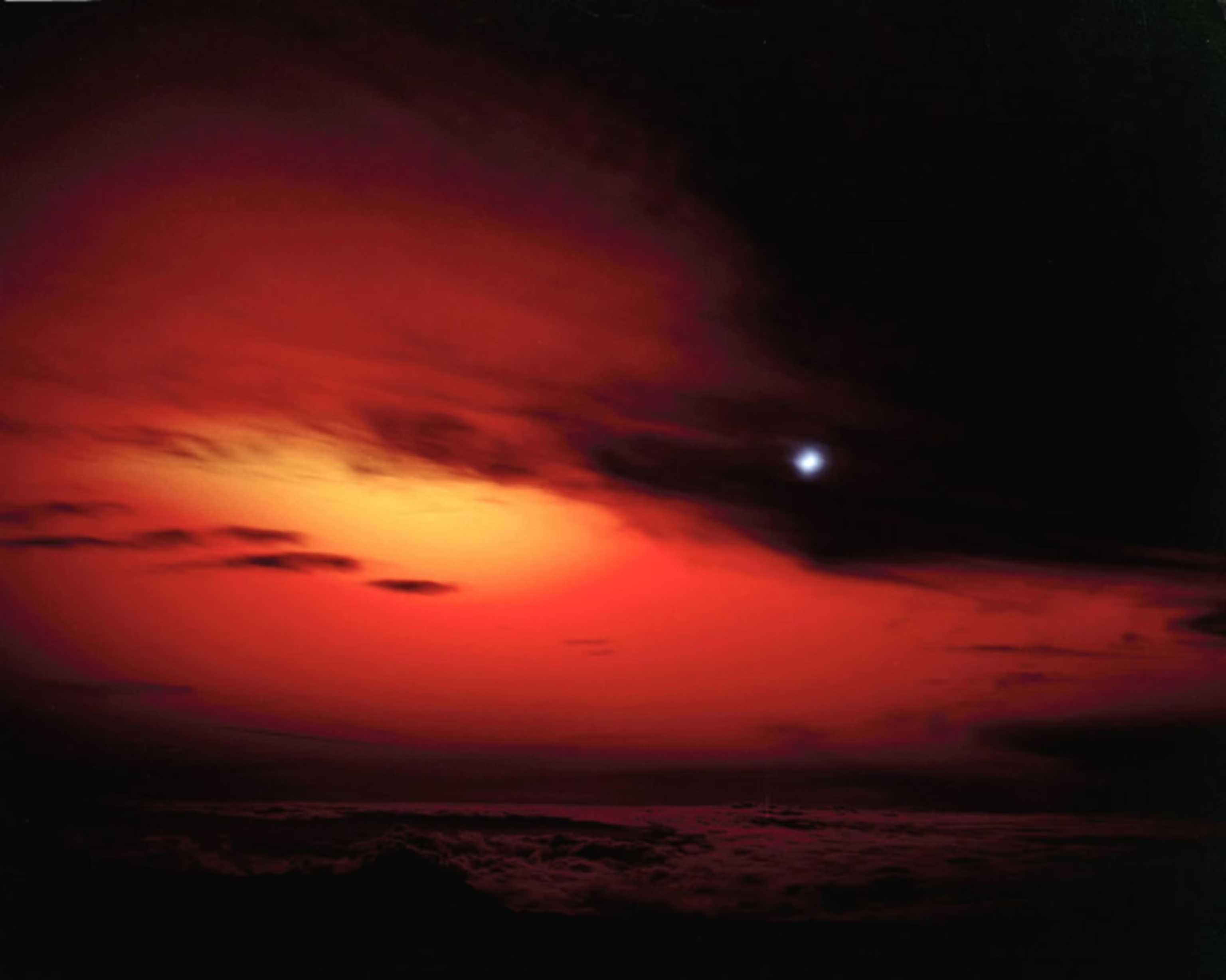
    On July 8th, 1962, the U.S. military prepared to launch a nuclear bomb miles into the air, a fusion bomb that was 500 times as powerful as the one that fell on Hiroshima. The bomb, Starfish Prime, would be one of the highest detonations ever and cause the nuclear powers to sign a treaty limiting the height of nuclear missile testing.
    Starfish Prime exploded at 250 miles into the atmosphere, around where the ISS orbits today. When it exploded above Hawaii, it lit up the night sky as far away as New Zealand, charged particles from the explosion colliding with the atmosphere and creating an artificial aurora. In Hawaii, it caused extensive blackouts, the collapse of the radio system, and made a siren go off.
    All this happened in the heat of the Cold War, when there were outlandish ideas like blowing up missiles on the Moon. Scientists were interested in knowing how the blast would interact with the Van Allen belts, which is essentially Earth's magnetic field. Most believed it would be a minor disturbance at worst.
    They were wrong. The massive plasma ball created a new radiation field called the Starfish Belt, with devastating consequences for the satellites that went through it. It eventually went away, but the threat of such an event occuring again is possible. Geomagnetic storms come periodically from the Sun, and if they are big enough, they have the effect of a nuclear bomb. In the 1800s, the Carrington Event created auroras in Australia and shocked telegraphers. But today, we rely much more on electronics than simple telegraphs. If the radiation is unchecked, the results could be devastating. Luckily, there is a potential remedy. If satellites hit the radiation belt with a certain frequency AM wave, the charged particles could be pushed into the atmosphere, where they would dissipate.

Friday, July 16, 2021

Time: Why Congress Deserves Its Own Emmy Category

By Philip Elliott

     Some may be wondering why the Emmy awards do not give out awards to a very entertaining category: politics. For the past few months, we've watched politicians give nightly performances on TV, arguing over Biden's infrastructure bill. If it does end up getting to Biden's desk, it likely won't resemble the original proposal, but rather a very banged-up version.
    Even though Democrats control both chambers of Congress and the White House, their road to victory will be far from easy. Their slim majorities mean they have to resort to things like reconciliation, which Republicans characterize as cheating, and the GOP 2022 election strategy is attacking Biden's Build Back Better agenda.
    There is even discord within the party, since legislators also have to appease people in their own localities. A key example is Senator Joe Manchin, who is one of the few Democrats who can win in a Republican state. The party knows how important he is, giving him newfound influence. Other congresspeople have battled to keep certain parts of the plan intact, and certain amounts of funding out. 
    An important note is that this bill is "two-tracked". There's one bill for $3.5 trillion that Dems can pass with 50 votes via budget reconciliation, which avoids the filibuster. However, this rule does have its limits, which means the second bill for $600 billion needs 10 Republican votes. Of course, this method has many top GOP members upset, so the drama will continue.

Sunday, July 11, 2021

Air and Space: Branson and Bezos May Reach Space First, But Billionaire Jared Isaacman (Who?) Has Booked a Better Trip

By Tony Reichhardt

    In the 2000s, half a dozen wealthy non-astronauts went to space aboard extra seats on Russiann space vehicles. 20 years later, Blue Origin, Virgin Galactic, and SpaceX are all preparing to launch more of the uber-rich into space onboard their privately owned spacecraft.
    Jeff Bezos will be joining 3 other passengers on board Blue Origin's first passenger flight on July 20, the anniversary of the Apollo 11 moon landing.
    A few weeks later, Richard Branson announced that he would be going up on his company, Virgin Galatic's first flight today, on July 11. He insists that this launch had nothing to do with Bezos's announcement, but he has been named Astronaut 001 despite the other pilots and crewmembers on the flight already having been to space on previous test flights.
    There are several others who are also waiting in line for their first commercial spaceflight, but perhaps the best trip that has been booked is one on September 15th via SpaceX's Crew Dragon, booked by billionaire Jared Isaacman, who comes in at #1164 on the Forbes billionarie list. Blue Origin and Virgin Galatic flights both last just minutes at relatively low altitudes. Isaacman's flight on the other hand, will take him and his crewmates into orbit for several days. He also plans to raise money for St. Jude Children's Hospital by auctioning off seats and donating some of his own money. He has arranged for a months-long NASA-like training program for all the astronauts, who are all rookies. SpaceX has even installed an enlarged window on the spacecraft, allowing for a better view of space than most astronauts have had.

Sunday, July 4, 2021

Time: You Can't Tell the Story of 1776 Without Talking About Race and Slavery

By Robert G. Parkinson

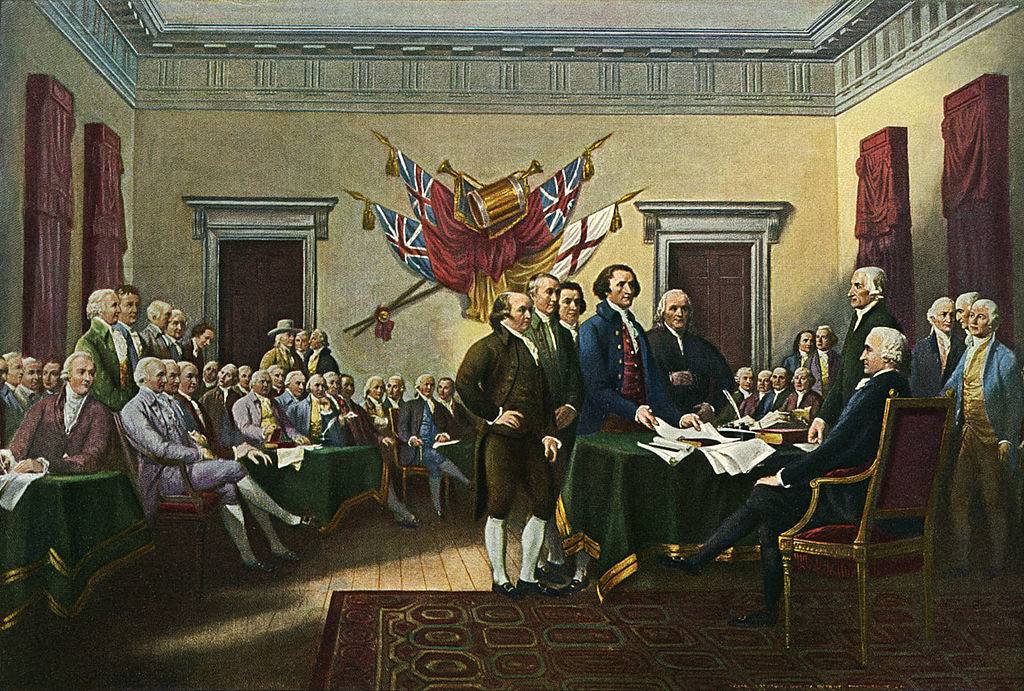
    Even though most of us may not admit it, slavery and racial questions were at the heart of America's beginnings. John Adams said 40 years after 1776 that getting all 13 colonies to unite against Great Britain was quite difficult and unheard of in all of history. He essentially suggested that he and the other members of the Continental Congress performed a miracle. However, it covered up the work that he and his colleagues had been doing for years prior to the American Revolution.
    Recently, a new debate has been sparked over the role of race in American history, and the most scrutinized part of that history is the founding of this nation. As it turns out, leaders of the revolution were quite concerned about the British inciting slave rebellions all over the South once the war began. They began to put words like "treachery" and "instigated insurrection" into everyone's mouths. Finally, when the drafted the Declaration of Independence in 1776, the very last crime that King George was accused of involved enslaved and native populations joining King George against the Americans.
    Thomas Jefferson had written a passage about the slave trade, condemning it as an evil, cruel violation of humanity. However, the Continental Congress eliminated nearly the entire section, but retained the small part about domestic insurrections. They said that the King had attempted to bring natives from the frontier into the war, and by avoiding this, the patriots were in the right.
    Patriot leaders had found the one thing that all the colonies could agree on: racism. They mobilized these fears and prejudices to bring the nation together, but this would root the same in the American Republic.

Thursday, July 1, 2021

Time: Supreme Court Upholds Arizona Voting Restrictions in Another Blow to Voting Rights Act

By Madeleine Carlisle and Sanya Mansoor

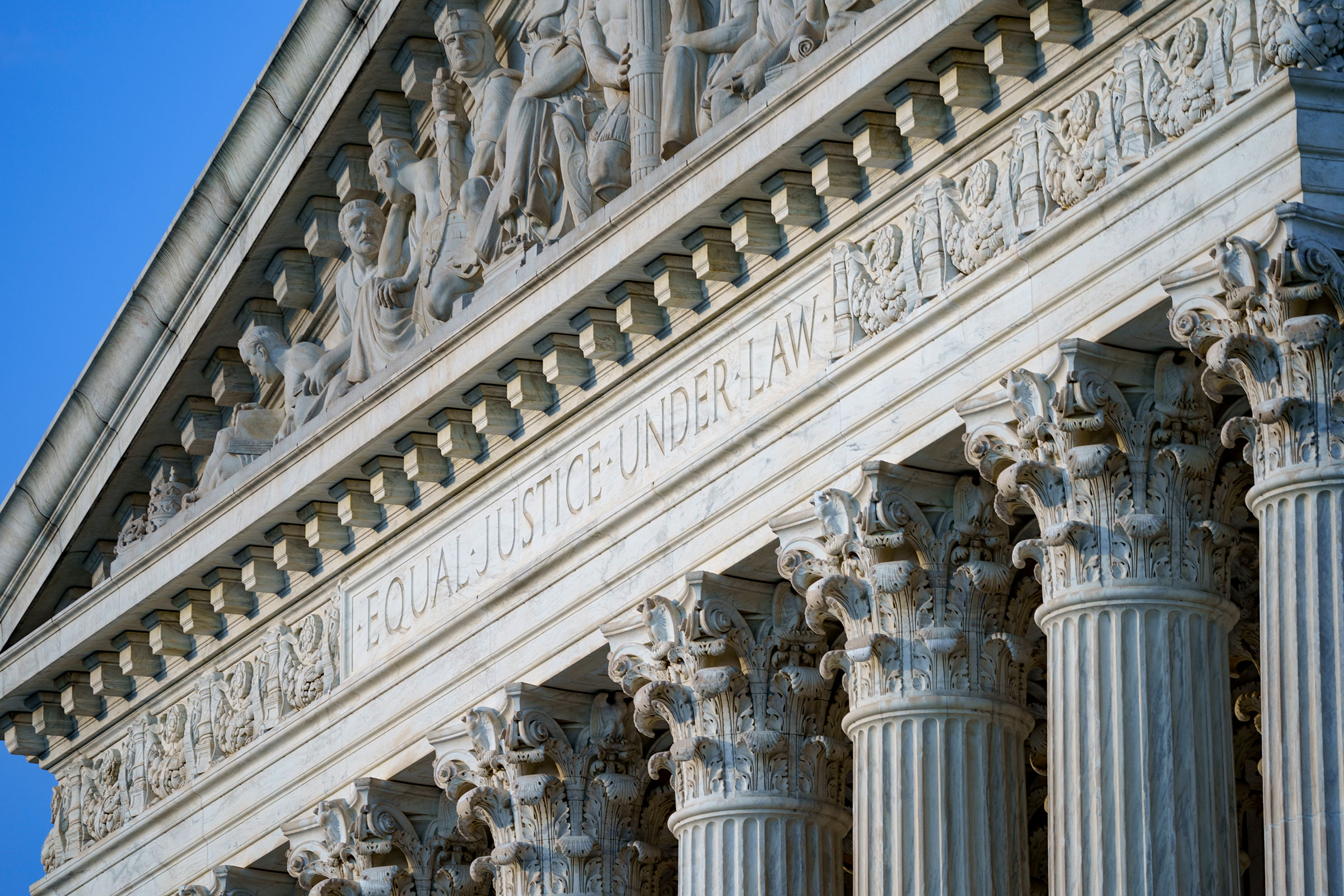
    On Thursday, the Supreme Court ruled that two controversial voting rights laws from Arizona do not violate the Voting Rights Act (VRA), weakening the landmark ballot. It was split along conservative/liberal lines, with Justice Samuel Alito writing for the 6-3 majority.
    The case, brought by the Democratic National Committee in 2016, claimed that two Arizona laws that ban ballot collection and require ballots cast in the wrong precincts to be thrown out discriminate against minorities. A federal appeals court had ruled in favor of the DNC in 2020, which was overturned by the Supreme Court.
    Since President Trump spread rumors about voter fraud in the 2020 election, a slew of Republican states have introduced similar voting restrictions, many of which experts say violate minority rights. This ruling affected Section 2 of the VRA, and a previous ruling had effectively eliminated Section 5 as well. The new ruling set out new "guideposts" for courts to use in the future, including weighing the size of the discriminatory impact of a given law, as well as what other options voters have to cast a ballot, both standards Brnovich and the Arizona GOP had argued for.
    Justice Elena Kagan wrote the dissent, saying that many new voting laws have still served to discriminate against minorities, and the VRA is still very important. Fortunately, the ruling does not completely eliminate the VRA, but it certainly makes it much harder to prosecute.
    The White Hosue released a statement saying that it was disappointed in the Supreme Court's decision, and called on legislators to pass more laws protecting voting rights.

Wednesday, June 30, 2021

Air and Space: NASA’s Most Important Mission, Long Delayed, Is Finally on Track

By Tony Reichhardt

    Most people believe that the probability of a truly dangerous asteroid hitting Earth is very small - and for a good reason. Over the past few decades, ground telescopes have identified over 95 percent of the asteroids in our atmosphere that are over a kilometer wide, and none of them are on course to hit Earth. Next year, a new spacecraft called DART will do a test drive to see if it can change an asteroid's course, should one be headed in our direction. However, this doesn't mean that we can rest easy.
    There are an estimated 25,000 smaller objects in orbit that are around 140 meters or larger. These could strike with enough impact to wipe out southern California. An asteroid half that size landed in Arizona 50,000 years ago and left the famous crater. In 2005, NASA was ordered to find at least 90% of objects this size, and the deadline was supposed to be 2020. But the project currently sits at just 40% finished and estimates show that it will take another 30 years to complete if it continues at this pace.
    One reason is that people don't seem to care about a threat so rare. Another is that NASA is having trouble figuring out which department should complete the task. While scientific asteroid missions have gotten plenty of funding, it's been harder to get the same for the so-called "planetary defense". A 2014 project was turned down by NASA. Fortunately, another project by the acronym NEO surveyor spacecraft has gotten funding and is on track for launch in 2026. Its infrared cameras should complete the project in the next ten years and pick up plenty of other small objects along the way.

Tuesday, June 29, 2021

Time: Feds Are Fed-Up with Trump-Era Meddling

By Philip Elliot

    Federal workers are often scapegoated by political leaders and pressured to meet their whims. It was already hard for the most spotlighted agencies, but their problems seem to have been only exacerbated by Trump's presidency.
    A recent poll on how federal employees felt about their jobs revealed a correlation - the less Trump knew about your job, the happier you were. Unsurprisingly, top-level cabinet departments like Homeland Security, Justice, and State, all had below-average happiness rankings. Even smaller agencies, like those that manage U.S. PR abroad and carry out budget management, ranked lower because of their frequent contact with the White House and its whims.
    This is important because unhappy agencies produce lower-quality work, resulting in more unnecessary spending and more people leaving their jobs.

Monday, June 28, 2021

Time: Post-White House Donald Trump Continues to Destroy Norms

By Philip Elliot

    Once a president leaves office, most generally settle down and stay out of politics. For example, no matter how far Obama stretched the truth during his administration, President Bush's office refused to comment on his successor. Often, former presidents even help out with current ones, knowing how hard the job is. Of course, that isn't to say they live like hermits - they do help family members run for office or support certain policies. But President Trump, like everything else he does, deviates from the norm.
    He recently held a rally in Cleveland where he perpetuated his lies about Biden stealing the Presidency, anti-immigrant rhetoric, and the January 6th insurrection, and also railed against a Republican Ohio Representative who dared vote against him in the second impeachment.
    Now, Trump obviously no longer has the influence he did as a president. But polls show that the majority of Republicans still believe his lies, and there's no reason to think his behavior will change any time soon.

Saturday, June 26, 2021

National Geographic: What is a heat dome? Deadly hot weather descends on Pacific Northwest.

By Sarah Gibbens

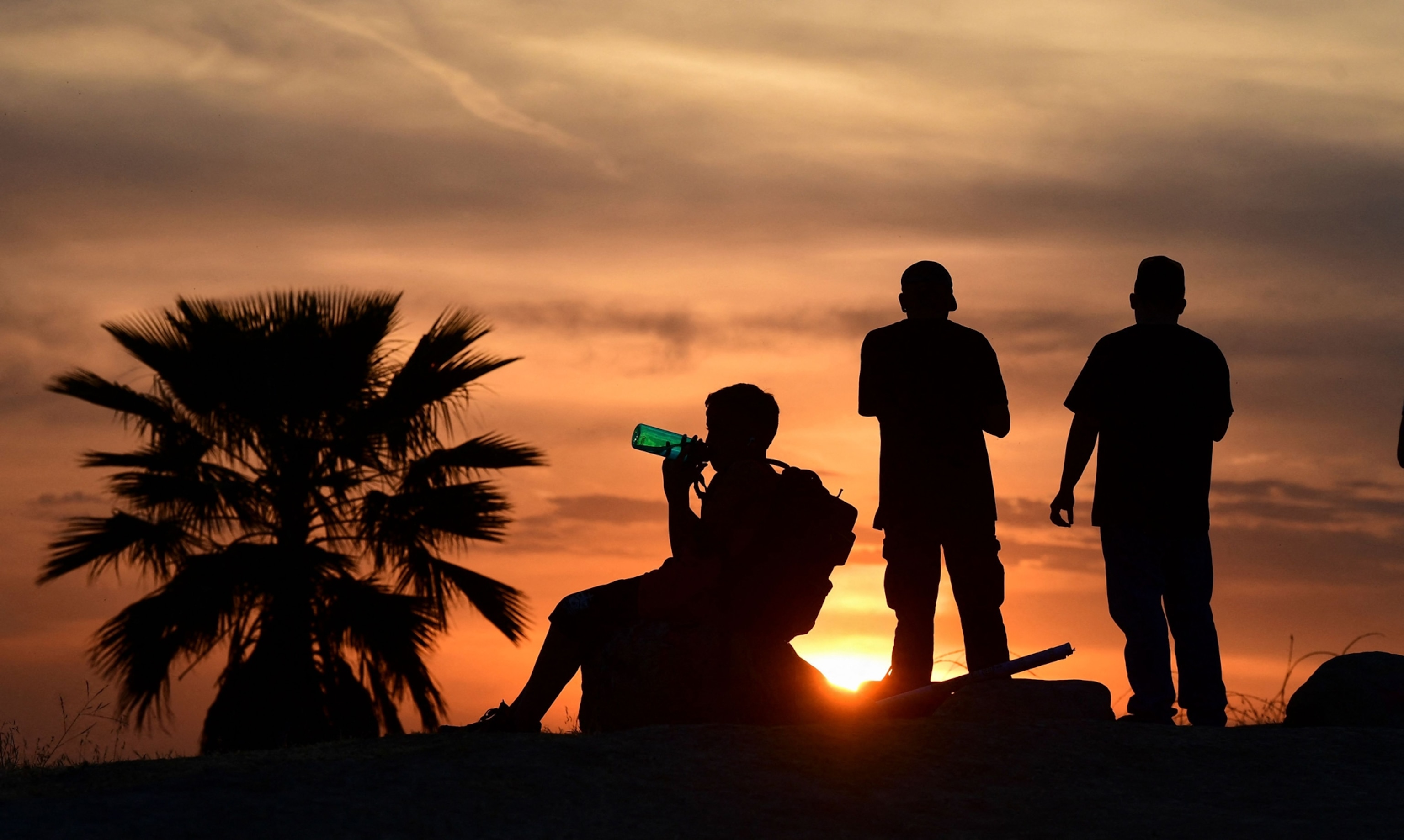
    Residents across the Pacific Northwest are bracing for a heatwave as health warnings went up all across the region. It's the latest in what is an alarming trend of increasing temperatures. A heat dome is a high-pressure region in the atmosphere that traps heat over a certain area. Because of a La Niña weather pattern, waters this year in the eastern Pacific are cool, while those in the west are warmer. This creates dense, warm winds that go into the jet stream and end up over the U.S. West Coast. The current heat dome has already set record temperatures, and another one is predicted to occur in mid-July.
    Scientists say that climate change is one major factor in the increase in heat domes, not just in the U.S. but around the world, even in Russia's Arctic Circle. Especially in dry areas, heat waves can be self-perpetuating, because there are already droughts, which exacerbate heat even more.
    In areas with especially high temperatures, city officials are open public venues with cooling as designated cooling centers, where people without air conditioning at home can come to rest and cool off. Officials also say that the very young and old are at most risk, and people with neighbors who live alone should check on them.

Friday, June 25, 2021

National Geographic: ‘Dragon Man’ skull may be new species, shaking up human family tree

By Maya Wei-Haas

    In the 1930s, people in northeast China found a skull. But it wasn't just any old skull. It was massive, well preserved, with a mish-mash of different features. Obviously knowing that this was an important find, the person who found it tossed it down a well where it was recently rediscovered. Several studies have determined that it is the skull of a man who died around 146,000 years ago, and one has even claimed that it should be named its own species: Homo longi.
    The reason for all the commotion is its array of both modern and archaic features. The skull is squat and wide, and its one remaining tooth has three roots, which are all features commonly found in older fossils. However, it also has delicate cheekbones that are low on the face, which looks more like us. When researchers ran algorithms to try to give it a place on the hominins tree, the resulting location was closer to our own species, Homo sapiens, than the Neanderthals.
    Still, not all scientists agree that it warrants a new species. Some say that the odd characteristics are unique to the individual, or that it should be group under the Denisovans. Whatever the case is, the discovery shows that as we make more discoveries, evolutionary trees will only get more complicated.

Thursday, June 24, 2021

Time: South Korean President Moon Jae-in Makes One Last Attempt to Heal His Homeland

By Charlie Campbell

    2018 was a year in which the Korean peninsula stepped back from the brink of war and entered into negotiations for the first time in years. After threats of "fire and fury" from Trump, South Korean President Moon Jae-in invited a North Korean delegation to the 2018 Winter Olympics in Pyeongchang, and a total of 5 summits were held. However, after Singapore, progress stalled. Talks in Hanoi ended with no agreements, and things escalated pretty quickly from there, with Trump focusing more on domestic issues and North Korea once again becoming antagonistic. Because Moon is barred from serving more than one term, he knows that now is the time to act. Now, this picture has played out several times since the cease-fire of the Korean War: talks will stall, the sides will part, and any agreements will soon be ripped up by an incoming administration. In addition, North Korea has said it will only make concessions once sanctions are removed, which is a leverage point Washington is not willing to give up easily.
    So what will become of this last chance? Biden recently met up with Moon and the pair signed several new deals, as well as releasing a statement that they will continue to coordinate in matters concerning the DPRK. Considering that both Seoul and Washington have progressive leaders in office, it could also be an opportunity for North Korea, and they seem to have recognized this, the state-run media releasing a report that Kim Jong-un is preparing for dialogue.
    But even as President Moon looks to leave his legacy, it also seems to be deteriorating. A recent poll showed that his approval ratings are down, and his fixation on foreign affairs seems to have drawn supporters away. Many are concerned that he is trying too hard to be close to the North Korean dictator, and South Korea's vaccination rates are faltering.
    People have tried and failed for 3 decades to solve the issue. "That might, after all, be Moon’s true legacy—the grim realization that if he couldn’t fix things, perhaps nobody can."

Wednesday, June 23, 2021

National Geographic: Astronomers identify the stars where any aliens would have a view of Earth

By Nadia Drake

    The transit method has long been a common way to figure out where planets are. It identifies little blips that appear to move across the surface of a star, because those could be planets moving past the stars they orbit. But could aliens have identified us using the same method?
    Of course, the conditions would have to be right for this to occur. With the transit method, only planets that can be seen passing a start from the angle of another planet can be identified, leaving many others unnoticed. Researchers recently conducted a study to determine when certain planets would be able to see us. They concluded that in the 10,000 year period ranging from 5,000 years ago to 5,000 into the future, planets orbiting over 2,000 nearby stars could potentially have identified Earth, should there be living organisms there. They also estimated that around 29 planets are habitable and could have picked up stray radio signals from us.
    These planets are all in the Earth transit zone or the plane that is aligned with the Sun and Earth. These planets, if habited, could have seen us in the past, be looking at us now, or see us in the future. They could not only use radio waves that humans produce but, over the span of hundreds of thousands of years, see the composition of the atmosphere changing.

Tuesday, June 22, 2021

Time: How Republicans Have Packed the Courts for Years

By Jackie Calmes

    While the Republicans have been accusing Democrats of wanting to "pack" the Supreme Court, they have quietly been doing the same thing for years at all levels of the federal judiciary system. The most obvious effect of this is the 6-3 conservative majority in the Supreme Court, which is set to see some challenges to past liberal rulings like abortion and same-sex marriage. While the Democratic Party is in control of the Senate now, Republicans have sworn to stop Biden nominees should they retake the majority in 2022 or 2024.
    The GOP, specifically Mitch McConnell, has sworn to stack the judiciary with as many conservatives as they can, because judges serve for life, while laws are more volatile. Democratic Presidents have left more than 100 vacant seats at various levels because most nominees were blocked by a Republican-held Senate. The most notable stiff-arming was seen in 2016, when McConnell refused a confirmation hearing for Merrick Garland, claiming that the next president should choose a nominee while forcing Amy Coney Barrett's hearing through the Senate just weeks before the election in 2020.
    During his presidency, Trump appointed nearly 300 judges to the federal bench, and 3 justices - only one of whom was legitimate. It seems that McConnell's strategy to "transform the federal judiciary" will only continue during the Biden years. He has pledged to block all Biden nominees in 2024 should he regain control of the Senate in 2022, and has yet to say anything about 2023.

Monday, June 21, 2021

National Geographic: Whales don’t spray water from their blowholes and other myths, debunked

By Melissa Hobson

    There are a variety of myths out there about whales, ranging from them blowing water from their blowholes to swallowing humans. However, most of these are wrong.
    Whales have hair: Though they don't look furry, whales actually have hair, and some are even born with whiskers that fall out because they serve no purpose underwater. Hair follicles are an evolutionary trait present in all whales since whales are mammals.
    Whales can't breathe underwater: Whales have lungs just like we do, and need to breathe in order to survive (though they do last much longer on one breath than we do). Their blowhole(s) are like our noses.
    Whales expel air from their blowholes: Whales breathe, and their blowholes serve as an air intake. When they surface, they blow air out, and the hot air from their lungs condenses when it collides with cold air outside. Water and other particles that were covering the blowhole are also expelled.
    Not all whales sing: You've probably heard about whale songs - predictable sequences of sound that travel through the ocean. However, only certain baleen whales exhibit this behavior. Toothed whales use echolocation, which emits high-pitched clicks to identify objects. 
    Whale sharks are not a type of whale: While whale sharks might be called whales and grow as large as one, they are a type of fish, not a mammal. Like all sharks, they are cold-blooded, have gills, and have a skeletal system comprised of cartilage. In addition, their fins move side to side, rather than up and down.

Saturday, June 19, 2021

Air and Space: Life May Have Been More Likely to Originate on Mars Than on Earth

By Dirk Schulze-Makuch

    One question in astrobiology is whether life is likely to have arisen on Mars. A team of researchers led by Benton Clark from the Space Science Institute recently explored the question. They concluded that it was just as probable for life to have arisen on Mars as on Earth.

    There are four reasons for this conclusion. First, Mars probably received a lot more organic materials from asteroids and comets. Second, sulfur, an important biological element, is more common on Mars. Third, Mars had a head start in the biological process because the Earth was hit by a meteor between 20 to 100 million years after its creation, obliterating any biology. Finally, Mars experiences a lot of wet-dry and freeze-thaw cycles, which concentrates elements. These cycles, when exposed to air, would support the hydrothermal pond theory of life's origin. However, because only around 5% of Mars was covered by water, a deep ocean origin would make it unlikely for life to have started on Mars. Ultimately, the true origin of life on Earth has a lot of implications for the results of this study and the possibility of life on Mars.

Wednesday, June 16, 2021

National Geographic: The Delta variant is serious. Here’s why it's on the rise.

By Sanjay Mishra

    As vaccination rates in the U.S. continue to fall, new concerns are rising about a more dangerous variant of COVID-19 that came out of India - the Delta variant. It already accounts for the majority of U.K. cases last week and 6% of the total cases worldwide, leading to the postponement of reopenings in that country. It is 60% more transmissible than the first Alpha variant, which was also 40% more transmissible compared to the original SARS-CoV-2 virus. It also seems to be more dangerous once a person is infected.
    The coronavirus mutates easily because its genetic information is in the form of RNA, which is prone to errors when copied. These random mutations can help a virus evade the immune system, make it weaker, or have no effect at all. In the case of the Delta variant, a series of genetic mistakes accumulated on the spike protein, which antibodies use to detect it. The mutations make it harder for antibodies to identify the virus and allow it to escape the immune system even after it is caught. Often, certain mutations that are beneficial to a virus evolve independently in many different areas around the globe and spread more quickly, with this mutation at location 681 quickly becoming more common.
    It also seems that this variant is also more resistant to vaccines. In the U.K., 31% of the patients with the Delta variant and needing critical care had at least one dose of a vaccine. With both doses, the Pfizer vaccine appeared to be around 88% effective, and AstraZeneca 60%. With one dose, they were just 51% and 33% effective. What has happened in the U.K. could happen in many other countries if people do not continue to be cautious. It is important that people not let down their guard.