Showing posts with label Historical. Show all posts

Saturday, October 2, 2021

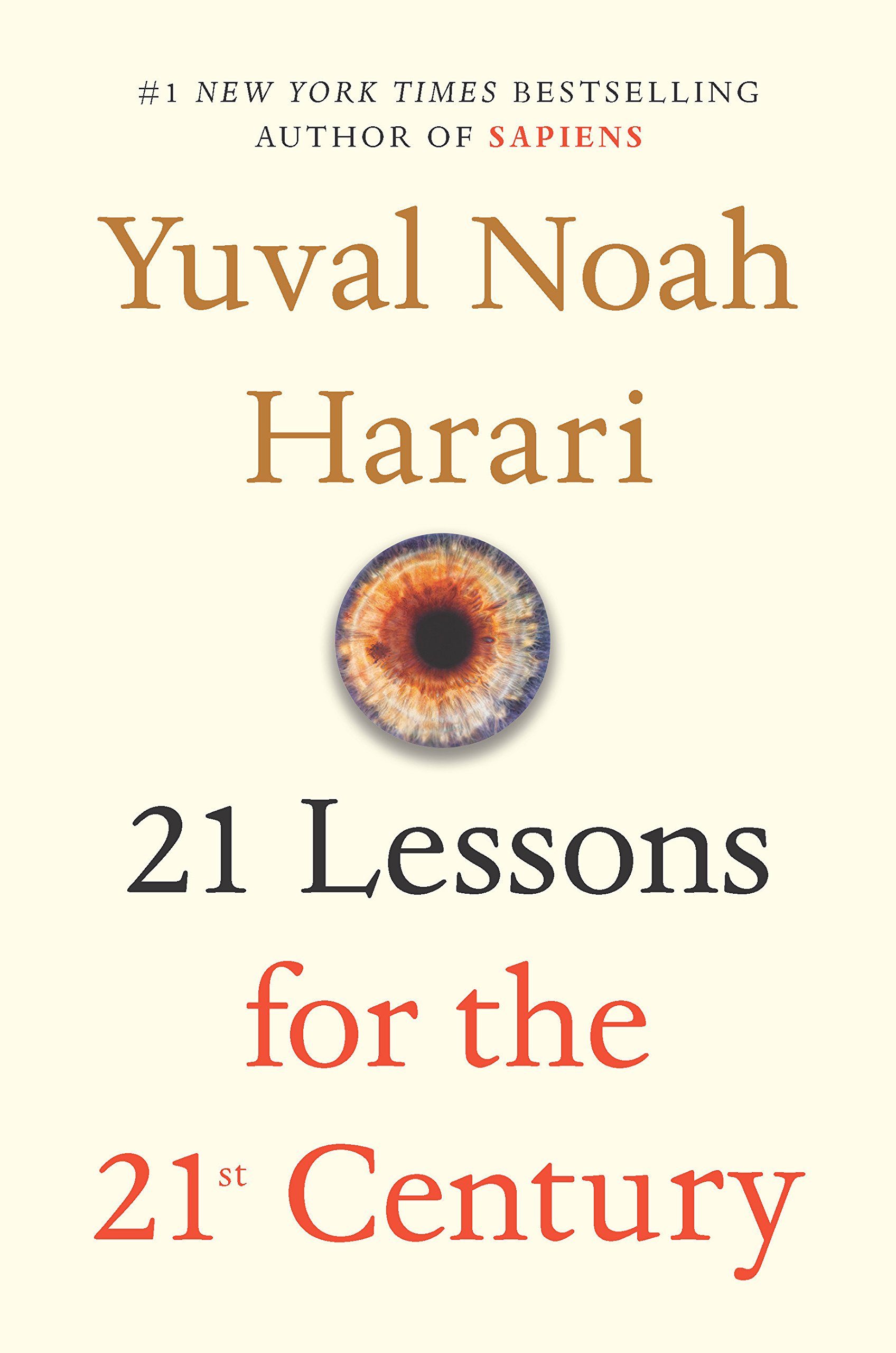
21 Lessons for the 21st Century

By Yuval Noah Harari

    Humans have irreversibly changed the world. This book explores the ways in which we have done so, in ways that many may not even realize, and explains the impacts of these changes on the future.
    The first few chapters discuss how AI and computers have progressed. They are slowly taking over jobs that normally would have required humans, and though they may never gain full "consciousness", which is something that even people don't really understand, they will have significant impacts on humans and the workplace. Because of these rapid changes, the job market will also fluctuate rapidly, which means that the traditional model of education may not work anymore. It might no longer make sense to learn basic skills then train your entire life for one occupation. Instead, dynamic learning, constant retraining for new jobs, might be necessary. Connecting to the idea of AI, the future might also be shaped by computers. Algorithms are already getting better than even humans at detecting user interest - perhaps in the future, Google or Facebook will know you better than you do yourself.
    Part two discusses politics and religion. Nationalism is a big thing these days, and while humans always tend to gather into groups, ultra-nationalism is dangerous. It is what causes war and division, but the world needs to collaborate to succeed.
    Part three is about war and peace (no not the book). It first delves into terrorism, and how it has changed our world. In the past, terrorists would have had no impacts at all. But we have gotten so used to being perfectly safe that even the slightest tremors make us afraid, make us overreact, which is exactly what the terrorists wanted in the first place. As for war, in today's world, war for big countries means mutually assured destruction. But one should never underestimate the stupidity of humankind, when one misstep could cause catastrophe. And that is why a little humility would be good for everyone.
    The final parts discuss how, in the digital age, humanity as a whole has gained massive knowledge but individuals know less and less because so much easy information is at our fingertips. And this is why fake news is so dangerous.
    Many think that life is a story that you are the center of. But it's not. So just take a step back and reflect, observe, and meditate.

Note: I've read so many books by this person and I'm a little bored...

Tuesday, June 15, 2021

The Man Who Mistook His Wife for a Hat and Other Clinical Tales

By Oliver Sacks

My thoughts: It was interesting that almost everyone with a disability had a different ability, often one that replaces their original capacities. Those who couldn't talk, drew. The woman with a low IQ could express herself eloquently. Another interesting thing is that even though Thompson and Jimmie were impacted similarly by their diseases, they had two very different coping mechanisms.

    Oliver Sacks, a neurologist details several odd cases that he has come across during his career. In Part 1, he begins by discussing the subject of neurological disorders. They have become rather sidelined in the medical field, as some sort of deficit that causes impairment. But he claims that this is not quite accurate, because patients often make up for deficits with enhancements in other parts of their brain. The patients he presents all have diseases that would be debilitating but are not because they have found workarounds with Dr. Sacks. For instance, Dr. P had become unable to distinguish faces from other objects; at one consultation with Dr. Sacks, he mistook his own wife for a hat. Jimmie G, who is stuck in the post-war era, unable to move on due to Korsakov's syndrome, and yet he has perfect recollection of everything he does remember. Christina, who loses her proprioception, or the innate ability almost everyone has to be able to tell where their body parts are. Similarly, the other patients had all lost some vital neural component that makes us, us, and most people take for granted. 
    Part 2 discusses patients with Tourette's Syndrome, which is a little-understood disease among doctors. However, Sacks has found that it is much more common than it seems, and attributes this to the excessively clinical diagnostics used to identify Tourette's. The syndrome creates an excess of a certain mental process, which can be different for every person. He describes several different impacts, including those who try to equalize their altered minds and those who have "visions". William Thompson, for instance, loses his memory like Jimmie. However, instead of staying stuck in the past, he constantly makes up a new past to match the present, stuck in a permanent catch-up game. It can also produce tics, or moments when the afflicted person feels especially lively. One man, a gifted musician, found that these tics, if they occurred while he was playing, could give him bouts of musical genius.
    Part Three discusses neurological conditions that can give people "visions". There were also two women, who, as a result of temporal lobe seizures, heard music. However, they had two very different effects. One enjoyed the music, for it provided a window into her childhood years, and opted to continue hearing it until it naturally went away. The other found the repetitive nature of the music annoying and chose anti-convulsants. A young Indian girl developed a tumor which also caused her to have seizures combined with illusions, and Sacks shows how calmly she took in her new life.
    In the final section, he talks about the subject of intellectual disabilities. These people often have a different grasp of the world than most, and it stems from abilities that become enhanced in order to make up for the lack of others. For instance, one girl was able to express herself best through poetry and abstract thought, Martin A, who loved music and Bach in spite of his low IQ, and most shockingly, "The Twins". They had the ability to "see" numbers, even though they lacked a basic understanding of arithmetic. They loved numbers, and it was their one tie to the world. Sadly, this ability went away after they were separated. In the final chapter, Dr. Sacks leaves us with the story of José, who couldn't speak a single coherent word but had a remarkable creative ability with art. He was so good that he was refashioned into an artist of sorts, with a use in the world, rather than being considered a burden.

Sunday, August 23, 2020

The Immortal Life of Henrietta Lacks

The Immortal Life of Henrietta Lacks
By Rebecca Skloot

    In 1951, and African American woman named Henrietta Lacks went to Johns Hopkins hospital to get a pain in her cervix checked out. She apparently had cervical cancer, which was treated by radium at the time. Her tumor faded, and she went home. However, a cell culturist named George Guy had collected her cells without her consent - typical medical procedure at the time. And her cells became HeLa, the first ever immortal human cells. It eventually killed her, but the cells grew and grew - far beyond what her normal cells had ever grown to - and they were used for vaccines and other research, leading to huge advances in science. They were also a problem. They grew so fast and were so hardy that they contaminated many other cell lines, causing a minor medical crisis because that meant some studies were nullified. This all happened without her family knowing.
    After her death, her husband, Day, had signed some form that asked if "John Hopkin" could do an autopsy and collect some cells. He had no idea what that meant, but he signed it. Leading to a generation of hardship. The Lacks family eventually found out about the cells from a scientist friend who had been using them for a long time. They were infuriated that people had made money off the cells and they had never gotten a share. The men in the family tried to get money out of Johns Hopkins, but Deborah, whom the author of this book spoke to, just wanted to know about her mother and sister.

Saturday, May 9, 2020

Prisoners of Geography

Prisoners of Geography
By Tim Marshall
Read in 8th Grade
Every nation on this planet has, and always will be, influenced by geography. First, Russia. It is the biggest nation in the world, albeit in an extremely cold region. Here, it faces its first geographic disadvantage. Since it is so far north, the only ocean it has access to is the Arctic. It has no warm-water ports, thereby preventing it from housing a decent navy. And, so that is why Russia has annexed Crimea, for a port. There is also a pizza-shaped piece of land in the west, the Northern European Plain. It is the only way Russia could possibly be attacked, and for all its history, Russia has been wary of it, trying to sway its border nations away from NATO. It does, however, have a strategic advantage in being Europes biggest, sometimes only, oil supplier.

Saturday, April 11, 2020

The Story of Art

The Story of Art
By E.H. Gombrich
Read in 8th Grade
Gombrich gives an extensive(really really long) history of art and architecture, from cave art through the Dark Ages to modern expressionist and abstract art. He explains what "Art" as we see it is, and why Art doesn't really exist, only artists. He takes celebrated pieces of art from each period and style and explains how it was revolutionary, why we get the reaction it invokes, and what they all imply about the way people view art.
I enjoyed reading this book because it was pretty in-depth without seeming like a list of facts or too much of an informational text.

Thursday, April 9, 2020

A Little History of the World

A Little History of the World
By E.H. Gombrich
Read in 8th Grade
Despite its title, this book is not a monotonous list of facts and dates and names. Although it is too short to accommodate every civilization and event, it goes through most major events from the Stone Age through the world wars. It provides facts in a fun way, like a journey through history. Although I had already learned about most of the events, I found it a nice, amusing review. I would highly recommend this book to students entering middle school.

Wednesday, April 8, 2020

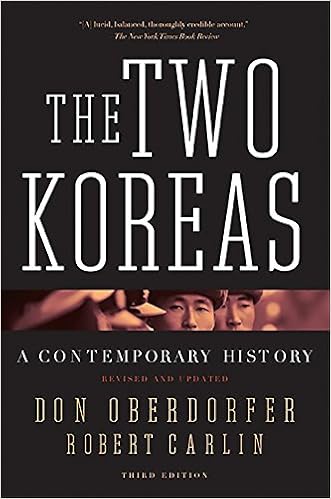
The Two Koreas

The Two Koreas(Third Edition)
By Don Oberdorfer and Robert Carlin
Read in 7th Grade

In this day and age, there is a lot of strife about North Korea, South Korea, nukes, and on and on and on. But how did there come to be two Koreas? This book provides an objective explanation of the Korean war, how the Korean Peninsula came to be divided, and how the two nations are still working toward reunification.
I highly recommend this book. It taught me a lot about why reunification is so hard and why the two halves are so different.

Ahn Junggeun's "A Treatise on Peace in the East"

안중근의 동양평화론 - Ahn Junggeun's "A Treatise on Peace in the East"
By Ahn Junggeun
Read in 7th Grade
This treatise was written by Ahn shortly before his death sentence for killing the unjust Japanese ruler of Korea, Ito Hirobumi. He explains how Japan came to occupy Korea in the first place, all the atrocities they have committed since, and his final rationale for killing Hirobumi. Today, he is a national hero as a freedom fighter, having given his own life in the process.

Tuesday, April 7, 2020

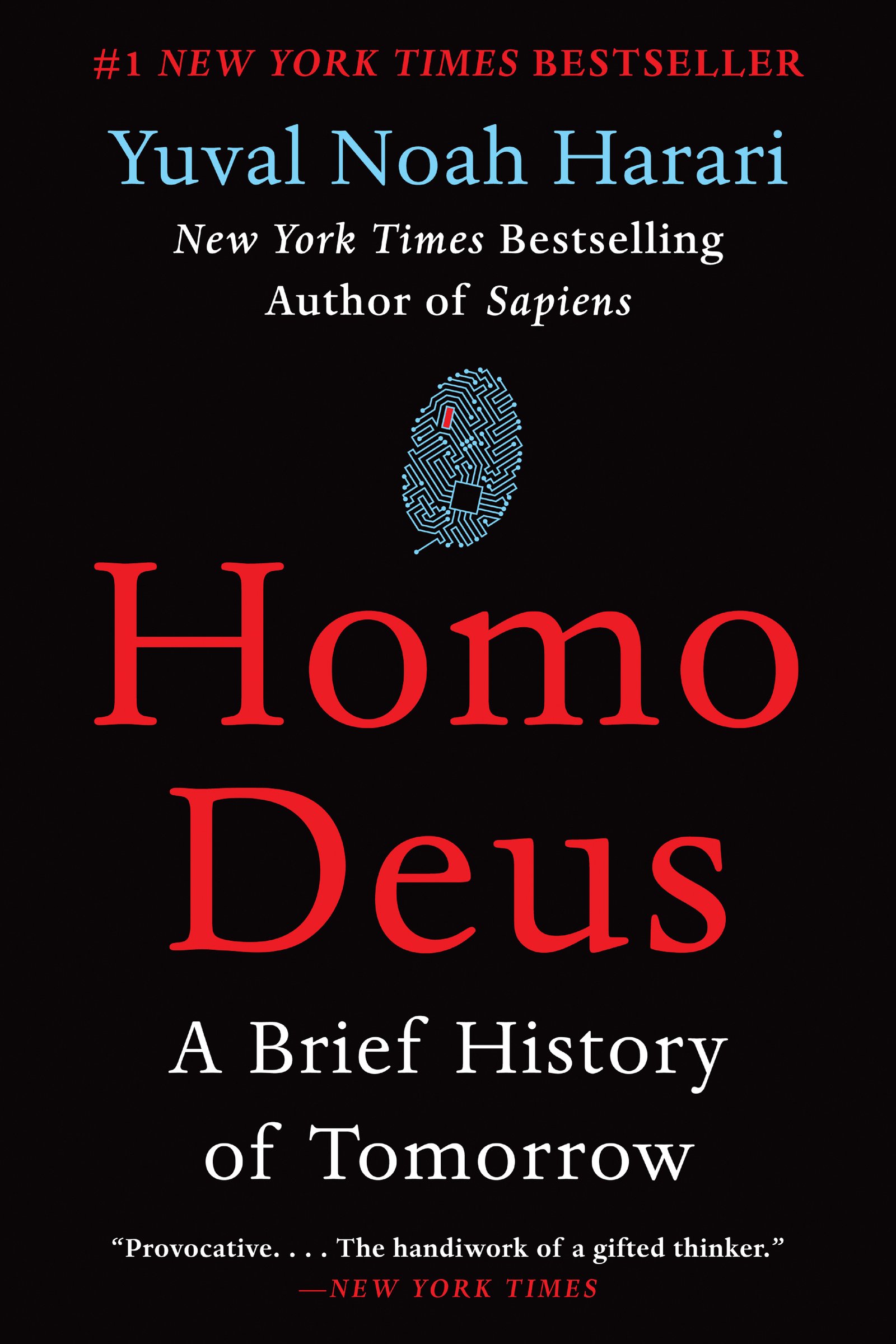
Homo Deus: A Brief History of Tomorrow

Homo Deus: A Brief History of Tomorrow
By Yuval Noah Harari
Read in 7th Grade
In this sequel to Sapiens, Harari explores the possibilities of the future. In recent centuries, problems that once plagued the daily lives of our ancestors - famine, disease, drought, etc. - have been reined in. So what will replace those at the top of our agenda? Immortality? Superhumans? Perhaps even editing humans themselves? The elite of today's society has immense power, and will that power be wielded according to our ideals of freedom and liberty, or at the expense of the powerless?

Sapiens: A Brief History of Humankind

Sapiens: A Brief History of Humankind
By Yuval Noah Harari
Read in 6th Grade
Many millennia ago, many human species inhabited various parts of our planet. But today, only our line lives on. How is it that that happened? In this book, Harari explores how we ended up developing things like religion, economy, and bureaucracy. Unfortunately, I don't remember too much because I read it a while back, but I one thing I do remember is that he wrote that it was good when Great Britain invaded India because it advanced Indian culture. I do not agree, because I don't think it is right of one country to invade another simply because they can.

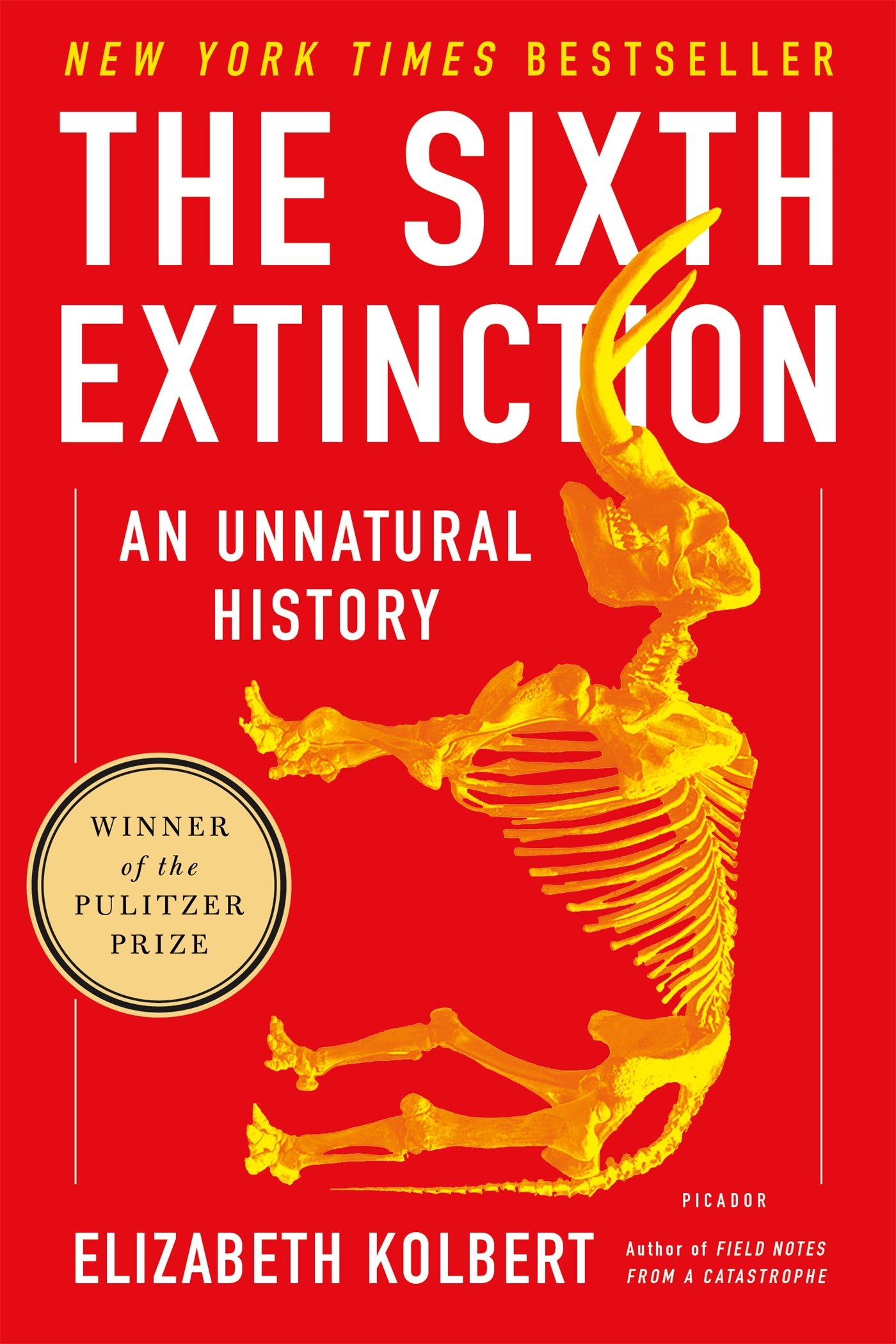
The Sixth Extinction

The Sixth Extinction: An Unnatural History
Elizabeth Kolbert
Read in 8th Grade
Our species has spread across the globe in an unprecedented global movement. We have messed up Earth's evolutionary process as we know it, wiping out species the minute we find them, and moving them around the world faster than ever before. But are we truly considering its impacts? In each of Earth's previous 5 mass extinctions, there have been sudden drops in biodiversity - just as it is going down now.

Saturday, March 28, 2020

Guns, Germs, and Steel

Guns, Germs, and Steel
By Jared Diamond
Chapter 13: Necessity's Mother
We have often heard that "necessity is the mother of invention". But many things go unappreciated simply because its first model isn't very good. Take, for instance, the gas engine. It was made when horses were still in full swing and the engine was unnecessary. In fact, many objects come from a series of previous inventions that have gradually been improved. We must also get society to adopt our invention, by making it more effective or giving it social prestige. Also, the receptiveness of a society is very important. If the technology is unnecessary, a society will probably be less receptive.