Showing posts with label Memoir. Show all posts

Friday, August 27, 2021

Crying in H Mart

By Michelle Zauner

    Michelle Zauner was born to a Korean woman and an American man, and for much of her early life she tried to hide her Korean side because in Eugene, Oregon, where she lived, there weren't many Korean people. She also writes about her changing dynamic with her mother, from childhood, adolescence, and during her mother's years with cancer.

    Her father had a difficult childhood, involving bad parents and drugs. He had managed to break away from the cycle and considered it an achievement that he even had a child, so most of her care was done by her mother.

    Her mother was interesting, not a protective or harsh one, somewhere in between. She was all about keeping things orderly. As a child, Zauner always strived to impress her mother, always doing things she asked for or would want in search of praise. But as she grew up, the classic teenage rift appeared. Her mother focused on her grades and college, while Michelle wanted to become an artist. Eventually, it got so bad, that Michelle left the house for a few weeks and refused to go to school, which ultimately ended up in her coming back when she became a literal "starving artist".

    After college, she spends a few years in a part-time band and other part-time jobs, visiting her mother every so often. Even though they parted in a rough manner, they are inextricably tied together and their visits are always emotional.

    Then comes the calamity that the majority of the book explores. Her mother, who was in great shape, gets cancer. Michelle immediately leaves Philadephia to return to Eugene, where the routine of the past few years is broken. Her mother rapidly declines, and a whole cohort of women try to help her get through. The prospect of her mother dying causes a sort of floodgate to open for Michelle, a new desire to reconnect with her homeland. She tries Korean recipes, visits Korea with her mother for a last time.

    In the end, it is a story of family and culture, how the author was tied to it all, no matter how much she tries to escape it.

Tuesday, July 27, 2021

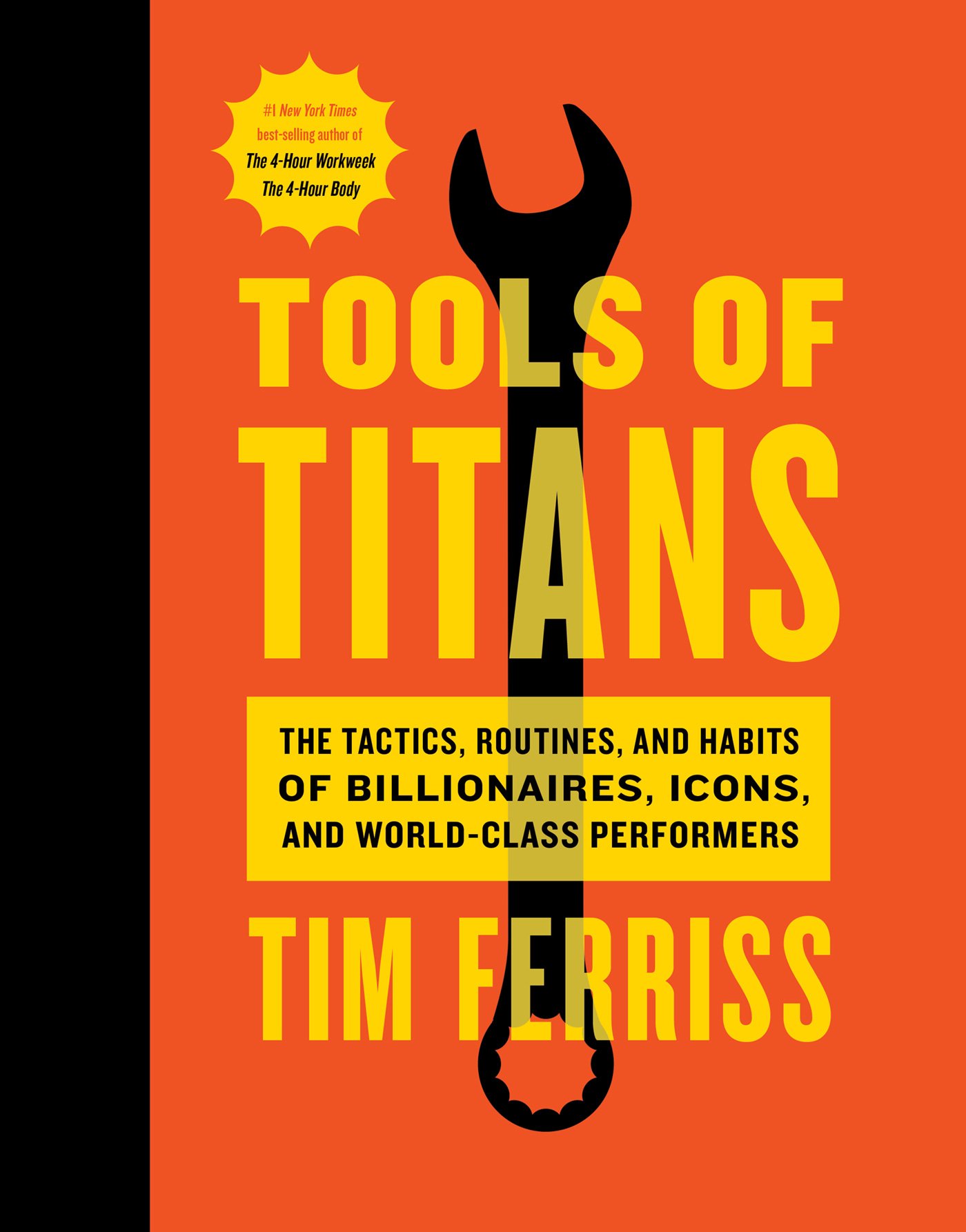
Tools of Titans: The Tactics, Routines, and Habits of Billionaires, Icons, and World-Class Performers

By Tim Ferriss

    Warning: Very long
    Tim Ferriss, the host of a show named after him, has interviewed more than 100 famous people on his show to learn what they do and how they achieved world-class performance. He has condensed hundreds of thousands of hours of interviews down to no less than 736 pages in hopes of helping others with tips from "titans".
    In the introduction, Ferriss explains that all these people have certain characteristics in common. They ask the big questions and have uncommon habits. They believe failure is unsustainable and maximize strengths to compensate for weaknesses.
    Part 1: Healthy
    Amelia Boone: Boone is one of the world's most decorated obstacle course racers. She has amassed over 30 victories and won a championship 8 weeks after knee surgery. In addition, she is a full-time attorney and does some ultra running. Some tactics she employs are hydrolyzed gelatin with beetroot powder, a rumble roller (foam roller with protruding sections), dry needling, and saunas.
    Rhonda Perciavalle Patrick, Ph.D.: She has done research on aging, cancer, mitochondrial metabolism, and apoptosis. She recently published a paper on vitamin D regulation of serotonin in the brain. In her interview, Dr. Partick talked about stem cells, which can be stored from baby teeth and wisdom teeth for later in life. In addition, hyperthermic conditioning, or calculated heat exposure can increase growth hormones and improve endurance.
    Christopher Sommer: He is a former U.S. National Team gymnastics coach and founder of GymnasticBodies. His 40 years of observing top athletes allowed him to create the Gymnastics Strenght Training (GST). Here are some of the things he has learned. You should always work on the deficiencies you are most embarrassed by because it is the only way they will get better. Mobility, or strength through an entire range of motion, is better than flexibility. Consistency is better than sporadic intense training. The book also includes a variety of exercises, including the QL Walk, Ring Turn Out, Hinge Rows, and Ag Walk (Google it).
    Dominic D'Agostino: He is an associate professor in the Department of Molecular Pharmacology and Physiology at the University of South Florida Morsani College of Medicine. His specialty is metabolic therapies, including ketone, which is what is described in this chapter. A ketogenic diet is a high-fat diet that mimics fasting, causing your body to use ketones for energy instead of glucose. This induces ketosis, which can be measured at less than 0.5 mmol of BHB in your blood. Ketosis can help you lose fat, prevent cancer, use oxygen better, and increase strength.
    Patrick Arnold: Arnold is considered the "father of prohormones". He created the steroid THG and several others. Today, he is innovating ketone supplementation. Some legal performance enhancers that he finds useful are ursolic acid spray, which helps with body recomposition, exogenous ketone drinks for workouts, and metformin for antiaging.
    Joe De Sena: He is the co-founder of the Death Race, Spartan Race, and several others. He has competed in a variety of grueling marathons and races and is also a strategic businessman. He started participating in insane competition events while working on Wall Street to get away from the hectic life there and created the Death Race in order to break people by making them do things they had never done before.
    Wim "The Iceman" Hof: He is a Dutch world record holder with more than 20 total. His world records are related to extreme temperatures, hence the nickname "Iceman". Cold exposure can, in fact, be used to improve immune function, increase fat loss, and elevate mood. 
    Jason Nemer: Nemer is the creator of AcroYoga, which blends yoga, Thai massage, and acrobatics. AcroYoga requires two people, a base and a flyer, and they do what it sounds like. The base is usually more experienced and supports the flier.
    Dr. Peter Attia: He is a former ultra-endurance athlete, and has conducted research on immune-based therapies for cancer at the National Cancer Institute. He often enters ketosis like the author, and he utilizes glute medius workouts to strengthen his lateral stability. It is surprisingly difficult, and he calls it the reverse thigh master. 5 blood tests he generally recommends are the APOE genotype, LDL particle number via NMR, the Lp(a) via NMR, OGTT, and IFG-1.
    Justin Mager, MD: Dr. Mager has helped the author with many experiments, and he believes that people should look and care about themselves more often. With blood tests, they are just a snapshot of one moment, which does not reflect you as a person. Also, context matters when are "optimizing", so you have to understand what a test is actually supposed to show you.
    Charles Poliquin: He is one of the best-known strength coaches in the world. He has trained gold medalists and all-stars in a variety of sports. One important thing he has learned is that your carbs need to be earned. To deserve carbs after a workout, you need to have sub-10% body fat or vertical separation in your abs. Another thing he has found is that to increase testosterone, cortisol needs to go down because they both require the same raw materials. When your body is stressed, it produces more cortisol, reducing testosterone. 
    Pavel Tsatsouline: He is chairman of STrongFirst, Inc., a former physical training instructor for the Soviet special forces, and currently a subject matter expert to a variety of U.S. military branches. He usually has a simple breakfast of only coffee. His specialty is kettlebell workouts, and two good warmups are halos and cossack squats. A full exercise might include a one-arm swing, Turkish get-up, and a goblet squat.
    Laird Hamilton, Gabby Reece, and Brian MacKenzie: Hamilton is regarded as one of the best surfers of all time. Reece is a successful volleyball player, and MacKenzie is the founder of CrossFit Endurance. He challenges distance running and favors a more minimalist approach. The three of them also hold workouts that involve getting in the pool with dumbbells, then going from an ice bath to a sauna. They say you should learn to be assertive and go first.
    James Fadiman: He has been involved with psychedelic research since the 1960s. He is often referred to as America's most respected authority on psychedelics. Please note that many psychedelics are considered illegal, and also have toxins if taken in high doses. Psychedelics essentially generate expressions of the psyche on levels not normally observable. They have been used by indigenous cultures for years to treat depression, remove anxiety, end anxiety, and more. Many psychedelics resemble a molecule called DMT and act as the naturally occurring serotonin. In any case, all of them should be administered in the presence of someone who can guide you and be used in safe doses.
    Martin Polanco and Dan Engle: Polanco is the founder of Crossroads Treatment Center, which specializes in conquering powerful addictions. Engle is board-certified in psychiatry and neurology. He has researched traumatic brain injury and plant medicines. One type of psychedelic is ayahuasca. It is one of the "safer" ones, but spiritually, it is the equivalent of a brain surgeon. Afterward, you will be very open, and done properly, it can be a corrective experience. Ibogaine is a very strong psychedelic that has been used in Africa to treat addictions. It can be deadly for some people, and is definitely too strong for people who just want to explore the psychedelic experience.
    Kelly Starrett: He is a performance coach who has trained CrossFit athletes and various world-class athletes. He likes to drink as little water as possible, usually with a little bit of salt, because while dehydration usually is not a risk, low sodium concentrations in the blood are an issue. A good test for mobility is the campfire squat test, and if you can't squat all the way down, you are missing full hip and ankle motion. The overhead squat is a good solution. He is a proponent of good sleep habits.
    Paul Levesque: He is popularly known as Triple H, a 14-time world champion in WWE. His tip for avoiding jet lag is to do a quick workout as soon as you can after you get off the plane, because it helps reset your mind. In terms of goal setting, if you really want to achieve something, it should be a goal, not a dream.
    Jane McGonigal: McGonigal is a research affiliate at the Institute for the Future, with over 10 million views on her TED talks. She has written on how games make us better, and even finds that Tetris has therapeutic effects.
    Dr. Adam Gazzaley: He is the director of the Gazzaley Lab at UCSF, and the co-founder of Akili Interactive, a company developing therapeutic video games, and is also a co-founder and chief science advisor of Akili Interactive, a company that develops therapeutic video games. He acts as a scientific advisor to more than a dozen technology companies. When he hires people what he looks for is not a specific thing but rather, what it is that excites them.
    Chris Sacca: Sacca is an early stage investor in dozens of companies including Twitter, Uber, Instagram, and more. His strategy in investing is going on offense. By this he means taking the time to focus and build what he really wants, rather than going from coffee to coffee, day by day. To do this, he bought a cabin near Tahoe. He also recommends attending as many high level meetings in your workplace as possible. It is a good way to start getting to know things and people higher up.
    
    There are many more people who are included in this book (honestly I couldn't write them all out), but it all revolves around a few central topic that Ferriss end the book on. Always finding something positive in the situation, dealing with your fears, weaknesses, and biggest tasks first, and living a healthy lifestyle. It all contributes to being less stressed and having more freedom in your life to pursue what you want.

Tuesday, June 15, 2021

The Man Who Mistook His Wife for a Hat and Other Clinical Tales

By Oliver Sacks

My thoughts: It was interesting that almost everyone with a disability had a different ability, often one that replaces their original capacities. Those who couldn't talk, drew. The woman with a low IQ could express herself eloquently. Another interesting thing is that even though Thompson and Jimmie were impacted similarly by their diseases, they had two very different coping mechanisms.

    Oliver Sacks, a neurologist details several odd cases that he has come across during his career. In Part 1, he begins by discussing the subject of neurological disorders. They have become rather sidelined in the medical field, as some sort of deficit that causes impairment. But he claims that this is not quite accurate, because patients often make up for deficits with enhancements in other parts of their brain. The patients he presents all have diseases that would be debilitating but are not because they have found workarounds with Dr. Sacks. For instance, Dr. P had become unable to distinguish faces from other objects; at one consultation with Dr. Sacks, he mistook his own wife for a hat. Jimmie G, who is stuck in the post-war era, unable to move on due to Korsakov's syndrome, and yet he has perfect recollection of everything he does remember. Christina, who loses her proprioception, or the innate ability almost everyone has to be able to tell where their body parts are. Similarly, the other patients had all lost some vital neural component that makes us, us, and most people take for granted. 
    Part 2 discusses patients with Tourette's Syndrome, which is a little-understood disease among doctors. However, Sacks has found that it is much more common than it seems, and attributes this to the excessively clinical diagnostics used to identify Tourette's. The syndrome creates an excess of a certain mental process, which can be different for every person. He describes several different impacts, including those who try to equalize their altered minds and those who have "visions". William Thompson, for instance, loses his memory like Jimmie. However, instead of staying stuck in the past, he constantly makes up a new past to match the present, stuck in a permanent catch-up game. It can also produce tics, or moments when the afflicted person feels especially lively. One man, a gifted musician, found that these tics, if they occurred while he was playing, could give him bouts of musical genius.
    Part Three discusses neurological conditions that can give people "visions". There were also two women, who, as a result of temporal lobe seizures, heard music. However, they had two very different effects. One enjoyed the music, for it provided a window into her childhood years, and opted to continue hearing it until it naturally went away. The other found the repetitive nature of the music annoying and chose anti-convulsants. A young Indian girl developed a tumor which also caused her to have seizures combined with illusions, and Sacks shows how calmly she took in her new life.
    In the final section, he talks about the subject of intellectual disabilities. These people often have a different grasp of the world than most, and it stems from abilities that become enhanced in order to make up for the lack of others. For instance, one girl was able to express herself best through poetry and abstract thought, Martin A, who loved music and Bach in spite of his low IQ, and most shockingly, "The Twins". They had the ability to "see" numbers, even though they lacked a basic understanding of arithmetic. They loved numbers, and it was their one tie to the world. Sadly, this ability went away after they were separated. In the final chapter, Dr. Sacks leaves us with the story of José, who couldn't speak a single coherent word but had a remarkable creative ability with art. He was so good that he was refashioned into an artist of sorts, with a use in the world, rather than being considered a burden.

Thursday, May 27, 2021

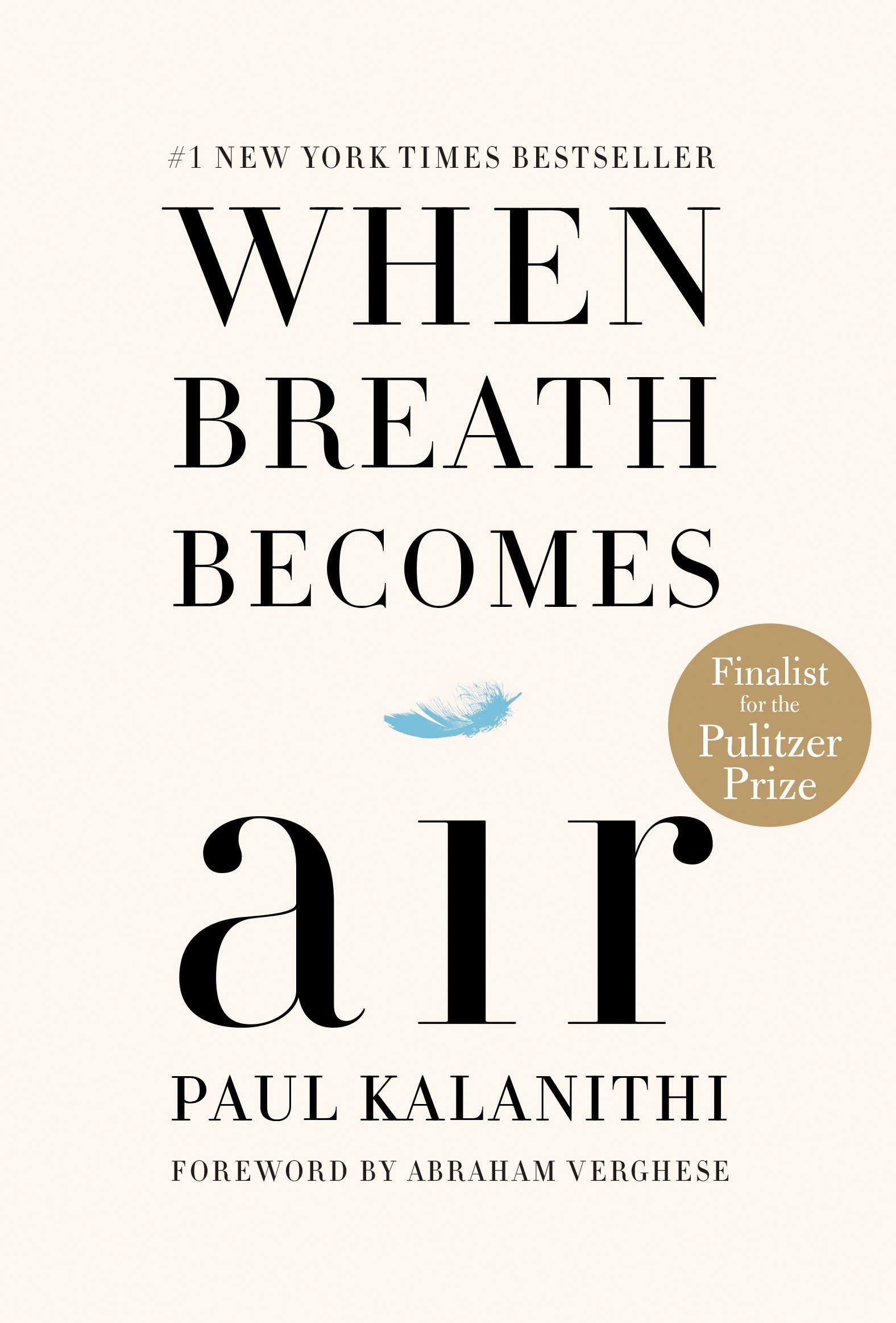
When Breath Becomes Air

By Paul Kalanithi

My thoughts: Even though as a teen, I feel like I have a lot of time left, I don't know when I might die, or what might happen, and it is very important to be able to accept whatever happens. I also saw how difficult the life of a surgeon can be, with all the stresses of life and death on the line.

    In the last two years of his life, Dr. Paul Kalanithi, a neurosurgeon, dedicated his life to documenting what he had learned about death and how we cope with it.
    He had been working to become a neurosurgeon for years and was in the culmination of his residency when the back pains first began. When he went in to get a scan, it was confirmed. He had Stage IV cancer, and one of the most deadly types, too.
    When he is diagnosed, everything he ever worked for is suddenly rearranged. Should he have a child? What about a job? And how long of a life should I plan for? Ultimately, the first round of drugs that he tries holds the cancer cells back, allowing him to opt for a child - but only after ensuring that his wife, Lucy, is okay with the probable burden of becoming a single mother. He even gets a lucrative job offer, which he turns down due to its distance from his oncologist and family.
    Unfortunately, while his oncologist is away, he suffers a relapse when a resident fails to give him the drugs that he needs, and neither of the other two solutions works for long, bringing him to the brink of death just months after his daughter is born. He grapples with the question that he has been considering since his diagnosis one last time: What kind of life is worth living? His answer, that life should have a purpose, led him to try therapy methods that would enable him to work as much as possible, and finally took him to his death, when he decided to end life support because a life like that would not be useful.
    His story of striving, trying to live, then coming to terms with death, is eloquently told, and just relatable enough that a reader can understand. "It's just tragic enough and just imaginable enough".

"The problem wasn’t really a scientific one. The fact of death is unsettling. Yet there is no other way to live."

Saturday, May 1, 2021

The Cuckoo's Egg

By Clifford Stoll

My thoughts: Many parts of this book are still very relevant today. Computers often seem secure, and we are frequently assured by manufacturers that they are, but small things, like guest accounts, easy to guess passwords, and other things can easily bring down a system. Clearly, cybersecurity still doesn't have very many safety nets; the field is evolving faster than the law, and it is the end user's burden to keep their systems secure.

    Back in the early days of electronics and the Internet, there weren't very many safety nets in the event of a hacking. In fact, the very word hacker originally meant "someone good and creative on a computer". So when Clifford Stoll, astronomer turned computer scientist noticed a 75 cent imbalance in the supercomputer accounts at Lawrence Berkeley Labs, he starting digging into it himself. He realized it wasn't just a simple accounting error by the software; no, a hacker was stealing supercomputer time and had inadvertently left behind a trail. For the next year, Stoll would follow this hacker through phone lines, computer bills, and all the way to Germany before he got to the bottom of the case.

    LBL labs isn't classified, but contains lots of information about various scientific topics. The hacker, though, is more interested in accessing the military's MILNET from LBL. From there, he worms his way through military computers, guessing obvious passwords like "guest" and gaining access to unprotected computers. He thinks nobody is noticing, but Clifford is silently tracking him, reporting to various government agencies. Unfortunately, there is no centralized system, and everyone tells him, we want information, but enforcement isn't in our jurisdicttion. When the hacker finally gets to stealing important information, the FBI steps in, and they are able to trace the phone lines from Oakland Tymnet, across the country, then the ocean, all the way to Hannover, Germany.

Monday, June 29, 2020

Educated: A Memoir

Educated: A Memoir
By Tara Westover
Read in 9th Grade

Tara was born in Utah, to a very devout Mormon father and 6 siblings. Her father owns a junkyard where all the kids work. He is also anti-socialist, believing that the Government and Medical Establishment are conspiracies. He pulled all his children out of school and is always trying to be “self-reliant”. He buys guns, buries gasoline, and cans fruit. He believes The End of Days, described in the Bible, is coming. Tara grows up in this atmosphere, constantly trying to figure out what’s right and wrong. She stays away from the “normal” people, but her views start to change when the world doesn’t end.