Showing posts with label Informational. Show all posts

Saturday, October 2, 2021

21 Lessons for the 21st Century

By Yuval Noah Harari

    Humans have irreversibly changed the world. This book explores the ways in which we have done so, in ways that many may not even realize, and explains the impacts of these changes on the future.
    The first few chapters discuss how AI and computers have progressed. They are slowly taking over jobs that normally would have required humans, and though they may never gain full "consciousness", which is something that even people don't really understand, they will have significant impacts on humans and the workplace. Because of these rapid changes, the job market will also fluctuate rapidly, which means that the traditional model of education may not work anymore. It might no longer make sense to learn basic skills then train your entire life for one occupation. Instead, dynamic learning, constant retraining for new jobs, might be necessary. Connecting to the idea of AI, the future might also be shaped by computers. Algorithms are already getting better than even humans at detecting user interest - perhaps in the future, Google or Facebook will know you better than you do yourself.
    Part two discusses politics and religion. Nationalism is a big thing these days, and while humans always tend to gather into groups, ultra-nationalism is dangerous. It is what causes war and division, but the world needs to collaborate to succeed.
    Part three is about war and peace (no not the book). It first delves into terrorism, and how it has changed our world. In the past, terrorists would have had no impacts at all. But we have gotten so used to being perfectly safe that even the slightest tremors make us afraid, make us overreact, which is exactly what the terrorists wanted in the first place. As for war, in today's world, war for big countries means mutually assured destruction. But one should never underestimate the stupidity of humankind, when one misstep could cause catastrophe. And that is why a little humility would be good for everyone.
    The final parts discuss how, in the digital age, humanity as a whole has gained massive knowledge but individuals know less and less because so much easy information is at our fingertips. And this is why fake news is so dangerous.
    Many think that life is a story that you are the center of. But it's not. So just take a step back and reflect, observe, and meditate.

Note: I've read so many books by this person and I'm a little bored...

Thursday, August 12, 2021

The Tyranny of Merit: What's Become of the Common Good

By Michael J. Sandel

The meritocratic model is something that is all around us, even in my own pursuit to vindicate myself in the mad race for college, but something that I never could put a name to. This book helped me understand how this came about and its effects on society.

“The Tyranny of Merit” is like a brilliant response to that misguided but well-meaning math teacher from the viewpoint, as it were, of a kid in some back-row seat of any classroom in a Rust Belt, prairie town or inner-city school in America.

As Hochschild puts so well, Sandel points out the problem with a philosophy ingrained into American society. Every teacher talks about grades and degrees, but people striving toward this only widens the societal divide.

    Today's social model is based on the philosophy of meritocracy - where the successful deserve their success and the poor deserve their poverty. It is based on the idea that you deserve what you get, and it is what Sandel claims were at the heart of Donald Trump's election in 2016 and the populist uprisings around the world.
    The American Dream, the one of rising, has become increasingly less an "American" dream. Today, rich parents can afford to help so much, and poor parents so little, that it's become virtually impossible to move between social classes. But parents still tell their children that if they try their best they will succeed - and when rich children succeed, they look down upon the unsuccessful, and even the poor believe that they deserve their place in life. It inspires hubris in place of humility from a position they were given by luck.
    And this is exactly what Trump took advantage of. The oppressed working class, who lack degrees and struggle to put food on the table, was tired of the Democrat's talk of rising and meritocracy, which politicians had relied on for decades. He utilized this discontent and used it in his favor. Sandel's solution lies in acknowledging the oppressed and empathizing with their pain.
    The true tyranny of globalization and the meritocracy that it brought with it is that it left too many behind in a place where everyone, even they themselves, looked down on them.
One reason, perhaps, is that many of us need what he does so well: help us grapple with the unexpected and uncomfortable questions that history delivers us.

 All of these create controversies that are so important to face in our society but are hard to think about alone. Books like these create good starting points for talking about them.

So you who are highly educated, Sandel concludes, should understand that you’re contributing to a resentment fueling the toxic politics you deplore. Respect the vast diversity of talents and contributions others make to this nation. Empathize with the undeserved shame of the less educated. Eat a little humble pie.

https://www.nytimes.com/2020/09/15/books/review/the-tyranny-of-merit-michael-j-sandel.html

Tuesday, July 27, 2021

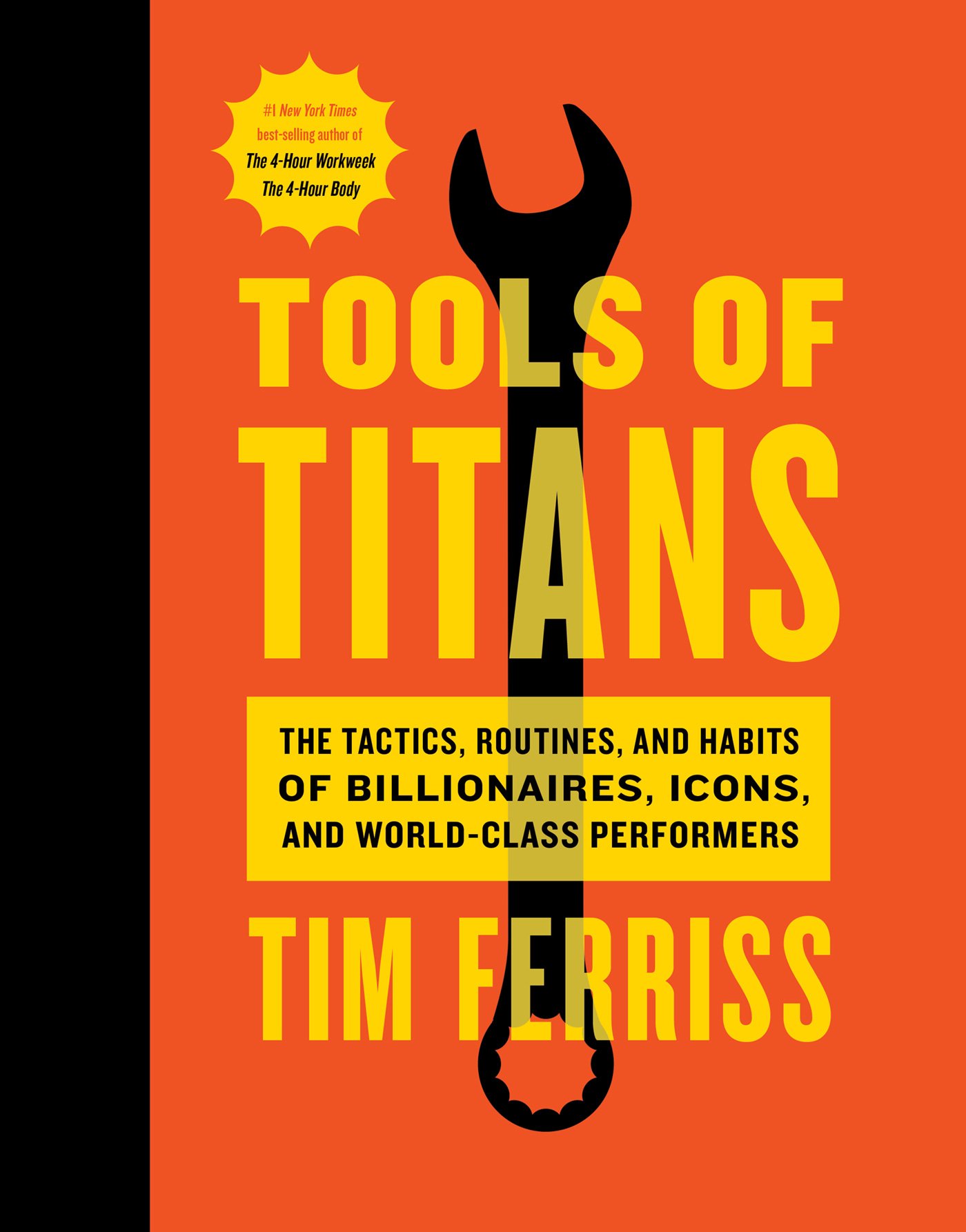
Tools of Titans: The Tactics, Routines, and Habits of Billionaires, Icons, and World-Class Performers

By Tim Ferriss

    Warning: Very long
    Tim Ferriss, the host of a show named after him, has interviewed more than 100 famous people on his show to learn what they do and how they achieved world-class performance. He has condensed hundreds of thousands of hours of interviews down to no less than 736 pages in hopes of helping others with tips from "titans".
    In the introduction, Ferriss explains that all these people have certain characteristics in common. They ask the big questions and have uncommon habits. They believe failure is unsustainable and maximize strengths to compensate for weaknesses.
    Part 1: Healthy
    Amelia Boone: Boone is one of the world's most decorated obstacle course racers. She has amassed over 30 victories and won a championship 8 weeks after knee surgery. In addition, she is a full-time attorney and does some ultra running. Some tactics she employs are hydrolyzed gelatin with beetroot powder, a rumble roller (foam roller with protruding sections), dry needling, and saunas.
    Rhonda Perciavalle Patrick, Ph.D.: She has done research on aging, cancer, mitochondrial metabolism, and apoptosis. She recently published a paper on vitamin D regulation of serotonin in the brain. In her interview, Dr. Partick talked about stem cells, which can be stored from baby teeth and wisdom teeth for later in life. In addition, hyperthermic conditioning, or calculated heat exposure can increase growth hormones and improve endurance.
    Christopher Sommer: He is a former U.S. National Team gymnastics coach and founder of GymnasticBodies. His 40 years of observing top athletes allowed him to create the Gymnastics Strenght Training (GST). Here are some of the things he has learned. You should always work on the deficiencies you are most embarrassed by because it is the only way they will get better. Mobility, or strength through an entire range of motion, is better than flexibility. Consistency is better than sporadic intense training. The book also includes a variety of exercises, including the QL Walk, Ring Turn Out, Hinge Rows, and Ag Walk (Google it).
    Dominic D'Agostino: He is an associate professor in the Department of Molecular Pharmacology and Physiology at the University of South Florida Morsani College of Medicine. His specialty is metabolic therapies, including ketone, which is what is described in this chapter. A ketogenic diet is a high-fat diet that mimics fasting, causing your body to use ketones for energy instead of glucose. This induces ketosis, which can be measured at less than 0.5 mmol of BHB in your blood. Ketosis can help you lose fat, prevent cancer, use oxygen better, and increase strength.
    Patrick Arnold: Arnold is considered the "father of prohormones". He created the steroid THG and several others. Today, he is innovating ketone supplementation. Some legal performance enhancers that he finds useful are ursolic acid spray, which helps with body recomposition, exogenous ketone drinks for workouts, and metformin for antiaging.
    Joe De Sena: He is the co-founder of the Death Race, Spartan Race, and several others. He has competed in a variety of grueling marathons and races and is also a strategic businessman. He started participating in insane competition events while working on Wall Street to get away from the hectic life there and created the Death Race in order to break people by making them do things they had never done before.
    Wim "The Iceman" Hof: He is a Dutch world record holder with more than 20 total. His world records are related to extreme temperatures, hence the nickname "Iceman". Cold exposure can, in fact, be used to improve immune function, increase fat loss, and elevate mood. 
    Jason Nemer: Nemer is the creator of AcroYoga, which blends yoga, Thai massage, and acrobatics. AcroYoga requires two people, a base and a flyer, and they do what it sounds like. The base is usually more experienced and supports the flier.
    Dr. Peter Attia: He is a former ultra-endurance athlete, and has conducted research on immune-based therapies for cancer at the National Cancer Institute. He often enters ketosis like the author, and he utilizes glute medius workouts to strengthen his lateral stability. It is surprisingly difficult, and he calls it the reverse thigh master. 5 blood tests he generally recommends are the APOE genotype, LDL particle number via NMR, the Lp(a) via NMR, OGTT, and IFG-1.
    Justin Mager, MD: Dr. Mager has helped the author with many experiments, and he believes that people should look and care about themselves more often. With blood tests, they are just a snapshot of one moment, which does not reflect you as a person. Also, context matters when are "optimizing", so you have to understand what a test is actually supposed to show you.
    Charles Poliquin: He is one of the best-known strength coaches in the world. He has trained gold medalists and all-stars in a variety of sports. One important thing he has learned is that your carbs need to be earned. To deserve carbs after a workout, you need to have sub-10% body fat or vertical separation in your abs. Another thing he has found is that to increase testosterone, cortisol needs to go down because they both require the same raw materials. When your body is stressed, it produces more cortisol, reducing testosterone. 
    Pavel Tsatsouline: He is chairman of STrongFirst, Inc., a former physical training instructor for the Soviet special forces, and currently a subject matter expert to a variety of U.S. military branches. He usually has a simple breakfast of only coffee. His specialty is kettlebell workouts, and two good warmups are halos and cossack squats. A full exercise might include a one-arm swing, Turkish get-up, and a goblet squat.
    Laird Hamilton, Gabby Reece, and Brian MacKenzie: Hamilton is regarded as one of the best surfers of all time. Reece is a successful volleyball player, and MacKenzie is the founder of CrossFit Endurance. He challenges distance running and favors a more minimalist approach. The three of them also hold workouts that involve getting in the pool with dumbbells, then going from an ice bath to a sauna. They say you should learn to be assertive and go first.
    James Fadiman: He has been involved with psychedelic research since the 1960s. He is often referred to as America's most respected authority on psychedelics. Please note that many psychedelics are considered illegal, and also have toxins if taken in high doses. Psychedelics essentially generate expressions of the psyche on levels not normally observable. They have been used by indigenous cultures for years to treat depression, remove anxiety, end anxiety, and more. Many psychedelics resemble a molecule called DMT and act as the naturally occurring serotonin. In any case, all of them should be administered in the presence of someone who can guide you and be used in safe doses.
    Martin Polanco and Dan Engle: Polanco is the founder of Crossroads Treatment Center, which specializes in conquering powerful addictions. Engle is board-certified in psychiatry and neurology. He has researched traumatic brain injury and plant medicines. One type of psychedelic is ayahuasca. It is one of the "safer" ones, but spiritually, it is the equivalent of a brain surgeon. Afterward, you will be very open, and done properly, it can be a corrective experience. Ibogaine is a very strong psychedelic that has been used in Africa to treat addictions. It can be deadly for some people, and is definitely too strong for people who just want to explore the psychedelic experience.
    Kelly Starrett: He is a performance coach who has trained CrossFit athletes and various world-class athletes. He likes to drink as little water as possible, usually with a little bit of salt, because while dehydration usually is not a risk, low sodium concentrations in the blood are an issue. A good test for mobility is the campfire squat test, and if you can't squat all the way down, you are missing full hip and ankle motion. The overhead squat is a good solution. He is a proponent of good sleep habits.
    Paul Levesque: He is popularly known as Triple H, a 14-time world champion in WWE. His tip for avoiding jet lag is to do a quick workout as soon as you can after you get off the plane, because it helps reset your mind. In terms of goal setting, if you really want to achieve something, it should be a goal, not a dream.
    Jane McGonigal: McGonigal is a research affiliate at the Institute for the Future, with over 10 million views on her TED talks. She has written on how games make us better, and even finds that Tetris has therapeutic effects.
    Dr. Adam Gazzaley: He is the director of the Gazzaley Lab at UCSF, and the co-founder of Akili Interactive, a company developing therapeutic video games, and is also a co-founder and chief science advisor of Akili Interactive, a company that develops therapeutic video games. He acts as a scientific advisor to more than a dozen technology companies. When he hires people what he looks for is not a specific thing but rather, what it is that excites them.
    Chris Sacca: Sacca is an early stage investor in dozens of companies including Twitter, Uber, Instagram, and more. His strategy in investing is going on offense. By this he means taking the time to focus and build what he really wants, rather than going from coffee to coffee, day by day. To do this, he bought a cabin near Tahoe. He also recommends attending as many high level meetings in your workplace as possible. It is a good way to start getting to know things and people higher up.
    
    There are many more people who are included in this book (honestly I couldn't write them all out), but it all revolves around a few central topic that Ferriss end the book on. Always finding something positive in the situation, dealing with your fears, weaknesses, and biggest tasks first, and living a healthy lifestyle. It all contributes to being less stressed and having more freedom in your life to pursue what you want.
Sunday, May 30, 2021

Justice

By Michael Sandel

My thoughts: It is very interesting to read about the different types of theories on justice, especially as we enter into debates about social justice, what the government can and cannot do, and how certain actions should be punished. Ultimately, it seems like no single theory can cover everything - different ideas fit in different situations, because the world is too complex for one simple theory of justice.

    There are several theories of justice: utilitarianism, libertarianism, and ideas from various scholars including Aristotle, Kant, and Rawls - all of whom have differing ideas on what is just. In reality, all of them have flaws and cannot apply to every scenario, but the justifications are interesting.
    Utilitarianism puts the utility of the most amount of people first - that is, the majority of society must benefit, even if some individuals are disadvantaged. Of course, this raises the question of what rights individuals have, which is what libertarianism stands for.
    Libertarianism guarantees rights to all individuals. This is essentially what liberalists are trying to do - use government power to make sure everyone has equal access.
    Aristotle takes a slightly different approach. He believed that everything should be distributed fairly, and no one should have more than anyone else. But that would mean that certain people with lots of wealth would have to have their money taken away for redistribution. This doesn't seem very fair to these people, who probably got that wealth through hard work.
    Kant's idea had three components to it. Justice is only about external actions which one takes to influence others. Second, justice isn't about what people want - rather, there is a set just action, regardless of what people want. Third, the content of a transaction doesn't matter - it need only be voluntary. The biggest issue here is that if an action is voluntary, but the seller or another actor knows that the person is being scammed, is that just?
    Finally, Rawls claims that in a just society, everyone has as much freedom as possible without infringing on the rights of others, and inequality is only allowed if someone in a lower position is not disadvantaged.


In medieval times, philosophers and theologians believed that the exchange of goods should be governed by a “just price,” determined by tradition or the intrinsic value of things. But in market societies, the economists observed, prices are set by supply and demand. There is no such thing as a “just price.”

There is nothing unjust about these prices, Sowell explained; they simply reflect the value that buyers and sellers choose to place on the things they exchange.

Should the state prohibit price gouging, even if doing so interferes with the freedom of buyers and sellers to make whatever deals they choose?

The standard case for unfettered markets rests on two claims—one about welfare, the other about freedom.

How do defenders of price gouging laws respond? First, they argue that the welfare of society as whole is not really served by the exorbitant prices charged in hard times...Second, defenders of price-gouging laws maintain that, under certain conditions, the free market is not truly free.

Aristotle maintains that we can’t figure out what a just constitution is without first reflecting on the most desirable way of life. For him, law can’t be neutral on questions of the good life. By contrast, modern political philosophers—from Immanuel Kant in the eighteenth century to John Rawls in the twentieth century—argue that the principles of justice that define our rights should not rest on any particular conception of virtue, or of the best way to live. Instead, a just society respects each person’s freedom to choose his or her own conception of the good life.

At the heart of the disagreement are rival conceptions of moral character and military valor. Those who insist that only bleeding wounds should count believe that post-traumatic stress reflects a weakness of character unworthy of honor. Those who believe that psychological wounds should qualify argue that veterans suffering long-term trauma and severe depression have sacrificed for their country as surely, and as honorably, as those who’ve lost a limb.

One obvious difference is that bailout bonuses come from the taxpayer while the bonuses paid in good times come from company earnings. If the outrage is based on the conviction that the bonuses are undeserved, however, the source of the payment is not morally decisive. But it does provide a clue: the reason the bonuses are coming from the taxpayer is that the companies have failed. This takes us to the heart of the complaint. The American public’s real objection to the bonuses—and the bailout—is not that they reward greed but that they reward failure.

we’ve identified three ways of approaching the distribution of goods: welfare, freedom, and virtue. Each of these ideals suggests a different way of thinking about justice.

The answer is that moral reflection is not a solitary pursuit but a public endeavor. It requires an interlocutor—a friend, a neighbor, a comrade, a fellow citizen. Sometimes the interlocutor can be imagined rather than real, as when we argue with ourselves.

Is morality a matter of counting lives and weighing costs and benefits, or are certain moral duties and human rights so fundamental that they rise above such calculations? And if certain rights are fundamental in this way—be they natural, or sacred, or inalienable, or categorical—how can we identify them? And what makes them fundamental?

Utilitarians see our tendency to recoil at placing a monetary value on human life as an impulse we should overcome, a taboo that obstructs clear thinking and rational social choice.

The class composition of today's volunteer army bears out this objection, at least to some extent. Young people from low- to middle-income neighborhoods are disproportionately represented in the ranks of active-duty army recruits.

The argument for upholding the surrogacy contract draws on the two theories of justice we've considered so far - libertarianism and utilitarianism. The libertarian case for contracts is that they reflect freedom of choice...The utilitarian case for contracts is that they promote the general welfare...

Thursday, May 27, 2021

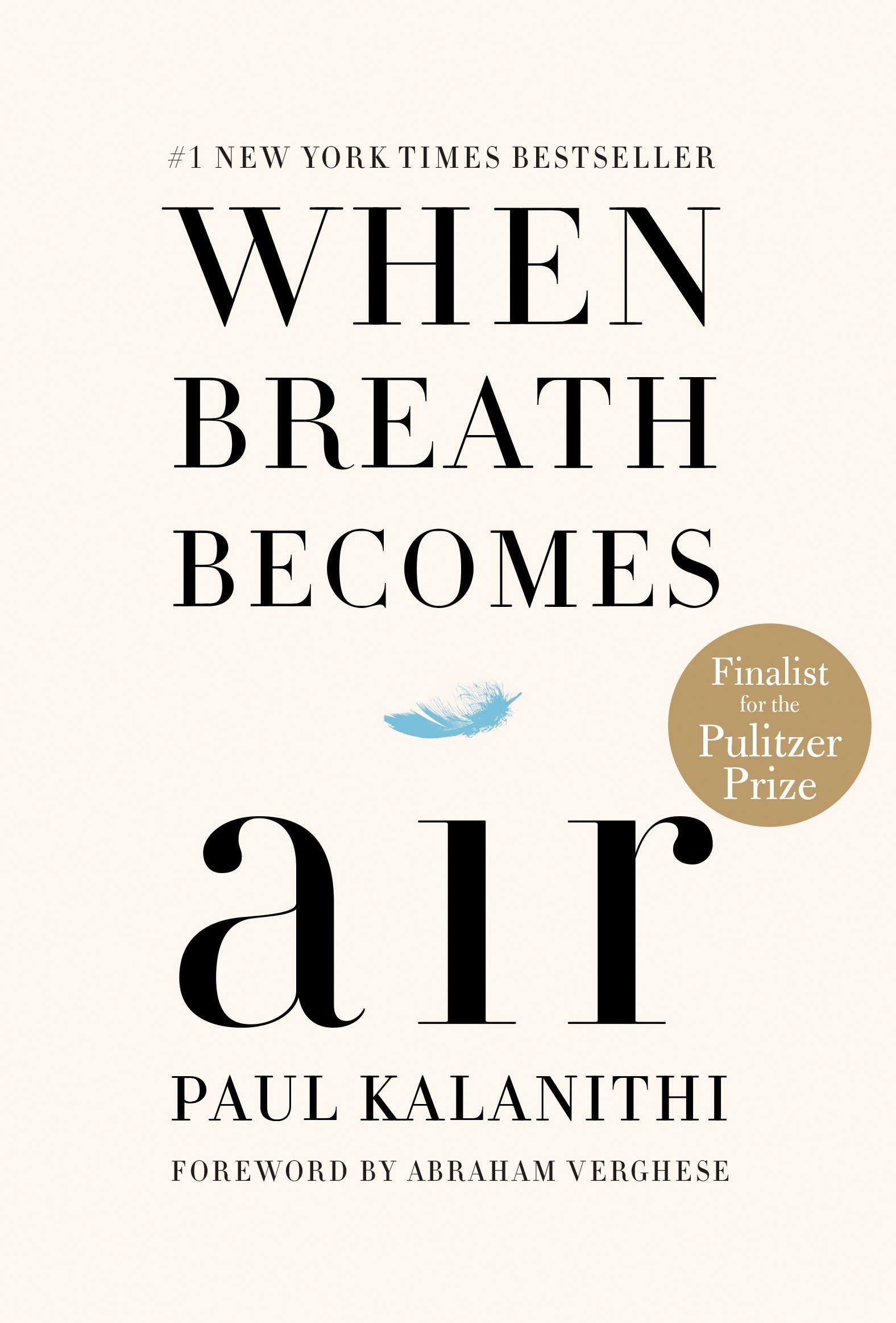
When Breath Becomes Air

By Paul Kalanithi

My thoughts: Even though as a teen, I feel like I have a lot of time left, I don't know when I might die, or what might happen, and it is very important to be able to accept whatever happens. I also saw how difficult the life of a surgeon can be, with all the stresses of life and death on the line.

    In the last two years of his life, Dr. Paul Kalanithi, a neurosurgeon, dedicated his life to documenting what he had learned about death and how we cope with it.
    He had been working to become a neurosurgeon for years and was in the culmination of his residency when the back pains first began. When he went in to get a scan, it was confirmed. He had Stage IV cancer, and one of the most deadly types, too.
    When he is diagnosed, everything he ever worked for is suddenly rearranged. Should he have a child? What about a job? And how long of a life should I plan for? Ultimately, the first round of drugs that he tries holds the cancer cells back, allowing him to opt for a child - but only after ensuring that his wife, Lucy, is okay with the probable burden of becoming a single mother. He even gets a lucrative job offer, which he turns down due to its distance from his oncologist and family.
    Unfortunately, while his oncologist is away, he suffers a relapse when a resident fails to give him the drugs that he needs, and neither of the other two solutions works for long, bringing him to the brink of death just months after his daughter is born. He grapples with the question that he has been considering since his diagnosis one last time: What kind of life is worth living? His answer, that life should have a purpose, led him to try therapy methods that would enable him to work as much as possible, and finally took him to his death, when he decided to end life support because a life like that would not be useful.
    His story of striving, trying to live, then coming to terms with death, is eloquently told, and just relatable enough that a reader can understand. "It's just tragic enough and just imaginable enough".

"The problem wasn’t really a scientific one. The fact of death is unsettling. Yet there is no other way to live."

Wednesday, April 7, 2021

Tuesdays With Morrie

By Mitch Albom

My thoughts: It is important to connect with others, especially during time like this, when people are separated for extended periods of time. This book emphasizes the importance of human connection in a society that propels us to ignore all else for the sake of getting ahead.

    Morrie Schwartz was Mitch's old professor at Brandeis University. He taught sociology like no one else, and Mitch took every class he taught. During that time, he developed a close friendship with the professor and learned to look at life in a different way. Yet after graduating, he failed on his promise to keep in touch, and only remembered him after an ABC Nightline report on how Morrie had contracted ALS and was dying. The disease was weakening his muscles bit by bit until he could no longer breathe. Already he was mostly confined to his chair.
    By the time Mitch arrives at Morrie's house, he has been meeting with many, many people coming to see him, and he could have just been another visitor. But after all these years, Mitch is still Morrie's favorite student. While he is still alive, he wants to transfer everything he has learned, so that his unique experience and outlook will not be lost. They begin meeting on Tuesdays, just like back in the university days.

Friday, December 18, 2020

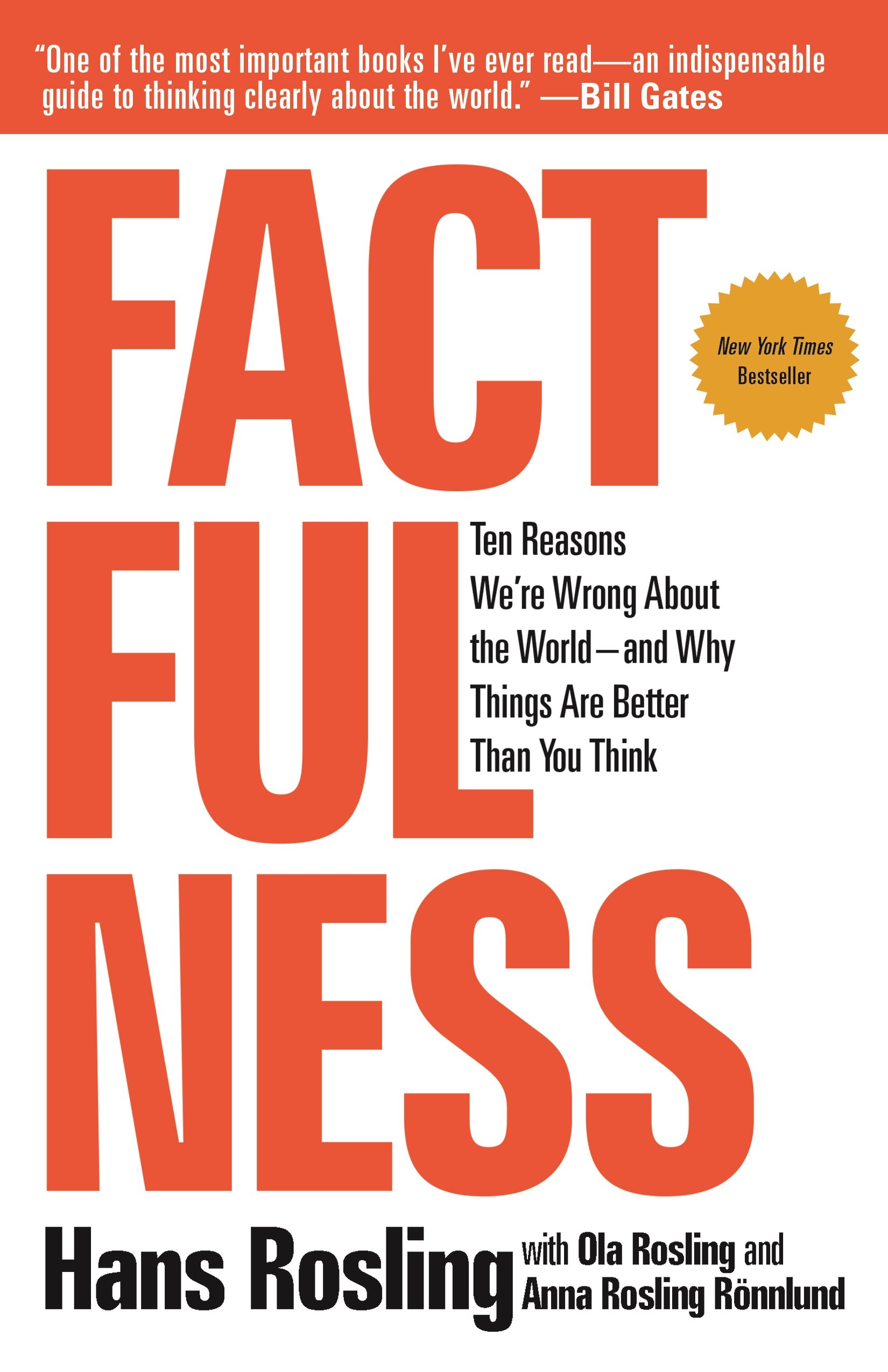
Factfulness: Ten Reasons We’re Wrong About the World—and Why Things are Better Than You Think

By Hans Rosling

    Most people today have an incorrect view of the world. They think the world is constantly getting worse. But it's not. While the world is still not perfect, it is constantly getting better. This book outlines 10 instincts that give us these misperceptions, and ways to control them.
    The first one is the gap instinct. It's most obvious in the way Westerners like to classify people into "Us" and "Them". We like to pretend that we are better than the rest of the world, but a more accurate classification is the 4 level system. The levels represent different income levels, and Level 4 is modern society while Level 1 is extreme poverty with high child mortality and low average life span. Most of the world lives in between, on levels 2 and 3. And yet we erase all of those billions of people and put a gap in between. This gap instinct can be triggered by a number of things, ranging from comparing extremes to looking at averages.
    Next is the negativity instinct, or the urge to notice the bad more than the good. Part of this is due to evolutionary history. We had to be on guard against the bad. Another reason is the media. Reporting good news will almost never result in headlines, and when we're constantly being fed negative news, it's no wonder we feel this way. Finally, even if the general trend is going up, we can feel it is heartless to say so if things are still bad. One key thing to remember is that things can be both bad and getting better at the same time. We also have a tendency to make the past look better, which can result in feeling that the present is worse.
    The third is the straight-line instinct. This happens when we look at a chart about world statistics, seeing heading up now, and assume it will continue straight up. In reality, most actual curve into an s-shape.
    The fear instinct makes us overestimate the dangers that we are most afraid of, even if they're unlikely. Even though the world is safer than ever, we are constantly bombarded with bad news about natural disasters, terrorism, and other things we often see on the news. As mentioned before, only this type of stuff is sensational, but the fact is, fewer people are being killed by natural disasters. This is because it mostly kills those in Level 1, and that sector is rapidly shrinking.
    The size instinct causes us to disproportionately inflate isolated numbers. We have to compare them to previous years or other numbers in order to get them into perspective. We can also use the 80/20 rule. 20% of something often accounts for 80% of the total.
    The generalization instinct is used when a category is used to define something. For example, entire groups can be generalized using the majority rule - even if it is just a 51% majority. Europeans also tend to generalize the continent of Africa into something hopeless. They believe only 20% of children are vaccinated when 88% are. This is a huge investment opportunity because transporting vaccines requires massive infrastructure in developing places like Africa.
    Similarly, destiny instinct causes us to determine the destinies of people based on their ethnicity or religion. However, the perspectives of people and cultures can change, and leaders of certain groups have less authority than they think. Even though Christian leaders say that contraceptives shouldn't be used, use is still high, and birthrates are low. In addition, even though changes in developing countries seem slow, they can actually build up to a substantial number over time.
    The seventh instinct is single perspective. This can happen with experts. They try to apply their knowledge of one thing to everything in life, which can cause them to miss different ways to do things. Instead of using the same hammer on every nail, get a toolbox.
    The next one is something everyone will recognize. The blame instinct. We always try to find a reason for bad things, and this leads to pointing fingers. But often, there are other explanations, and blaming stops future progress. For example, China and India are often blamed for the world's CO2 emissions because they are rising countries. But many Western, Level 4 countries produce more CO2. Similarly, people will immediately try to claim responsibility for good things.
    Lastly, the urgency instinct. We make bad decisions when we think something is urgent because we are overloaded by the pressure of having to pick fast. This is due to our evolutionary history. We evolved to quickly assess and respond to dangers in the wild. This is used by politicians, marketers, and activists alike to get us to do something. But stepping back and looking at the facts and data can often help make better decisions.


"...a new discovery can be generalized too far. In the 1960s, the success of the recovery position inspired new public health advice, against most traditional practices, to put babies to sleep on their tummies...sleeping babies, unlike unconscious soldiers, have fully functioning reflexes and turn to the side if they vomit...But on their tummies, maybe some babies are not yet strong enough to tilt their heavy heads..." (164).
"Factfulness is...recognizing when a category is being used in an explanation, and remembering that categories can be misleading" (165).
"The destiny instinct is the idea that innate characteristics determine the destinies of people, countries, religions, or cultures...they have always been this way and will never change" (167).
"I have never heard anyone in Sweden say anything close to that. Even highly educated Swedes seem completely unaware of the changes that have taken place. The improvements. The modernity. They think Iran is on the same level as Afghanistan" (174).
"Values change all the time" (176).
"Factfulness is...recognizing that many things (including people, countries, religions, and cultures) appear to be constant just because the change is happening slowly..." (184).
"Being intelligent-being good with numbers, or being well educated, or even winning a Nobel Prize-is not a shortcut to global factual knowledge. Experts are experts only within their field" (188).
"Just as Cuba is the poorest of the healthy because of its commitment to a single idea, the United States is the sickest of the rich" (198).
"Factfulness is...recognizing that a single perspective can limit your imagination, and remembering that it is better to look at problems from many angles to get a more accurate understanding and find practical solutions" (202).
"Reflecting reality is not something the media can be expected to do. You should not expect the media to provide you with a fact-based worldview any more than you would think it reasonable to use a set of holiday snaps of Berlin as your GPS system to help you navigate around the city" (212).
"Factfulness is...recognizing when a scapegoat is being used and remembering that blaming an individual often steals the focus from other possible explanations and blocks our ability to prevent similar problems in the future" (222).
"Relax. It's almost never true. It's almost never urgent, and it's almost never and either/or. You can put the book down if you like and do something else" (227).
"When you are called to action, sometimes the most useful action you can take is to improve the data" (232).
"Factfulness is...recognizing when a decision feels urgent and remembering that it rarely is" (242).

Saturday, December 5, 2020

Why We Sleep: Unlocking the Power of Sleep and Dreams

By Matthew Walker

    Humans and many other animals sleep. A lot. But why? This puzzle has confounded scientists for decades. When we sleep, we cannot forage, hunt, or reproduce, all of which were essential to our cavemen ancestors. And yet Mother Nature decided that sleep is an essential and complex part of our biology.
    It turns out that sleep has a variety of mechanisms that are essential to health, promote cognitive abilities, and improve memory. Unfortunately, many modern societies are sleep deprived without realizing it because we have gotten used to sleeping less. But that doesn't mean it's any less necessary.
    Every night, your brain starts off in NREM sleep and transitions over to REM sleep in the early hours of the morning. NREM stands for non-rapid eye movement. There are 4 phases of NREM sleep, each of which is deeper than the preceding one, and your brain slows down to a fraction of its waking activity. The thalamus blocks all input to your sensory cortex, which is why you might not wake up even with noise around you. During this period of sleep, the memories you have made during the day are selectively transferred to your long-term storage.

Sunday, October 11, 2020

Life Leverage

By Rob Moore

    In this book, Rob Moore describes how to "get more done in less time, outsource everything and create your ideal mobile lifestyle." One of the key topics that he revolves around are efficiency and merging life with work and passion with profession.
    The traditional ideals of society are working for the majority of your life and then having that little time after retirement for your pleasures. However, as Moore states, the amount of money you save now won't be enough for the future due to inflation. Instead, you will just waste your "yearning" years, working endlessly, never reaching your goals. But with the Life Leverage Philosophy, you don't have to do that.
    There are a few main points to the Philosophy. First, outsource everything and make maximum usage of your time. You need to build a core team around you - even if you think you can't afford it. If there's something you're not good at, outsource it. There are plenty of good outsourcing websites these days, or you can have your team do it as well. Then there is the concept of NeTime - No Extra Time. Make use of all the time you have. Listen to a podcast, read an educational book, all while exercising, going somewhere, etc.
    Merge your passion with your profession. You need to have a passion, and something you want to do during your lifetime, something that will attract others. This should be the foundation of your business (this is a very business-oriented book).

Saturday, July 25, 2020

The Subtle Art of Not Giving a F*ck

The Subtle Art of Not Giving a F*ck
By Mark Manson
Read in 9th grade
Note: About one hundred f-words used

We all have values on which we base out success. The key to living a good life is choosing the right values. Conventional self-improvement gurus suggest visualizing what you want to be and set your goals based on those standards. However, visualizing this potential only reinforces the fact that you don’t have it, leading a loss of direction. For example, everyone wants a big house, nice car, and lots of money. But in today’s world, when we are constantly bombarded by people who have it, this only makes us sad that we don’t. And even if one does achieve this goal, they have used up the majority of their lifetime pursuing this one thing, and are now lost. Life is full of problems. And you can’t ever solve all of them. The key is choosing the problems that you choose to care about.

Tuesday, July 14, 2020

The Tipping Point: How Little Things Can Make a Big Difference

The Tipping Point: How Little Things Can Make a Big Difference
By Malcolm Gladwell
Read in 9th grade

How do word-of-mouth epidemics work? They start, spread rapidly, start slowing, then go away, right? But how are they started? Gladwell explores the three rules for epidemics. The Law of the Few, the Stickiness Factor, and the Power of Context. The Law of the Few. All social epidemics are started by three small groups of people. Think about your social circle. If you think about where a relationship started can most be traced back to one person? That person is a Connector. They score very high on tests that determine how many people they know. Paul Revere was this kind of person, and it is this trait that helped him succeed where William Dawes failed.

Friday, June 5, 2020

Give and Take

Give and Take
By Adam Grant
Read in 9th grade

What drives success? When you envision the people at the top of your workplace, do you see them as givers who will help, or takers who have succeeded at the expense of others? Believe it or not, givers occupy the top positions (and the bottom), with takers and matchers in between. So what causes the disparity? Givers take their time to help others improve and share their knowledge. This seems like a perfect way to fall behind. However, the matchers will eventually repay this favor when a giver needs something. The most successful givers also know how to identify takers, so they won't be exploited. They do this by constantly observing behavior, because even though a taker can fake over a few conversations, the lies will eventually add up and reveal them.

Saturday, May 9, 2020

Prisoners of Geography

Prisoners of Geography
By Tim Marshall
Read in 8th Grade
Every nation on this planet has, and always will be, influenced by geography. First, Russia. It is the biggest nation in the world, albeit in an extremely cold region. Here, it faces its first geographic disadvantage. Since it is so far north, the only ocean it has access to is the Arctic. It has no warm-water ports, thereby preventing it from housing a decent navy. And, so that is why Russia has annexed Crimea, for a port. There is also a pizza-shaped piece of land in the west, the Northern European Plain. It is the only way Russia could possibly be attacked, and for all its history, Russia has been wary of it, trying to sway its border nations away from NATO. It does, however, have a strategic advantage in being Europes biggest, sometimes only, oil supplier.

Saturday, April 11, 2020

The Story of Art

The Story of Art
By E.H. Gombrich
Read in 8th Grade
Gombrich gives an extensive(really really long) history of art and architecture, from cave art through the Dark Ages to modern expressionist and abstract art. He explains what "Art" as we see it is, and why Art doesn't really exist, only artists. He takes celebrated pieces of art from each period and style and explains how it was revolutionary, why we get the reaction it invokes, and what they all imply about the way people view art.
I enjoyed reading this book because it was pretty in-depth without seeming like a list of facts or too much of an informational text.

Thursday, April 9, 2020

A Little History of the World

A Little History of the World
By E.H. Gombrich
Read in 8th Grade
Despite its title, this book is not a monotonous list of facts and dates and names. Although it is too short to accommodate every civilization and event, it goes through most major events from the Stone Age through the world wars. It provides facts in a fun way, like a journey through history. Although I had already learned about most of the events, I found it a nice, amusing review. I would highly recommend this book to students entering middle school.

Wednesday, April 8, 2020

The Two Koreas

The Two Koreas(Third Edition)
By Don Oberdorfer and Robert Carlin
Read in 7th Grade

In this day and age, there is a lot of strife about North Korea, South Korea, nukes, and on and on and on. But how did there come to be two Koreas? This book provides an objective explanation of the Korean war, how the Korean Peninsula came to be divided, and how the two nations are still working toward reunification.
I highly recommend this book. It taught me a lot about why reunification is so hard and why the two halves are so different.

Ahn Junggeun's "A Treatise on Peace in the East"

안중근의 동양평화론 - Ahn Junggeun's "A Treatise on Peace in the East"
By Ahn Junggeun
Read in 7th Grade
This treatise was written by Ahn shortly before his death sentence for killing the unjust Japanese ruler of Korea, Ito Hirobumi. He explains how Japan came to occupy Korea in the first place, all the atrocities they have committed since, and his final rationale for killing Hirobumi. Today, he is a national hero as a freedom fighter, having given his own life in the process.

50 Physics Ideas You Really Need To Know

50 Physics Ideas You Really Need To Know
By Joanne Baker
Read in 8th Grade
In this book, Baker, well, obviously explains 50 physics concepts in a quick and clear manner. My favorite was black holes(Idea #42). Scientists believe that they are either holes or massive dips in the fabric of space-time. They are created by large masses with high gravitational pull, so strong that not even light can escape once it passes what is called the event horizon.

Tuesday, April 7, 2020

Thinking, Fast and Slow

Thinking, Fast and Slow
By Daniel Kahneman
Read in 7th Grade
In this book, Kahneman explains our two system thought processes - fast and slow. The fast one is used more often and is more instinctive. But it isn't always more accurate. It might be for simple things like math equations, but for choices, our fast system might be misled. That's where our logical, slow reasoning comes in. This book taught me to think things over more carefully, instead of just doing things impulsively.

Homo Deus: A Brief History of Tomorrow

Homo Deus: A Brief History of Tomorrow
By Yuval Noah Harari
Read in 7th Grade
In this sequel to Sapiens, Harari explores the possibilities of the future. In recent centuries, problems that once plagued the daily lives of our ancestors - famine, disease, drought, etc. - have been reined in. So what will replace those at the top of our agenda? Immortality? Superhumans? Perhaps even editing humans themselves? The elite of today's society has immense power, and will that power be wielded according to our ideals of freedom and liberty, or at the expense of the powerless?