Showing posts with label Other. Show all posts

Saturday, October 2, 2021

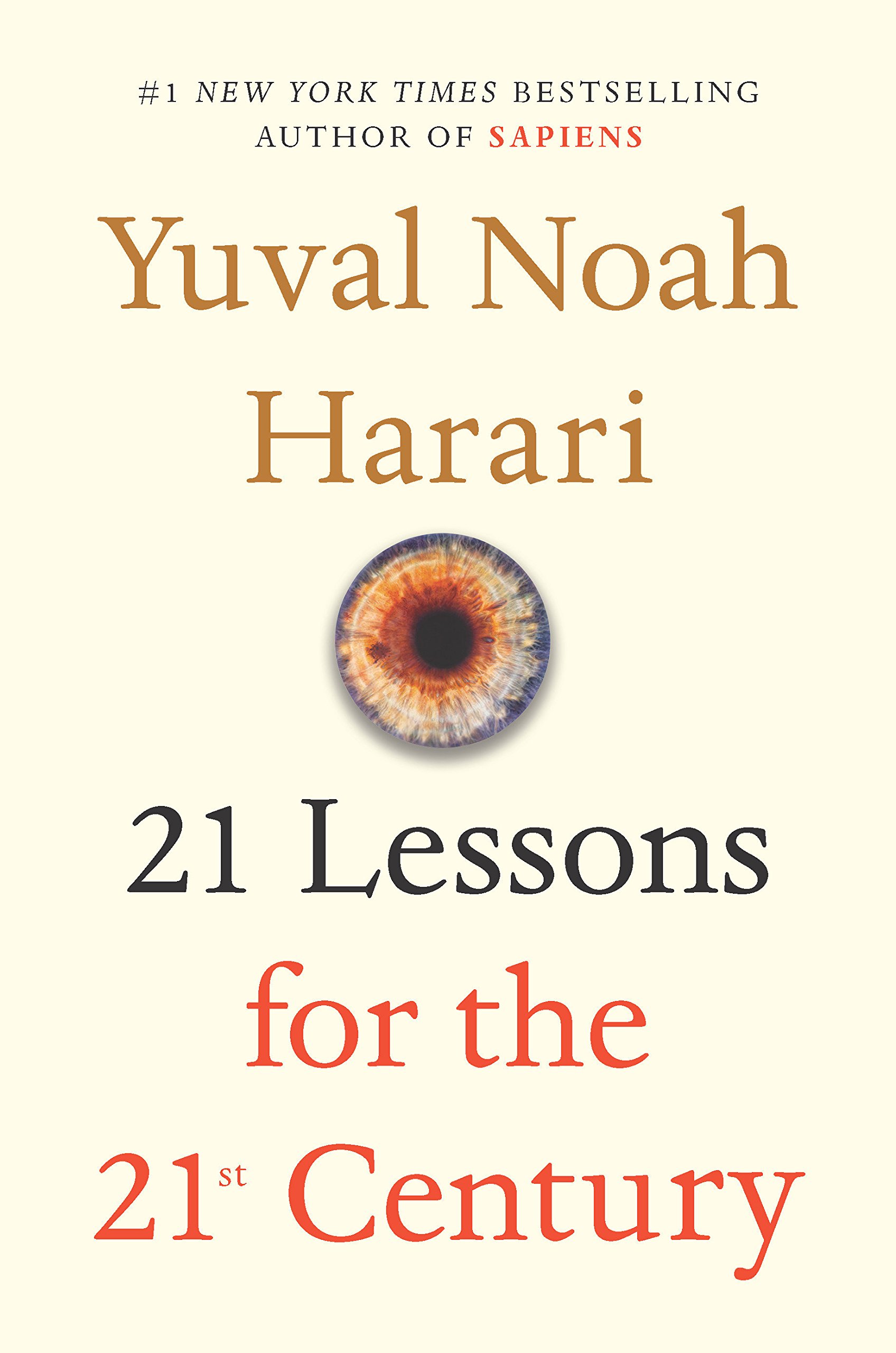
21 Lessons for the 21st Century

By Yuval Noah Harari

    Humans have irreversibly changed the world. This book explores the ways in which we have done so, in ways that many may not even realize, and explains the impacts of these changes on the future.
    The first few chapters discuss how AI and computers have progressed. They are slowly taking over jobs that normally would have required humans, and though they may never gain full "consciousness", which is something that even people don't really understand, they will have significant impacts on humans and the workplace. Because of these rapid changes, the job market will also fluctuate rapidly, which means that the traditional model of education may not work anymore. It might no longer make sense to learn basic skills then train your entire life for one occupation. Instead, dynamic learning, constant retraining for new jobs, might be necessary. Connecting to the idea of AI, the future might also be shaped by computers. Algorithms are already getting better than even humans at detecting user interest - perhaps in the future, Google or Facebook will know you better than you do yourself.
    Part two discusses politics and religion. Nationalism is a big thing these days, and while humans always tend to gather into groups, ultra-nationalism is dangerous. It is what causes war and division, but the world needs to collaborate to succeed.
    Part three is about war and peace (no not the book). It first delves into terrorism, and how it has changed our world. In the past, terrorists would have had no impacts at all. But we have gotten so used to being perfectly safe that even the slightest tremors make us afraid, make us overreact, which is exactly what the terrorists wanted in the first place. As for war, in today's world, war for big countries means mutually assured destruction. But one should never underestimate the stupidity of humankind, when one misstep could cause catastrophe. And that is why a little humility would be good for everyone.
    The final parts discuss how, in the digital age, humanity as a whole has gained massive knowledge but individuals know less and less because so much easy information is at our fingertips. And this is why fake news is so dangerous.
    Many think that life is a story that you are the center of. But it's not. So just take a step back and reflect, observe, and meditate.

Note: I've read so many books by this person and I'm a little bored...

Thursday, August 12, 2021

The Tyranny of Merit: What's Become of the Common Good

By Michael J. Sandel

The meritocratic model is something that is all around us, even in my own pursuit to vindicate myself in the mad race for college, but something that I never could put a name to. This book helped me understand how this came about and its effects on society.

“The Tyranny of Merit” is like a brilliant response to that misguided but well-meaning math teacher from the viewpoint, as it were, of a kid in some back-row seat of any classroom in a Rust Belt, prairie town or inner-city school in America.

As Hochschild puts so well, Sandel points out the problem with a philosophy ingrained into American society. Every teacher talks about grades and degrees, but people striving toward this only widens the societal divide.

    Today's social model is based on the philosophy of meritocracy - where the successful deserve their success and the poor deserve their poverty. It is based on the idea that you deserve what you get, and it is what Sandel claims were at the heart of Donald Trump's election in 2016 and the populist uprisings around the world.
    The American Dream, the one of rising, has become increasingly less an "American" dream. Today, rich parents can afford to help so much, and poor parents so little, that it's become virtually impossible to move between social classes. But parents still tell their children that if they try their best they will succeed - and when rich children succeed, they look down upon the unsuccessful, and even the poor believe that they deserve their place in life. It inspires hubris in place of humility from a position they were given by luck.
    And this is exactly what Trump took advantage of. The oppressed working class, who lack degrees and struggle to put food on the table, was tired of the Democrat's talk of rising and meritocracy, which politicians had relied on for decades. He utilized this discontent and used it in his favor. Sandel's solution lies in acknowledging the oppressed and empathizing with their pain.
    The true tyranny of globalization and the meritocracy that it brought with it is that it left too many behind in a place where everyone, even they themselves, looked down on them.
One reason, perhaps, is that many of us need what he does so well: help us grapple with the unexpected and uncomfortable questions that history delivers us.

 All of these create controversies that are so important to face in our society but are hard to think about alone. Books like these create good starting points for talking about them.

So you who are highly educated, Sandel concludes, should understand that you’re contributing to a resentment fueling the toxic politics you deplore. Respect the vast diversity of talents and contributions others make to this nation. Empathize with the undeserved shame of the less educated. Eat a little humble pie.

https://www.nytimes.com/2020/09/15/books/review/the-tyranny-of-merit-michael-j-sandel.html

Tuesday, July 27, 2021

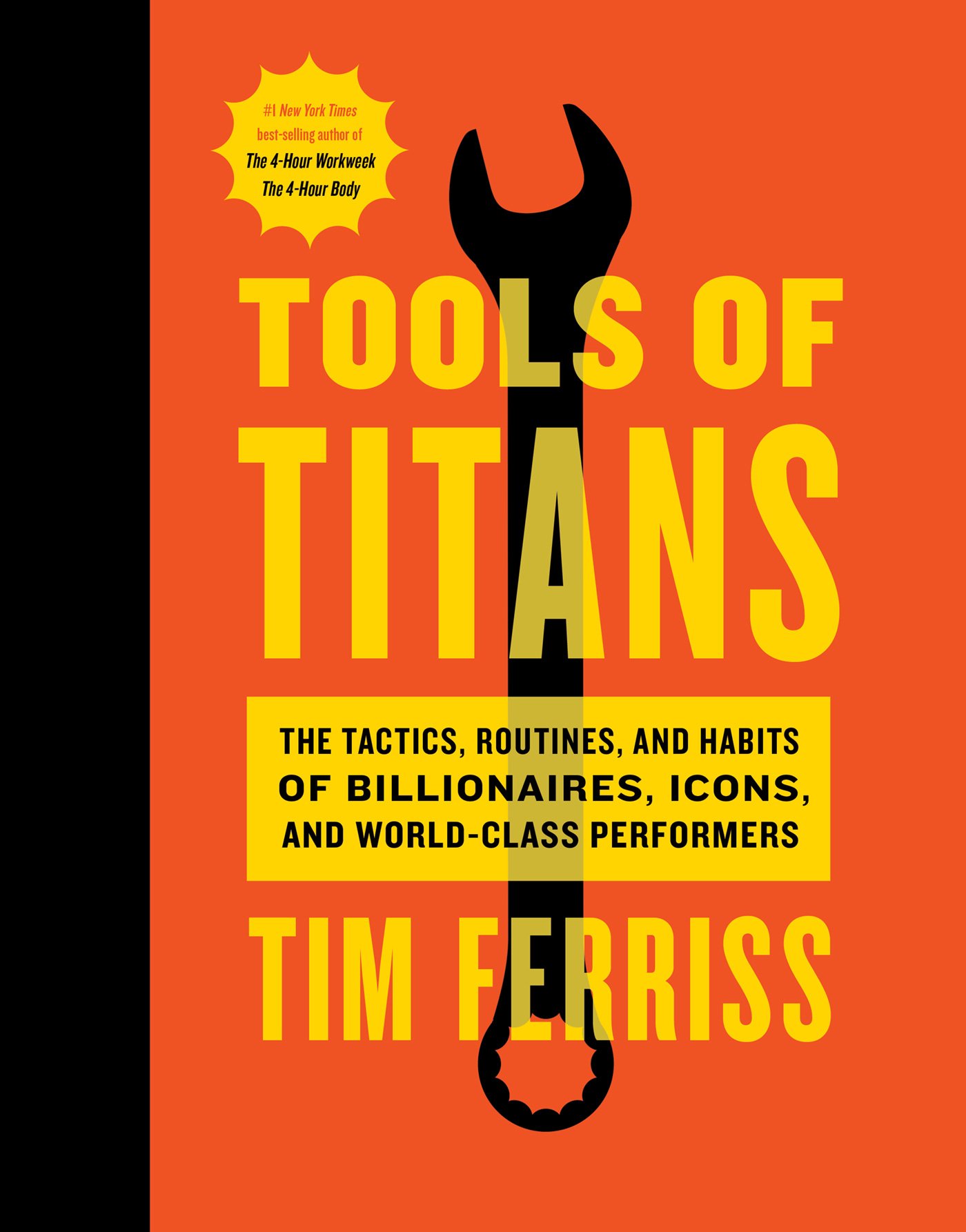
Tools of Titans: The Tactics, Routines, and Habits of Billionaires, Icons, and World-Class Performers

By Tim Ferriss

    Warning: Very long
    Tim Ferriss, the host of a show named after him, has interviewed more than 100 famous people on his show to learn what they do and how they achieved world-class performance. He has condensed hundreds of thousands of hours of interviews down to no less than 736 pages in hopes of helping others with tips from "titans".
    In the introduction, Ferriss explains that all these people have certain characteristics in common. They ask the big questions and have uncommon habits. They believe failure is unsustainable and maximize strengths to compensate for weaknesses.
    Part 1: Healthy
    Amelia Boone: Boone is one of the world's most decorated obstacle course racers. She has amassed over 30 victories and won a championship 8 weeks after knee surgery. In addition, she is a full-time attorney and does some ultra running. Some tactics she employs are hydrolyzed gelatin with beetroot powder, a rumble roller (foam roller with protruding sections), dry needling, and saunas.
    Rhonda Perciavalle Patrick, Ph.D.: She has done research on aging, cancer, mitochondrial metabolism, and apoptosis. She recently published a paper on vitamin D regulation of serotonin in the brain. In her interview, Dr. Partick talked about stem cells, which can be stored from baby teeth and wisdom teeth for later in life. In addition, hyperthermic conditioning, or calculated heat exposure can increase growth hormones and improve endurance.
    Christopher Sommer: He is a former U.S. National Team gymnastics coach and founder of GymnasticBodies. His 40 years of observing top athletes allowed him to create the Gymnastics Strenght Training (GST). Here are some of the things he has learned. You should always work on the deficiencies you are most embarrassed by because it is the only way they will get better. Mobility, or strength through an entire range of motion, is better than flexibility. Consistency is better than sporadic intense training. The book also includes a variety of exercises, including the QL Walk, Ring Turn Out, Hinge Rows, and Ag Walk (Google it).
    Dominic D'Agostino: He is an associate professor in the Department of Molecular Pharmacology and Physiology at the University of South Florida Morsani College of Medicine. His specialty is metabolic therapies, including ketone, which is what is described in this chapter. A ketogenic diet is a high-fat diet that mimics fasting, causing your body to use ketones for energy instead of glucose. This induces ketosis, which can be measured at less than 0.5 mmol of BHB in your blood. Ketosis can help you lose fat, prevent cancer, use oxygen better, and increase strength.
    Patrick Arnold: Arnold is considered the "father of prohormones". He created the steroid THG and several others. Today, he is innovating ketone supplementation. Some legal performance enhancers that he finds useful are ursolic acid spray, which helps with body recomposition, exogenous ketone drinks for workouts, and metformin for antiaging.
    Joe De Sena: He is the co-founder of the Death Race, Spartan Race, and several others. He has competed in a variety of grueling marathons and races and is also a strategic businessman. He started participating in insane competition events while working on Wall Street to get away from the hectic life there and created the Death Race in order to break people by making them do things they had never done before.
    Wim "The Iceman" Hof: He is a Dutch world record holder with more than 20 total. His world records are related to extreme temperatures, hence the nickname "Iceman". Cold exposure can, in fact, be used to improve immune function, increase fat loss, and elevate mood. 
    Jason Nemer: Nemer is the creator of AcroYoga, which blends yoga, Thai massage, and acrobatics. AcroYoga requires two people, a base and a flyer, and they do what it sounds like. The base is usually more experienced and supports the flier.
    Dr. Peter Attia: He is a former ultra-endurance athlete, and has conducted research on immune-based therapies for cancer at the National Cancer Institute. He often enters ketosis like the author, and he utilizes glute medius workouts to strengthen his lateral stability. It is surprisingly difficult, and he calls it the reverse thigh master. 5 blood tests he generally recommends are the APOE genotype, LDL particle number via NMR, the Lp(a) via NMR, OGTT, and IFG-1.
    Justin Mager, MD: Dr. Mager has helped the author with many experiments, and he believes that people should look and care about themselves more often. With blood tests, they are just a snapshot of one moment, which does not reflect you as a person. Also, context matters when are "optimizing", so you have to understand what a test is actually supposed to show you.
    Charles Poliquin: He is one of the best-known strength coaches in the world. He has trained gold medalists and all-stars in a variety of sports. One important thing he has learned is that your carbs need to be earned. To deserve carbs after a workout, you need to have sub-10% body fat or vertical separation in your abs. Another thing he has found is that to increase testosterone, cortisol needs to go down because they both require the same raw materials. When your body is stressed, it produces more cortisol, reducing testosterone. 
    Pavel Tsatsouline: He is chairman of STrongFirst, Inc., a former physical training instructor for the Soviet special forces, and currently a subject matter expert to a variety of U.S. military branches. He usually has a simple breakfast of only coffee. His specialty is kettlebell workouts, and two good warmups are halos and cossack squats. A full exercise might include a one-arm swing, Turkish get-up, and a goblet squat.
    Laird Hamilton, Gabby Reece, and Brian MacKenzie: Hamilton is regarded as one of the best surfers of all time. Reece is a successful volleyball player, and MacKenzie is the founder of CrossFit Endurance. He challenges distance running and favors a more minimalist approach. The three of them also hold workouts that involve getting in the pool with dumbbells, then going from an ice bath to a sauna. They say you should learn to be assertive and go first.
    James Fadiman: He has been involved with psychedelic research since the 1960s. He is often referred to as America's most respected authority on psychedelics. Please note that many psychedelics are considered illegal, and also have toxins if taken in high doses. Psychedelics essentially generate expressions of the psyche on levels not normally observable. They have been used by indigenous cultures for years to treat depression, remove anxiety, end anxiety, and more. Many psychedelics resemble a molecule called DMT and act as the naturally occurring serotonin. In any case, all of them should be administered in the presence of someone who can guide you and be used in safe doses.
    Martin Polanco and Dan Engle: Polanco is the founder of Crossroads Treatment Center, which specializes in conquering powerful addictions. Engle is board-certified in psychiatry and neurology. He has researched traumatic brain injury and plant medicines. One type of psychedelic is ayahuasca. It is one of the "safer" ones, but spiritually, it is the equivalent of a brain surgeon. Afterward, you will be very open, and done properly, it can be a corrective experience. Ibogaine is a very strong psychedelic that has been used in Africa to treat addictions. It can be deadly for some people, and is definitely too strong for people who just want to explore the psychedelic experience.
    Kelly Starrett: He is a performance coach who has trained CrossFit athletes and various world-class athletes. He likes to drink as little water as possible, usually with a little bit of salt, because while dehydration usually is not a risk, low sodium concentrations in the blood are an issue. A good test for mobility is the campfire squat test, and if you can't squat all the way down, you are missing full hip and ankle motion. The overhead squat is a good solution. He is a proponent of good sleep habits.
    Paul Levesque: He is popularly known as Triple H, a 14-time world champion in WWE. His tip for avoiding jet lag is to do a quick workout as soon as you can after you get off the plane, because it helps reset your mind. In terms of goal setting, if you really want to achieve something, it should be a goal, not a dream.
    Jane McGonigal: McGonigal is a research affiliate at the Institute for the Future, with over 10 million views on her TED talks. She has written on how games make us better, and even finds that Tetris has therapeutic effects.
    Dr. Adam Gazzaley: He is the director of the Gazzaley Lab at UCSF, and the co-founder of Akili Interactive, a company developing therapeutic video games, and is also a co-founder and chief science advisor of Akili Interactive, a company that develops therapeutic video games. He acts as a scientific advisor to more than a dozen technology companies. When he hires people what he looks for is not a specific thing but rather, what it is that excites them.
    Chris Sacca: Sacca is an early stage investor in dozens of companies including Twitter, Uber, Instagram, and more. His strategy in investing is going on offense. By this he means taking the time to focus and build what he really wants, rather than going from coffee to coffee, day by day. To do this, he bought a cabin near Tahoe. He also recommends attending as many high level meetings in your workplace as possible. It is a good way to start getting to know things and people higher up.
    
    There are many more people who are included in this book (honestly I couldn't write them all out), but it all revolves around a few central topic that Ferriss end the book on. Always finding something positive in the situation, dealing with your fears, weaknesses, and biggest tasks first, and living a healthy lifestyle. It all contributes to being less stressed and having more freedom in your life to pursue what you want.
Tuesday, June 8, 2021

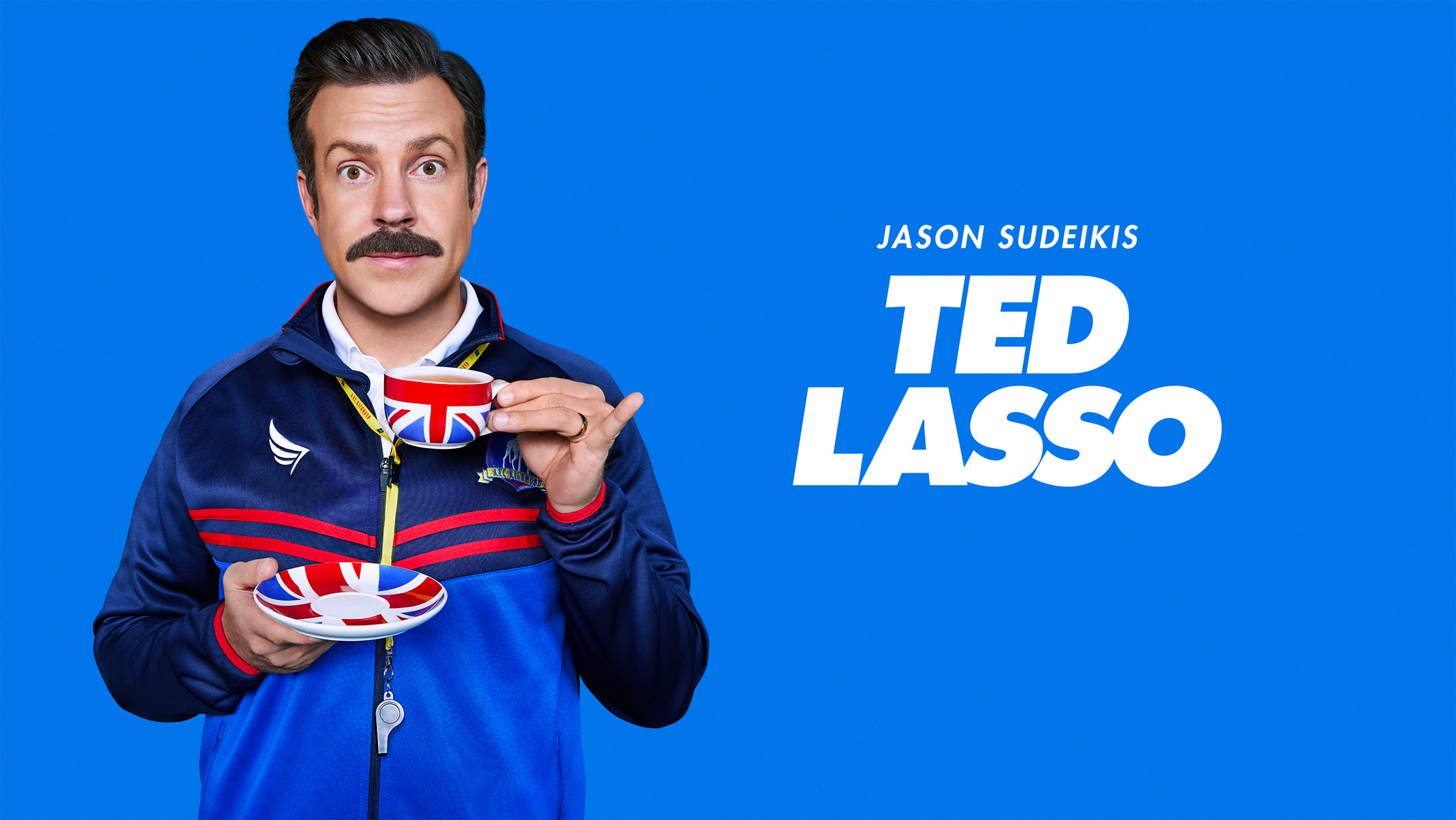
Ted Lasso Season 1


Episode 1
Ted Lasso, American football coach, is hired to coach Premier League team AFC Richmond by its new owner, the recently divorced Rebecca Welton. When he arrives at his first press conference, it's quite clear that he has no knowledge of football (soccer), and the loyal fanbase is outraged. Granted, the team was mediocre with its previous manager, but no one expects any improvement out of Lasso, except, it seems, Welton herself. However, it is revealed in a side conversation that she actually wants to destroy Richmond. Her cheating husband was the previous owner, and the team was his pride and joy. Lasso's first meeting with his players does not go well. Most of them hate him, and Roy Kent, the veteran on the team, even calls him some bad names. When he gets home, Ted calls home, and it is revealed that he is going through some relationship issues with his wife.

Episode 2
The next day, Ted brings Rebecca some biscuits in the morning to try to talk, which she refuses to do. But she does love the biscuits and tries to figure out where he got them. Rebecca doesn't like how amiable Ted is when she is trying to bring him down. She asks Higgins who the most influential person in the locker room is when she notices Ted talking to Keeley, Jamie's girlfriend. Ted then goes out to practice, where he learns about all the players. It seems Jamie Tartt is the new talent, while Roy is the aging senior. Sam Obisanya, a player from Kenya, seems to be struggling, so he decides to throw a birthday party for him the next day before the match against Crystal Palace. He also creates a new suggestion box for the locker room, but it only gets filled up with insults. Seeing that Jamie is very negative and rude, he asks Rebecca what might motivate him, and she sends him to Keeley. While Keeley and Ted are talking, Higgins, undercover, takes pictures that make them look intimate. The party does make Sam feel and play much better, but it hardly matters as Richmond is blown out by Crystal Palace. After the match, Trent Crimm, an influential reporter, talks to Jamie, who tells him that it's like a joke in the locker room, with cake and a party.

Episode 3
Rebecca is upset that the story on Keeley and Ted isn't in the morning tabloid, and demands to have it published as Ted walks in with more biscuits. When he comes down to the locker room, Nate, the kitman, tells him about a new play that he thought of and Ted agrees to try it. As he walks out to the pitch, Keeley intercepts him, telling him that a story about them was going to be published, but her friend managed to stop it for one day. They both hurry down to Rebecca's office to see if it can be stopped (even though Rebecca was the one who wanted it published in the first place). She tells them that she can speak to the owner of the Sun. Nate's new play works, but it uses Jamie as a decoy, and he is not happy. He and his friends start bullying him more than usual, and Roy is fed up. He tries to get Ted to do something, but Ted intentionally angers him by refusing, hoping to get Roy to take leadership, which he does.
It is revealed later that in return for not publishing the picture of him and Keeley, Ted has to do a profiling interview with Trent Crimm from the Independent. The next day, he comes to watch practice and learns that the new play was designed by Nate, the kitman, and is not impressed. After training, Ted takes Trent to a local school that recently won a junior championship, and Roy plays football with them before going home. For dinner, Trent and Ted get Indian food, which is simply too spicy for both of them. Before he leaves, Trent asks why Ted is coaching a sport he knows nothing about. He replies that just like Trent loves writing, he loves coaching. He reiterates that for him, sports isn't about winning or losing. It's about helping his players be the best they can be in all aspects of life. Crimm's final article does not paint a rosy picture. He is certain Richmond will be relegated, but somehow, he won't gloat when Lasso is fired. Something about the man makes him root for him.

Episode 5
Ted drops into Rebecca's office like usual but brings a heavy topic today. He tells her that he is having marital problems that were alluded to earlier in the series. He says his wife is sick of his constant optimism and that he came to England to give her space. Keeley, meanwhile, shows up at Jamie's house to find that he is already sleeping with someone else, completing their breakup. She does still agree to show up to his promo event later that day, where Rebecca offers her a publicity job. Ted's wife and son show up for a visit. You can tell that something is odd between him and Michelle (his wife), but they have a good time nonetheless. After the promo, Jamie is already trying to get Keeley back, but she rebuffs him. Roy tells her she made a good decision, upon which she asks if she needs to ask him before every decision. It looks like they are flirting, but it is hard to be sure. The next day, before the match, Ted finds Michelle crying and asks what is wrong. She says she no longer feels like the way she did at the beginning of their marriage, but she will keep trying. During the match, Jamie continues to display his self-centered ideas. He scores twice and begins pointing at himself, yelling "Me!" Ted is fed up and decides to bench him. In the second half, which just a minute to go, Sam scores with an assist from Roy, and Richmond wins the game. The crowd continues to call him a w*nker, but in a more admiring way. At the end of the episode, Ted talks to Michelle before she and their son return to the states. He tells her that he doesn't regret any part of their marriage, but now it is time to let her go. Like that, they agree to end their marriage.

Episode 6
Ted rushes into the office late, distraught about his divorce and unable to calm down. He also finds out that Manchester City, which is loaning Jamie to Richmond, is threatening to terminate the loan if he sits on the bench. In this state, he learns that Jaime won't be practicing because he is hurt, and when Ted talks to him, he responds in an offhanded manner. The normally calm coach blows up, angry that Jaime doesn't care about the team, and assigns him to menial tasks like setting up cones. At practice, a new player from Mexico, Dani Rojas, shows up to play in Jaime's spot, and he is good. So good, in fact, that Jaime is afraid that his spot might get taken. Unfortunately, Dani gets hurt later that day while he is practicing, and everyone realizes that he was in the treatment room before practice. Ted learns that the treatment room is considered cursed and gathers everyone at a pub. The landlady explains that in 1914, 400 young men were recruited for war in the treatment room under the premise of a soccer tryout. To break the curse, Ted tells everyone to bring something important for a sacrifice on the pitch at midnight. At midnight, players take turns discarding something important, with even Rebecca coming down to put a newspaper calling her "Old Rebecca" in the trash. In the end, Jamie shows up with his cleats, saying that his mom got him into football, but his dad called him soft whenever he didn't score. It explains his tough attitude, and the whole process brings the team together. After the ceremony, they find that Dani is indeed healthy again. Higgins and Ted reveal to Rebecca that he was actually healed hours ago, but they waited until after the ceremony to let the team know in order to have the bonding experience. Rebecca storms off, knowing that the team is a more coherent unit now. The next morning, Ted learns that Man. City recalled Jamie, and he storms into Rebecca's office, furious, and gives her the biscuits before storming out.

Episode 7
In the intro, Ted's wife asks him about the divorce papers her lawyer sent him. He promises to sign and send it back as soon as he can. Today is also Rebecca's first anniversary as a divorceé, and she and Keeley have made plans to go with the team to Liverpool to blow off some steam. In the locker room, Ted tries to get the team excited. He learns that they are dejected because Richmond hasn't beaten Everton in 60 years. At the hotel, Rebecca starts to get emotional about being alone, and Keeley comforts her. They also find out that Keeley is in an ad reel that pops up every time the TV is turned on. They make plans to get some champagne and then go out for dinner. Rebecca's best friend Flo Collins (Sassy), whom she hasn't seen in six months, comes in and turns out the be quite the personality, just like Keeley. When they go out, she tries to get her to hook up with a waiter. She also meets Ted in the lobby and the two take a liking for each other. In his room, Ted looks over the divorce papers but hesitates when Nate knocks on the door and delivers his thoughts on the team, which Ted had asked for earlier. Ted, on edge about his divorce, snaps at him. The next day, he apologizes to Nate and asks him to deliver the pregame speech, reading what he had written the night before. The team encourages him when he shrinks, and promptly gets roasted about their faults - all until Roy. Roy steps up and dares Nate to say something to his face. Nate tells him that he should let his anger go, because that is how he plays best, prompting him to rip up a bench and fire up the team. Richmond beat Everton for the first time in 60 years with the only goal coming from Roy. They all go out to celebrate by singing karaoke, and it turns out Rebecca is an amazing singer (Sassy signed her up for "Let It Go"). In the middle, Ted has a panic attack because of his divorce. Rebecca comes out and calms him down, after which he goes back to the hotel and finally signs the papers. Meanwhile, Sassy takes the team to a bar, while Roy and Keeley walk back to the hotel together. They start kissing until Roy suddenly stops and walks away, confusing her. At the end of the episode, Sassy randomly walks into Ted's room, making him confused (how did she find his room?!).

Episode 8

Episode 9

Episode 10
It is now almost time for Richmond to play its final game of the season against Manchester City, the Premier League reigning champions. Ted visits Rebecca before training and tells her that it is alright if she fires him, that he knows he isn't a football coach. She tells him that instead of despairing, he should cause chaos. Ted realizes that this is a brilliant idea and gathers his team together. He has them talk about all the trick plays (set pieces) that they have ever used and gets everyone to learn them. Jamie is currently in town, and he sees an interview that Ted gave where he talks about how great Jamie is and how he wishes the best for him. He thinks Ted is trying to play mind games on him, but everyone he talks to tells him that Ted genuinely cares. The fated day finally arrives, and everyone but Ted is pessimistic. They know how good Manchester City is (though Ted is mostly clueless), and Ted asks why they have no hope. It is then that he learns of the saying, "it's the hope that kills you". It is repeated throughout his day, and in the locker room, everyone is acting as though they have lost already. Ted tells them to get their heads up, that he believes that it is the lack of hope that kills you. He finishes by asking each and every player whether they believe in miracles. The match begins, and Richmond actually finishes 0-0 in the first half. In the second half, Man City gets a penalty kick, which they score on. Minutes later, Jamie comes in, about to score and essentially seal Richmond's coffin when Roy tackles him, suffering a career-ending injury in the process. All the fans present cheer for him as he leaves the pitch, and Keeley comes and meets him in the locker room. Back in the match, there are just minutes remaining in additional time when Richmond decides to run the "Lasso Special". It soon becomes clear that it is supposed to resemble American Football and completely confuse the opponent. It works brilliantly, allowing Sam and Dani to break away and score. But in all the commotion, everyone forgets the game is not over. In the end, it was the hope that killed them, because Jamie started the game, tore down the pitch, made the final pass to his teammate, who made the game-winning goal. After the game, Ted is going to the locker room when he sees Jamie in a room with his father, who is berating Jamie for making the pass and not showing off by making the goal himself. Ted tells his team that even though they lost, they gave everything they had on the pitch, and that they will fight back next season. He also sends Jamie a note commending him for making that pass.

Saturday, May 1, 2021

The Cuckoo's Egg

By Clifford Stoll

My thoughts: Many parts of this book are still very relevant today. Computers often seem secure, and we are frequently assured by manufacturers that they are, but small things, like guest accounts, easy to guess passwords, and other things can easily bring down a system. Clearly, cybersecurity still doesn't have very many safety nets; the field is evolving faster than the law, and it is the end user's burden to keep their systems secure.

    Back in the early days of electronics and the Internet, there weren't very many safety nets in the event of a hacking. In fact, the very word hacker originally meant "someone good and creative on a computer". So when Clifford Stoll, astronomer turned computer scientist noticed a 75 cent imbalance in the supercomputer accounts at Lawrence Berkeley Labs, he starting digging into it himself. He realized it wasn't just a simple accounting error by the software; no, a hacker was stealing supercomputer time and had inadvertently left behind a trail. For the next year, Stoll would follow this hacker through phone lines, computer bills, and all the way to Germany before he got to the bottom of the case.

    LBL labs isn't classified, but contains lots of information about various scientific topics. The hacker, though, is more interested in accessing the military's MILNET from LBL. From there, he worms his way through military computers, guessing obvious passwords like "guest" and gaining access to unprotected computers. He thinks nobody is noticing, but Clifford is silently tracking him, reporting to various government agencies. Unfortunately, there is no centralized system, and everyone tells him, we want information, but enforcement isn't in our jurisdicttion. When the hacker finally gets to stealing important information, the FBI steps in, and they are able to trace the phone lines from Oakland Tymnet, across the country, then the ocean, all the way to Hannover, Germany.

Wednesday, December 23, 2020

A Taxi Driver

    Based on a true story, this film captures the events of the 1980 Gwangju Uprising. It is centered around German journalist Jürgen Hinzpeter and his taxi driver, Kim Sa-bok (real identity unknown, he told Hinzpeter his name was Kim Sa-bok).

    In 1980, widowed father Kim Man-seob (fictional name) returns home after a day driving around Seoul in his taxi. On the radio, he hears about protests by university students in Gwanju. He, like the majority of the populace, is being fed censored news that says more damage is being done to the military "protecting" the city than the protestors. He believes that the students should just study instead of doing all of this.
    The next day, he overhears a corporate taxi driver talking about a foreigner who is paying 100,000 won for a trip to Gwangju and back before curfew. Man-seob slips away to steal the passenger, who is Jürgen Hinzpeter, a reporter from Germany who wants to know more about the uprisings in Gwangju. Because foreign media was restricted in Korea at the time by the military dictatorship of Chun doo-hwan, he pretends to be a missionary to get in.
    Because the government has declared martial law, all the roads into and out of Gwangju are blocked, and the taxi driver tries to get Hinzpeter to go back to Seoul. He refuses to pay 100,000 unless he is taken to Gwangju, so they lie that he is a businessman to get in. Inside, all the roads are empty and littered with posters promoting democracy. Hinzpeter starts recording, and Man-seob repeats that the students shouldn't do this, Korea is a great place to live (in part due to government propaganda). They meet a truck full of students, and it is revealed that Hinzpeter is a reporter for ARD in Germany. The boys let him onto their truck, and Man-seob attempts to leave, afraid his taxi will be damaged in protests. However, he sees an old woman begging him to take her to the hospital; her youngest son has disappeared, and she fears that the police have beat him up. At the hospital, he runs into Hinzpeter, who scolds him and refuses to pay until the trip is over.
    Hinzpeter and Man-seob take Jae-sik, one of the students, as a translator, and go to the site of the protests. The military fires tear gas into crowds of protestors, and mayhem breaks loose. While filming, Hinzpeter is spotted and they are nearly arrested. The taxi breaks down and is taken in for overnight repair by one of the local taxi drivers. Man-seob realizes that his young daughter will be at home alone and gets into a brief scuffle with Hinzpeter.
    That night, the local TV station is blown up. When they go to record footage, a plainclothed security guard spots them, and they run into an abandoned building. Hinzpeter drops his film, and when Jae-sik goes to get it, he runs into a guard and gets killed while trying to buy time for Hinzpeter and Man-seob. He pleads with Hinzpeter to get the footage aired to the world before taking several blows. Man-seob is caught in a dead-end street, and the guard accuses him of being a Communist. Luckily, Hinzpeter is able to save him. In the morning, a taxi driver gives him a Gwangju license plate because the police are looking for a taxi from Seoul. He also gets a map of hidden passages out of Gwangju and gets away, stopping briefly at a bus station. There, he hears on the radio that protestors are causing chaos, and feeling guilty for leaving, he returns to Gwangju.
    At the hospital, he finds Hinzpeter and the other taxi driver slumped next to Jae-sik's body. Man-seob reminds Hinzpeter of his promises to show the world what is happening and gets him to keep filming. Suddenly, more taxi drivers rush in, screaming that the military will kill them all. They are using real bullets this time, killing people on a closed-off street, and even those trying to get the wounded. Man-seob and the other taxi drivers create a blockade, helping the wounded get away. Afterward, they attempt to leave, but find even the hidden exits blocked by the military. Man-seob lies that Hinzpeter is a businessman trying to get away, and during a search of the taxi, a soldier finds his Seoul license plates in the trunk. However, he says nothing, letting them leave. The moment they leave, the head of national security gives an order to stop all foreigners, and several jeeps start chasing and shooting at the taxi. However, the local drivers intervene from a side road, sacrificing themselves to help Hinzpeter and Man-seob escape.
    At the airport in Seoul, Hinzpeter asks for Man-seob's name and phone number, intending to return and pay him. After deliberation, Man-seob writes "Kim Sa-bok" and the phone number of a cigarette company. Hinzpeter thanks him for the ride, and leaves the terminal. He is later shown in Germany, airing the footage, while Man-seob returns home to his waiting daughter. When Hinzpeter returns and tries to find Kim Sa-bok, he realizes no such person exists.
    Years later, Hinzpeter receives an award in Korea for his work in recording the Gwangju Uprising, and in his speech, thanks "Kim Sa-bok", saying that he has been searching for him and that he would really love to meet him again. In a newer taxi, Man-seob reads a newspaper article about Hinzpeter and says he feels the same.
    As the final part of the movie, the real Jürgen Hinzpeter is shown thanking "Kim Sa-bok". Hinzpeter passed away in 2016, never seeing "Kim Sa-bok" again.

Sunday, December 20, 2020

Welcome to Dongmakgol

    It's the 1950s during the Korean War, and a US Navy pilot crashes nearby the village of Dongmakgol. At the same time, North Korean soldiers trying to get back up north are ambushed by Allied forces, who kill most of them. The remaining three head into the mountains. In the woods, one lost Korean soldier finds another one. All three of them are headed for the peaceful village of Dongmakgol, lost in time.
    Dongmakgol is a place where people still live in their traditional ways, and no one has a clue about the war raging outside of their quiet home. So when Captain Neel Smith of the US Navy crashes, they take care of him and try to talk to him, and bring in the lost soldiers. Later, the North Korean soldiers show up and walk into the village, threatening a man called Teacher Kim. They and the South Korean soldiers face off for several days. The North Koreans have no ammo, so they hold up grenades instead. None of the villagers know what is happening or what the weapons are because they are removed from the world and don't even know that there is a war. A crazy girl pulls the pin on a grenade. When it doesn't blow, one of the South Koreans thinks it's a dud and throws it behind him into a storage room, where it blows.
    The next morning, they all wake up, and the leader of the North Koreans has promised not to fight and help refill and rebuild the storeroom. The others agree, and they start to learn to get along, even killing a boar that had been ravaging the town's harvests. Two of them form a very close bond, one calling the other "elder brother". The American frequently returns to his downed plane to send out a distress signal to no avail - or so he thinks. The US command in Korea receives the signal and plans an attack to get him out. A lot of their planes have been disappearing in the area around Dongmakgol and they believe it's an enemy anti-aircraft base.
    During a party one night, US/South Korea allied forces break-in and start yelling for the Communists to come out. Of course, the villagers have no idea what that means, and the North Korean soldiers stay hidden. But when the soldiers start harming people, both the South and North Koreans retaliate and take them out. They learn that the next night, the US fleet will be bombing the area, so they create a plan to decoy the bombers. They have Smith stay back as a last line of defense if it doesn't work. During the initial assault, they get the planes' attention and actually manage to take out a few. But later on, one of them is killed, and in a rage, another begins firing a machine gun and gets shot down. Satisfied that they have protected the village, the remaining three soldiers, despite being on opposite sides of a war, stand together as the bombs rain down.