Go to cnn.com/cnn10 for latest video
Monday, July 27, 2020
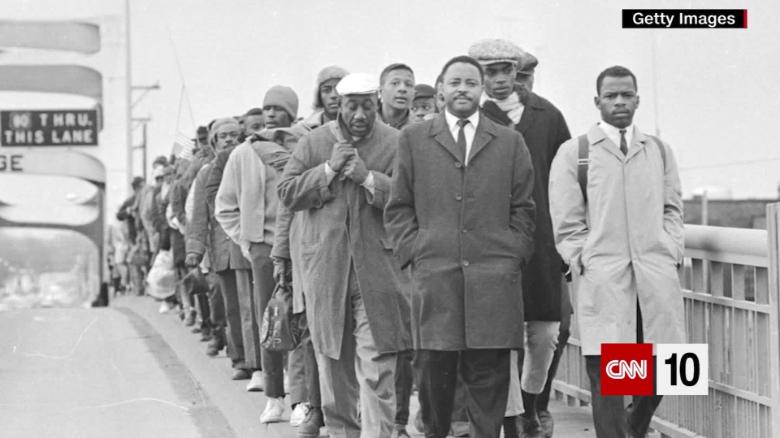
On Saturday, Hurricane Hanna made landfall in Padre Island, Texas. It was a Category 1, the weakest class of hurricanes, but dropped more than a foot of rain, cut power to many homes, and caused the governor to issue a disaster declaration. Making things worse, many areas affected are also seeing high rates of COVID-19, making rescue efforts difficult. Hurricane Hanna was also the first hurricane of the Atlantic season. Former Representative John Lewis was not only an important political figure but a fighter for civil rights as well. He led the Selma March for Voting Rights in 1965 with Dr. Martin Luther King, Jr., which shed light on some states that were resisting Black voting rights and led to laws preventing that. Lewis died recently at age 80 after a long battle with cancer. A comet called NEOWISE is passing Earth through late August. It can be seen just before sunrise and just after sunset, and won't be returning for another 6,400 years. Don't miss out! The CDC is recommending schools reopen with proper precautions, but that could cause transportation problems for some people. Due to social distancing, buses will only be able to operate at partial capacity, with priority for special eduction, low income, and homeless families. But many more families who have single parents or full time working parents also have problems.
Tuesday, July 28, 2020

Sports have restarted. In the MLB, games began on the 23rd and 24th with a shortened season of 60 games. However, there have been postponements, for example, the Miami Marlins’ opener when 14 players tested positive for coronavirus. The NBA will resume on the 31st with 22 of the 30 teams playing 8 remaining games to determine the playoff roster. The NFL will begin as scheduled in September. However, no fans are allowed inside stadiums - only cardboard ones - and the sounds are missing as well. In South Korea, though, a small percentage of fans are allowed into baseball games. To get in, one must receive a temperature check, check-in with a barcode for contact tracing, and use hand sanitizer. Fans are spread out across the bleachers, and the atmosphere just isn’t the same. Many big cities are seeing slowed growth, and it may be because a generation is aging. Millennials make up the majority of the population, and they were moving to the big cities in the early parts of the century to be with the sights, sounds, and social interactions. But with the pandemic, many of these qualities are missing, and since the Millennials are also aging, they are starting to move back to the suburbs. Still, Gen Z may save the cities when they begin their own wave in the future.
Wednesday, July 29, 2020
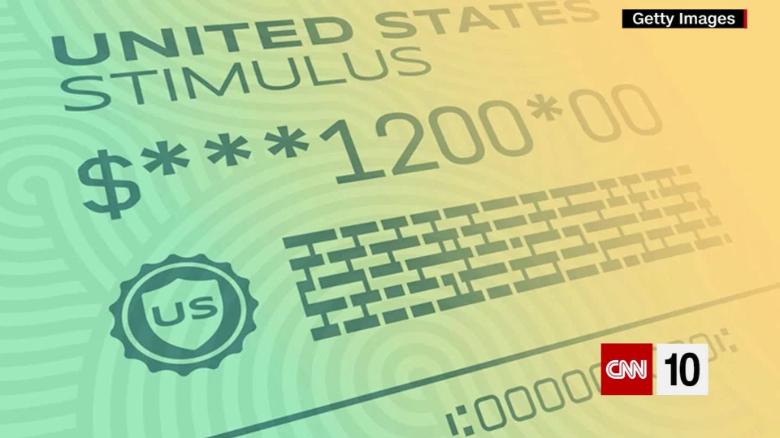
Congress is debating more stimulus bills to help the US economy. They will assist businesses that are closed due to coronavirus and people who have lost their jobs. Both the Democratic and Republican packages would send direct checks to Americans, support jobless people, and spend billions on education. But they're not the same. The Democrats support spending $3 trillion while the Republicans call for $1 trillion. There are also disagreements over who would get the money. New research has found that the COVID-19 has already mutated. But that isn't necessarily a bad thing. Many mutations to viruses, which occur when DNA/RNA is copied, end up being neutral or even harmful to them. The one in the coronavirus is on the spike protein, which helps it enter human cells. Even though it makes the virus spread faster, it doesn't appear to make it more lethal. The only major problem is, how are we going to make a vaccine? The pandemic has also affected graduating seniors. Many of them are paying to go to college when learning will actually be remote. Hear what they have to say
here.
Thursday, July 30, 2020
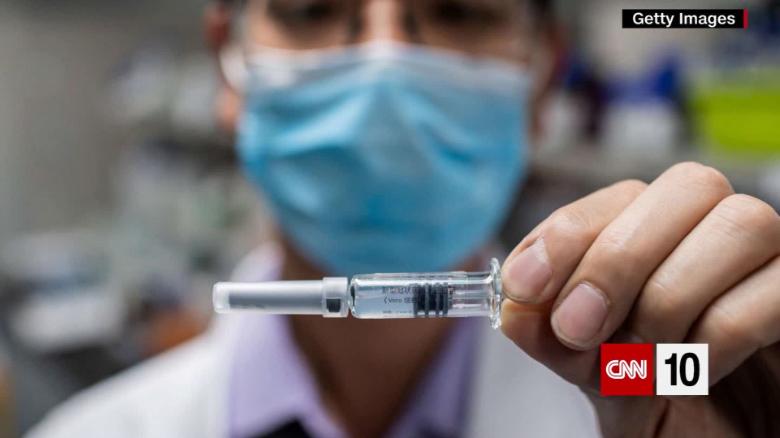
Since January, scientists around the world have been racing to find a vaccine for COVID-19 to try to stop its spread. In fact, Russia plans to approve its first one in just two weeks. However, the speediness is creating valid concerns over the vaccine’s safety and effectiveness. Normally, vaccines take years to develop, and the coronavirus vaccine is being developed over a matter of months. And even when it does come out, there are concerns that people will refuse to receive the vaccine. One poll found that just 1/3 of the population would take it, while others show 2/3 would. But if not enough people get the vaccine, we can’t have herd immunity, making the vaccine much less effective. Contact tracing is another tool that could potentially help against the pandemic. Used properly, it could alert people if they were in the vicinity of a person who tested positive for the virus. There are, however, concerns that people’s privacy could be breached. I believe these concerns are invalid. Take South Korea, a country in which contact tracing has helped contain the pandemic. No personal information is disclosed, no names, nothing. Just the fact that a person with COVID was in a certain area at what time. Back to the story. Many companies are creating devices that could help in the workplace. Cameras, which can track whether employees are wearing masks and social distancing, and wearables that maintain social distance.
Friday, July 31, 2020
America has seen its greatest GDP drop ever. Between April and June, it decreased by 9.5%, which is higher than the biggest quarterly drop during the financial crisis. The reason is coronavirus. More than 20 million jobs were reportedly lost due to closed businesses. And even though many businesses created jobs and rebounded when the US reopened, the economy still has not recovered its record-setting levels of growth. As reported on Wednesday, Congress is spending trillions to help small businesses and the jobless. Still, many small businesses are evolving or struggling. Perseverance is the name of the 2020 Mars rover. It launched this week and is scheduled to arrive on the Red Planet in February 2020. It has all sorts of new tools like cameras and sample collection kits, and it will be searching for evidence of past life. It will also carry a helicopter that may become the first to fly on another planet.