Sunday, September 13, 2020

TedEd: A brief history of plastic

A TedEd by the TedEd team

Plastics are endemic to society. But they first came from a round object that wasn't even made of plastic - billiard balls. Billiard balls used to be made from elephant tusk ivory. But overhunting led to a decline in elephant populations, and ball manufacturers posted huge rewards for a new material. In 1863, American scientist John Wesley Hyatt decided to try. For 5 years, he worked to create celluloid, made from a compound in wood and straw called cellulose. Unfortunately, celluloid wasn't heavy enough and didn't bounce the right way to replace ivory in billiard balls. But it could be tinted and patterned to resemble other materials. Plastics are polymers - long molecules made of repeating parts. Plastics are soft and can be easily molded. The first plastic, celluloid, was unfortunately highly flammable, making it less useful. In 1907, Bakelite was created from a mix of phenol and formaldehyde. Since phenol came from the remnants of coal tar, it was cheaper to make, and it was less flammable. In the decades that followed, many other plastics came out, and polyethylene, developed in 1933, is still very commonly used. Injection molding was also created, and it allowed for plastics to be formed in the same mold over and over, opening up an array of possibilities. Surprisingly, plastics were first widely used in World War II, when they were used to make a variety of equipment, rather than to make consumer products. After the war, the factories began making consumer products like furniture and packaging. Unfortunately, the new ease and low costs also came with massive environmental impacts because plastics use many nonrenewable resources and take a very long time to decompose. Scientists today are working on more renewable materials and recycling what we already have.

Time: An American Nightmare: How the U.S. Succumbed to Complacency and Let 200,000 People Die of COVID-19

By Alex Fitzpatrick and Elijah Wolfson

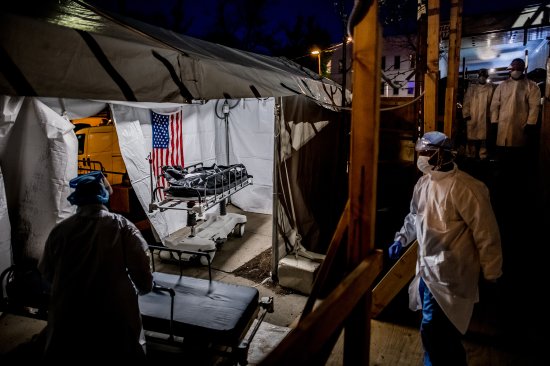
    By mid-September, more than 200,000 people will have died from COVID-19 in the US. This is despite the fact that just 45 days before the first coronavirus infection, the US was ranked first out of 195 countries in its ability to handle a disease outbreak. They failed to take into account the political polarization and the fracturing within the country over the past few years. Had the United States used its vast resources to prepare for the virus and done extensive testing and contact-tracing instead of lulling the people into a false sense of security and ridiculing experts, we might be in a different situation. In fact, some much less prosperous countries have had no cases or gotten their outbreaks under control.
    At the top, the leadership continually downplayed the severity of the virus and refused to follow proven scientific guidelines. Because America is so fractured down party lines today, the division was clear for all to see. A majority of Republican-leaning voters thought masks were not important, while a majority of Democrats said masks are important. Similar results were seen for questions about medical professionals. The President also failed to test effectively, often decreasing the number of tests and blaming testing for increases in cases. Individual states have been left to fend for themselves, and few have succeeded.
    The pandemic has also dredged up the country's racist past. Because Blacks, Native Americans, and Latinos were systematically persecuted for so long, the socioeconomic gap remains, and it is reflected in their higher COVID infection and death rates.
    Then there is the fact that most Americans are self-centered, according to a Pew survey. This is especially bad now when we need to be united against this virus and sacrifice some pleasures for the group.
    But all is not lost yet. A vaccine, the magical fix that lawmakers are hoping for might be here by the end of the year (although many people have said they might not take it), and we can still improve. Adequate amounts of PPE should be produced and distributed, and we need to listen to scientific experts. Most of all, we should stay home and sacrifice some things from normal life. "...some 200,000 Americans have already died, and many more may do so before a vaccine emerges unless America starts to implement and invest in the science-based solutions already available to us. Each one of those lives lost represents an entire world, not only of those individuals but also of their family, friends, colleagues and loved ones. This is humbling—and it should be. The only path forward is one of humility, of recognition that if America is exceptional with regard to COVID-19, it’s in a way most people would not celebrate."

Saturday, September 12, 2020

The Joy Luck Club

The Joy Luck Club
By Amy Tan

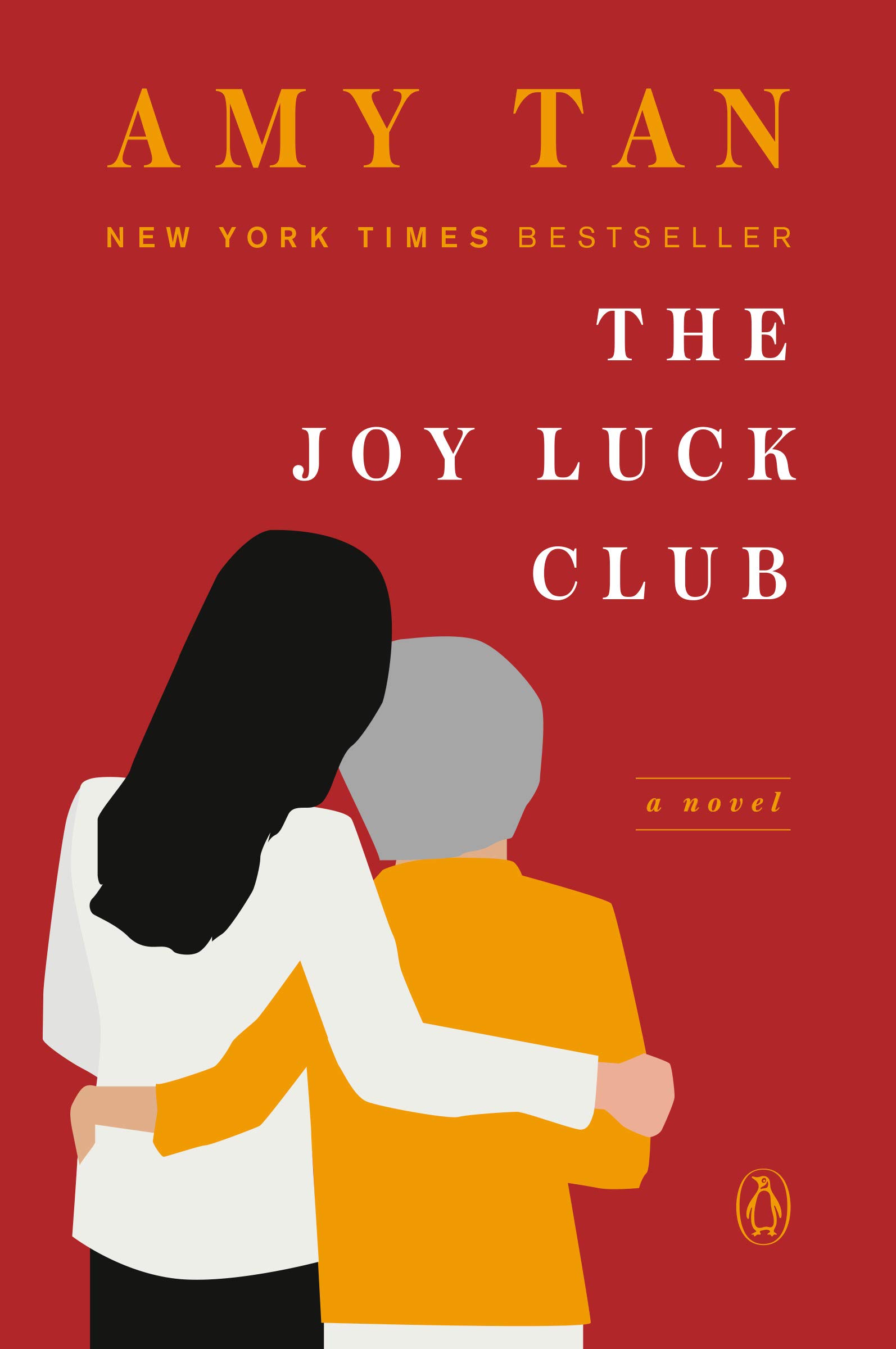
    4 Chinese American women comprise of the Joy Luck Club, each of them with painful memories of their past in China. The Club was started by Suyuan Woo, and she plays mahjong every week with her friends An-mei Hsu, Lindo Jong, and Ying-ying St. Clair. Each woman has a daughter and the daughters have a difficult time understanding things that their mother does.
    First, Suyuan and her daughter Jing-mei's story. Suyuan had to flee her home in China during the war with the Japanese. She couldn't carry her two babies and left them on the road with her babies, praying that someone would find and take care of them. For years, she searched with her second husband, Jing-mei's father (her first husband, a military officer, was killed in the war). She couldn't find them and eventually came to the US. Soon after her death, the rest of the Joy Luck Club receives news that they were found by a mountain-dwelling couple long ago. They couldn't read the Chinese that was on the back of a card left with the babies, so she only figured out who they were recently. Even then, she couldn't find the family because the house had been bombed and replaced by a factory. By chance, an old friend of Suyuan found the sisters, now grown women, and told them of their mother. Jing-mei doesn't understand much of this, and only remembers a mother who tried so hard to make her a prodigy, like her friend Waverly. Finally, she can't take it and tells her she wishes she was dead, which the two supposed the abandoned girls were. But as she learns what happened, Jing-mei comes to an understanding. In the final chapter of the book, Jing-mei has a tearful reunion with them and the rest of her Chinese family.
    Lindo Jong was forced into an arranged marriage with a spoiled husband and a harsh mother-in-law. By her own wit, she escaped and made it to the US, where her daughter Waverly was born. As a child, Waverly was a chess prodigy, but she somehow lost her skill after a spat with her mother. Later on, Waverly constantly feels as if her mother's judgment controls her actions, but later comes to terms with it after a divorce and learning that her mother's criticism was just taken the wrong way.
    An-mei's mother was widowed, then raped by a rich man and forced to become his concubine. An-mei watched her mother suicide from an opium overdose, then came to America and had many children. Her daughter was married to Ted, and after her divorce, she is devastated. After getting over it, she learns to create her own identity instead of hiding in Ted's shadow.
    Ying-ying St. Clair grew up in a rich family and married a man she thought she loved. But after she became pregnant with his son, he began cheating on her, so she aborted and left. She lived in poverty for years, working as a salesgirl, when she catches the eye of an American, Clifford St. Clair, and marries him. She left behind her spirit, but she finds it again to help her daughter, Lena. Lena is married to an architect, who she works for in a company she helped him make. He insists on splitting all their expenses equally while he makes much more money than her. She eventually divorces him and starts to make her own decisions.

Note: This was really hard for me because the book was sectioned with the story going back and forth between EIGHT different people.    

The Princess Bride (abridged)

The Princess Bride (abridged)
By William Goldman, original book by S. Morgenstern

    Buttercup is a young girl living on a farm with a farm boy named Westley who always says "As you wish" at a command. She is also one of the 20 most beautiful people on Earth, but she doesn't really care about that. One day, the Count and Countess come to take a look at the supposedly high-quality cows on the farm. When she sees the Countess flirting with Westley, she is overcome with a fit of sudden jealousy and falls in love with him. She tells him so that night and is afraid she has ruined everything when Westley shows up to tell her he is leaving. He says he is going to go to America to make a new life there and will send for her when he is ready. They share a heartfelt goodbye, and from that day on, Buttercup starts to fuss over personal hygiene so much she becomes the most beautiful person alive. But one day, she receives news that his ship was captured by the Dread Pirate Roberts, who kills all captives. She vows never to love again.
    For the next few chapters, we learn about Prince Humperdinck, prince of Florin, Buttercup's city. He is an excellent hunter and spends lots of time in his Zoo of Death, where he keeps all sorts of creepy animals to kill. His father, King Lotharon, is getting old, and it is about time for Humperdinck to find a wife. So he invites the princess of Guilder, their rival neighbor city, but discovers that she is bald. His closest lieutenant, Count Rugen, leads him to Buttercup, whom he demands as his bride. Buttercup says she can't love him, but Humperdinck tells her there will be no love involved, so she agrees.