Monday, September 14, 2020

CNN 10 9/14/2020 ~ 9/18/2020


Go to cnn.com/cnn10 for latest video

Monday, September 14, 2020
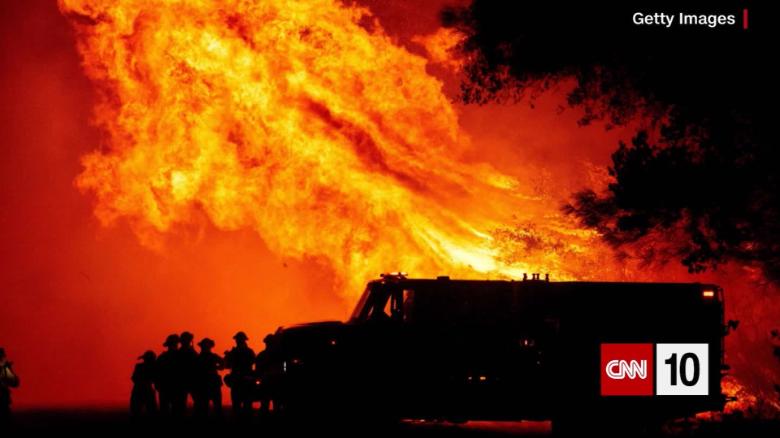
In the western US, wildfires are burning in 12 different states. More than 4.5 a million acres have burned, and over 30,000 firefighters have been enlisted to help fight the blaze. Where I live, in California, more than 24 fires are burning, and over 12 have been reported in multiple states. As the smoke rose up, a strange phenomenon occurred. In California, Oregon, and Washington, skies turned orange, making it look like some sort of apocalyptic scene. This is because all the smoke and ash rose up above something called a marine layer, effectively blocking the sun and changing colors. Honeybees are credited with 1/3 of the US food chain. However, while bee colonies have grown around the world, those in the US have dropped to just half of their original number, mainly due to the use of pesticides. New technology might be able to save them. A small device from Apis Protect can be placed on the roof of the hive to measure interior conditions. The Internet-connected device would contact the beekeeper if anything goes wrong. A new dog-like robot is being used by the military. The autonomous unmanned ground vehicles go into an area and scout it out before the soldiers go in, alerting them of possible dangers.

Tuesday, September 15, 2020
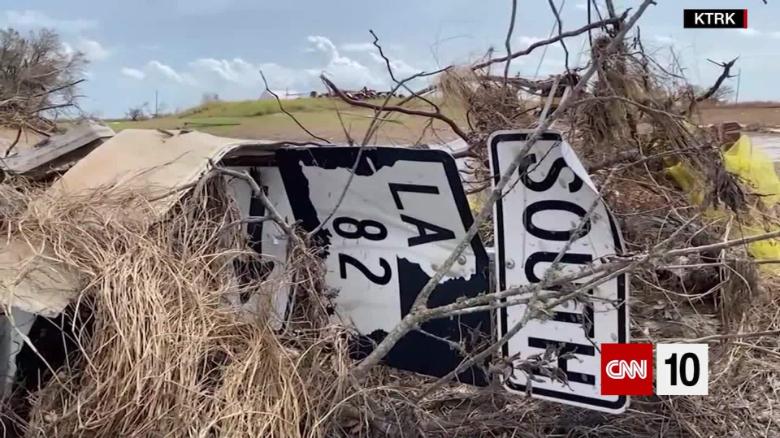
Another hurricane is approaching the US Gulf Coast. Hurricane Sally is expected to hit Mississippi and parts of Louisianna; Lousianna was already hit by a category 4 four hurricane earlier this season. Luckily, Sally is expected to be much weaker. It had strengthened to category 1 status when the show was produced and is expected to become a category 2 storm. However, it is also a very slow-moving storm. This means many areas will experience storm conditions for prolonged periods of time. Mandatory evacuations have been ordered for some areas, and the governor has declared a state of emergency. Storm chasers are people who go into storms like these. They also have complex instruments that they drop from planes to gather data and help better understand hurricanes and protect people from them. On Sunday, the largest number of single-day coronavirus cases was recorded at over 308,000 positive infections. Across Europe, new COVID-19 rules are taking place. In areas like Britain, France, and Israel, new lockdowns and restrictions are being enforced after recent surges in cases. In Italy, though, schools are reopening with safety protocols in place. Last month, TikTok was given until September 20 by the US government to sell its US operations to a United States company or be banned in the US. This is because the Chinese app collects lots of user data that could be used by the Chinese government. TikTok said that this was false, it doesn't have to disclose data, and that it would sue the US. However, the company is now considering partnering with Oracle. This kind of deal, of course, would be incredibly complicated, but the app might be allowed to continue in the US.

Wednesday, September 16, 2020
The US has advised against travel to China and Hong Kong because of tensions between the two. Hong Kong is a special administrative region of China, and it wants more freedom from the mainland while China maintains that it has ultimate control over the area. China has also had a bitter feud with Taiwan. Taiwan was created as a democratic country after the communist party won a civil war and forced the former democratic rulers to flee. Its official name is the Republic of China (China is the People's Republic of China) and both countries claim sovereignty over the mainland. In the 1990s, tensions eased when diplomats reopened communications and travel strictly for the purpose of economic and cultural exchange. Since then, the relationship has fluctuated depending on the ruling party in Taiwan, one of which is more favorable toward China. Hurricane Sally did not make landfall as expected yesterday. As it approached the Gulf Coast, it slowed down significantly. Fortunately, it didn't get any stronger, but its slower speed could bring prolonged storm surges and rainfall, worsening its impacts. On Venus, the gas phosphine, which is produced on Earth by bacteria that don't use oxygen. However, this doesn't mean that life exists on Venus because its super-hot and acidic conditions would kill the life forms. However, the way the gas arrived on the planet is an intriguing mystery for scientists.

Thursday, September 17, 2020
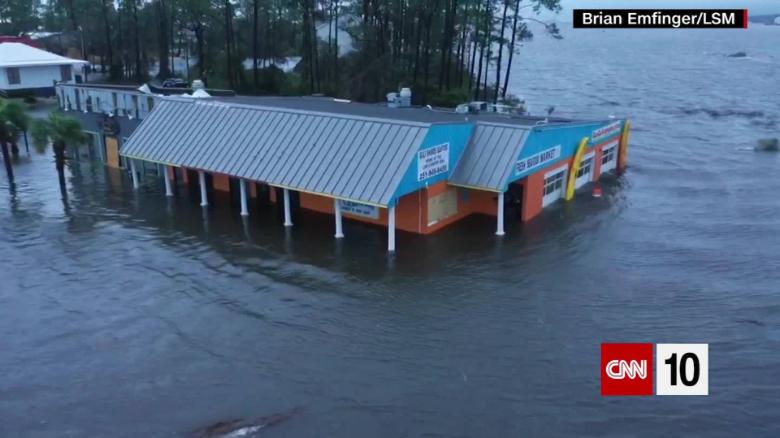
Hurricane Sally went through a series of changes before finally making landfall in Alabama as a category 2 hurricane in the same spot as Hurricane Ivan 16 years ago. Although it was a weaker storm, it moved much slower, at 2 mph, dumping rain and storm surges on Alabama and Florida for a longer period of time. On the other side of the country, people are praying for the rain. In the Western US, wildfires are still burning. They have destroyed thousands of homes and burned over 4.7 million acres with much of the wildfire season left to go. As we reported on Monday, skies across the region turned orange as smoke and ash blocked the blue and green light waves from the ground, creating a Martain looking orange daylight. In India, a man is trying to do his part in saving Earth's biodiversity with plants. Because of the industrialization of agriculture, seed diversity has dropped. By planting our own, we can each do a small part to save what is left.

Friday, September 18, 2020

The US has often been at the head of diplomacy in the Middle East, from President Jimmy Carter's deal with Egypt and Israel and the accord between Israel and Jordan orchestrated by President Clinton. Now, President Trump has achieved a major peace treaty. His administration had failed at achieving the slippery goal of Palestinian and Israeli peace after the president showed pro-Israeli leanings, but the UAE, Bahrain, and Israel signed the Abraham Accord at the White House recently, which the Trump Administration calls the beginning of a new Middle East. The US presidential debates are coming up soon. There will be two between incumbent President Trump and Democratic nominee Biden, and one between Vice President Pence and California Senator Kamala Harris. They will give the public a chance to see their candidates in action and how they will perform. The giant Magellan telescope will be the largest of its kind and is currently being created at the University of Arizona, which is the only place with the technology. Each mirror takes years to create, and the final telescope will be assembled in the Chilean Andes.

Sunday, September 13, 2020

TedEd: A brief history of plastic

A TedEd by the TedEd team

Plastics are endemic to society. But they first came from a round object that wasn't even made of plastic - billiard balls. Billiard balls used to be made from elephant tusk ivory. But overhunting led to a decline in elephant populations, and ball manufacturers posted huge rewards for a new material. In 1863, American scientist John Wesley Hyatt decided to try. For 5 years, he worked to create celluloid, made from a compound in wood and straw called cellulose. Unfortunately, celluloid wasn't heavy enough and didn't bounce the right way to replace ivory in billiard balls. But it could be tinted and patterned to resemble other materials. Plastics are polymers - long molecules made of repeating parts. Plastics are soft and can be easily molded. The first plastic, celluloid, was unfortunately highly flammable, making it less useful. In 1907, Bakelite was created from a mix of phenol and formaldehyde. Since phenol came from the remnants of coal tar, it was cheaper to make, and it was less flammable. In the decades that followed, many other plastics came out, and polyethylene, developed in 1933, is still very commonly used. Injection molding was also created, and it allowed for plastics to be formed in the same mold over and over, opening up an array of possibilities. Surprisingly, plastics were first widely used in World War II, when they were used to make a variety of equipment, rather than to make consumer products. After the war, the factories began making consumer products like furniture and packaging. Unfortunately, the new ease and low costs also came with massive environmental impacts because plastics use many nonrenewable resources and take a very long time to decompose. Scientists today are working on more renewable materials and recycling what we already have.

Time: An American Nightmare: How the U.S. Succumbed to Complacency and Let 200,000 People Die of COVID-19

By Alex Fitzpatrick and Elijah Wolfson

    By mid-September, more than 200,000 people will have died from COVID-19 in the US. This is despite the fact that just 45 days before the first coronavirus infection, the US was ranked first out of 195 countries in its ability to handle a disease outbreak. They failed to take into account the political polarization and the fracturing within the country over the past few years. Had the United States used its vast resources to prepare for the virus and done extensive testing and contact-tracing instead of lulling the people into a false sense of security and ridiculing experts, we might be in a different situation. In fact, some much less prosperous countries have had no cases or gotten their outbreaks under control.
    At the top, the leadership continually downplayed the severity of the virus and refused to follow proven scientific guidelines. Because America is so fractured down party lines today, the division was clear for all to see. A majority of Republican-leaning voters thought masks were not important, while a majority of Democrats said masks are important. Similar results were seen for questions about medical professionals. The President also failed to test effectively, often decreasing the number of tests and blaming testing for increases in cases. Individual states have been left to fend for themselves, and few have succeeded.
    The pandemic has also dredged up the country's racist past. Because Blacks, Native Americans, and Latinos were systematically persecuted for so long, the socioeconomic gap remains, and it is reflected in their higher COVID infection and death rates.
    Then there is the fact that most Americans are self-centered, according to a Pew survey. This is especially bad now when we need to be united against this virus and sacrifice some pleasures for the group.
    But all is not lost yet. A vaccine, the magical fix that lawmakers are hoping for might be here by the end of the year (although many people have said they might not take it), and we can still improve. Adequate amounts of PPE should be produced and distributed, and we need to listen to scientific experts. Most of all, we should stay home and sacrifice some things from normal life. "...some 200,000 Americans have already died, and many more may do so before a vaccine emerges unless America starts to implement and invest in the science-based solutions already available to us. Each one of those lives lost represents an entire world, not only of those individuals but also of their family, friends, colleagues and loved ones. This is humbling—and it should be. The only path forward is one of humility, of recognition that if America is exceptional with regard to COVID-19, it’s in a way most people would not celebrate."

Saturday, September 12, 2020

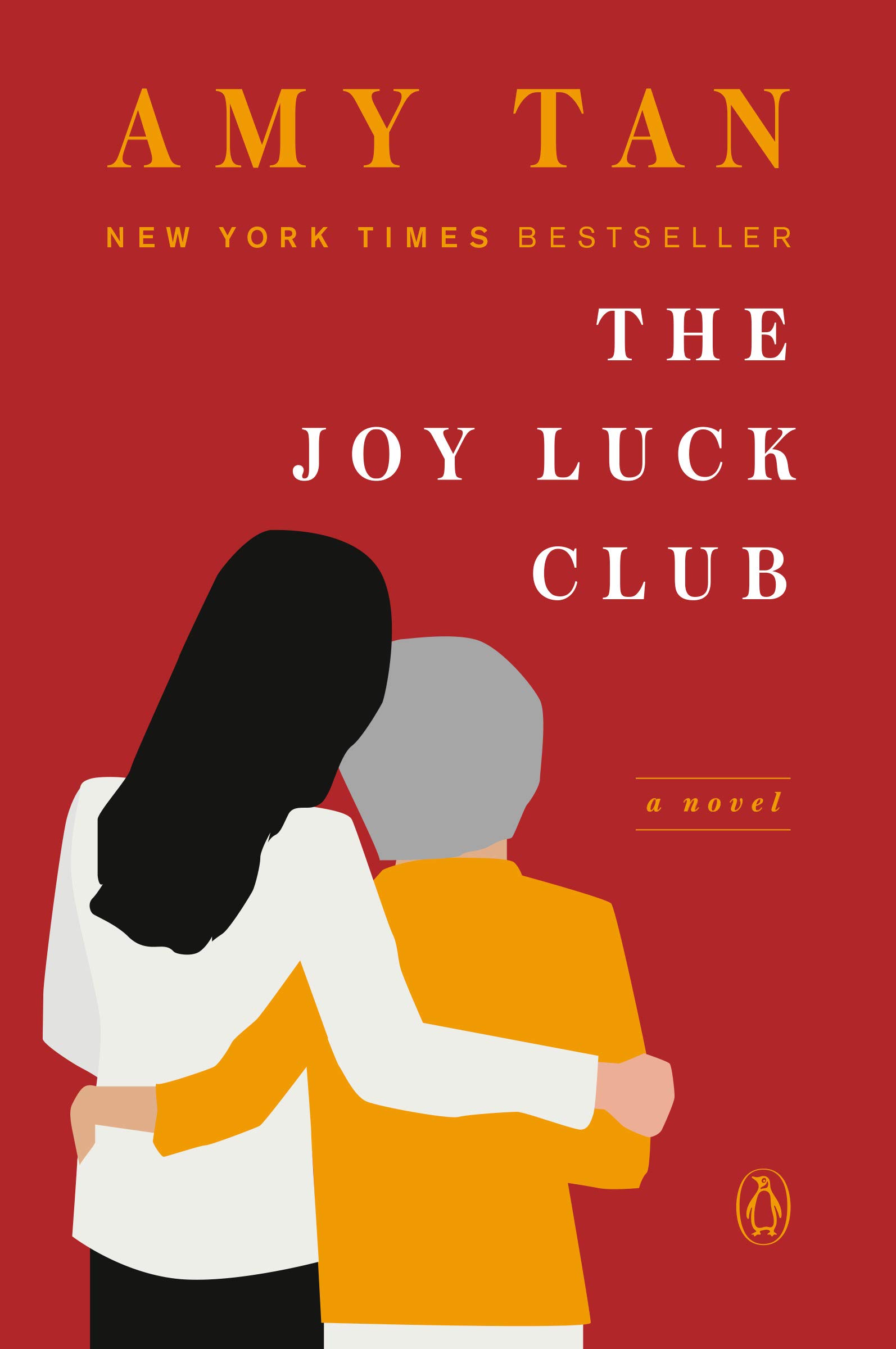
The Joy Luck Club

The Joy Luck Club
By Amy Tan

    4 Chinese American women comprise of the Joy Luck Club, each of them with painful memories of their past in China. The Club was started by Suyuan Woo, and she plays mahjong every week with her friends An-mei Hsu, Lindo Jong, and Ying-ying St. Clair. Each woman has a daughter and the daughters have a difficult time understanding things that their mother does.
    First, Suyuan and her daughter Jing-mei's story. Suyuan had to flee her home in China during the war with the Japanese. She couldn't carry her two babies and left them on the road with her babies, praying that someone would find and take care of them. For years, she searched with her second husband, Jing-mei's father (her first husband, a military officer, was killed in the war). She couldn't find them and eventually came to the US. Soon after her death, the rest of the Joy Luck Club receives news that they were found by a mountain-dwelling couple long ago. They couldn't read the Chinese that was on the back of a card left with the babies, so she only figured out who they were recently. Even then, she couldn't find the family because the house had been bombed and replaced by a factory. By chance, an old friend of Suyuan found the sisters, now grown women, and told them of their mother. Jing-mei doesn't understand much of this, and only remembers a mother who tried so hard to make her a prodigy, like her friend Waverly. Finally, she can't take it and tells her she wishes she was dead, which the two supposed the abandoned girls were. But as she learns what happened, Jing-mei comes to an understanding. In the final chapter of the book, Jing-mei has a tearful reunion with them and the rest of her Chinese family.
    Lindo Jong was forced into an arranged marriage with a spoiled husband and a harsh mother-in-law. By her own wit, she escaped and made it to the US, where her daughter Waverly was born. As a child, Waverly was a chess prodigy, but she somehow lost her skill after a spat with her mother. Later on, Waverly constantly feels as if her mother's judgment controls her actions, but later comes to terms with it after a divorce and learning that her mother's criticism was just taken the wrong way.
    An-mei's mother was widowed, then raped by a rich man and forced to become his concubine. An-mei watched her mother suicide from an opium overdose, then came to America and had many children. Her daughter was married to Ted, and after her divorce, she is devastated. After getting over it, she learns to create her own identity instead of hiding in Ted's shadow.
    Ying-ying St. Clair grew up in a rich family and married a man she thought she loved. But after she became pregnant with his son, he began cheating on her, so she aborted and left. She lived in poverty for years, working as a salesgirl, when she catches the eye of an American, Clifford St. Clair, and marries him. She left behind her spirit, but she finds it again to help her daughter, Lena. Lena is married to an architect, who she works for in a company she helped him make. He insists on splitting all their expenses equally while he makes much more money than her. She eventually divorces him and starts to make her own decisions.

Note: This was really hard for me because the book was sectioned with the story going back and forth between EIGHT different people.