Tuesday, January 5, 2021

Time: Congressional Republicans Won't Overturn Biden's Win. But Their Objections Are Still Dangerous

By Alana Abramson

    Tomorrow, both chambers of Congress will convene to count the states' electoral votes and certify Joe Biden as the winner of the election. However, this year will be different. President Trump has refused to concede, and dozens of Republican lawmakers have said that there will be objections, although it's highly improbable that it will change the outcome.
"Most of the Republicans who plan to challenge the outcome have said their intention is to air allegations of rampant voter fraud. But those claims are not supported by evidence. Trump’s own Administration deemed the election the most secure in U.S. history. And since Election Day, Trump’s legal team has lost nearly all of its challenges to election results in court, with judges widely rejecting their allegations."

Monday, January 4, 2021

National Geographic: What vaccines mean for the return of travel

By Johanna Read

    As several companies announced vaccines toward the end of 2020, hope returned for regular travel in 2021. Still, there is anxiety over the potential of catching COVID-19. Most people said that they wouldn't be doing any extra traveling, and many said that they are still concerned about exposure.

"'Vaccine hesitancy is a critical obstacle to overcome,' says Dr. Tom Kenyon, the chief health officer of Project HOPE, a global health and humanitarian relief organization, and a former director at U.S. Centers for Disease Control and Prevention (CDC). To get back to travel, the U.S. and the world need herd immunity, thought to be achieved when about 70 percent of the population has protective antibodies. Kenyon says, though, that '70 percent is an arbitrary figure, and there is no "off/on" switch with herd immunity.' Recent news about more transmissable strains of COVID-19 suggest that herd immunity might only come when 90 percent of citizens have antibodies."

Sunday, January 3, 2021

CNN 10 1/4/2021 ~ 1/8/2021


Go to cnn.com/cnn10 for the latest video
Happy New Year!

Monday, January 4, 2021
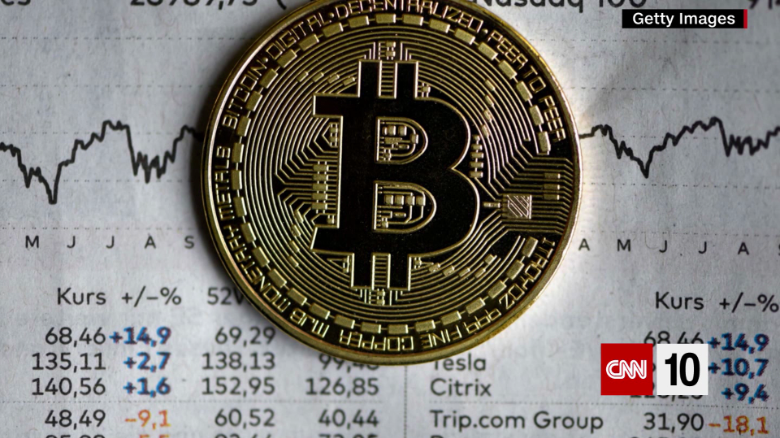
Congress passed a new stimulus package in December. Among its relief provisions are more checks to low-income individuals and families. Those who earned less than $75,000 in 2019 will get $600 and married couples who earned less than $150,000 will get $1,200. Several Democrats and President Trump pushed for $2,000, but many said that it wasn't the best way to help the economy. The whole package cost $900 billion, making it second only to the $2.2 trillion CARES Act passed in March. It also funds additional government help to businesses, and COVID vaccine production and distribution. The vaccines by Pfizer and Moderna have been approved for emergency use by the FDA, and millions of shots have already been given to front-line workers and the most vulnerable. There have been some allergic reactions to some who have received it, and many people don't want to get it at all. Still, the existence of vaccines provides hope that the pandemic will soon be over. People around the world celebrated the new year, hoping that it would bring better tidings than 2020. Cryptocurrencies like Bitcoin, currently worth nearly $33,000, have been steadily on the rise over the past year. Some believe that it will be the future of money, but even if it dies, the underlying framework is important. Blockchain is a public list of transactions. When two parties make a transaction, other mining computers work to decrypt something to certify that. Once that is completed, the transaction ends up on a public list that cannot be changed, preventing fraud. It could also remove banks, lowering transaction rates. Another potential use is for public records. Boston Dynamics recently released a video of all of its robots dancing to a tune to celebrate the new year, inciting reactions all across social media.

Air and Space: The Dawn of Transatlantic Flight

By John Fleischman

    On October 23, 1945, the first general transatlantic passenger flight was made from New York to London. It carried eleven other passengers including a governor and various press reporters, along with the cargo of envelopes that declared that they had been on the first commercial landplane flight overseas.
"Stamp collectors might have considered October 23, 1945 a day to remember, but 75 years later few recall the first scheduled transatlantic service via 'land plane' from New York to London...Everyone who has ever flown the Atlantic in economy class should have been invited to a big 75th anniversary party—except there was no party. It wasn’t cancelled because of COVID. It was never planned."

    Before that first DC-4, clippers carried luxury passengers in small groups. Henceforth, transatlantic travel would become commonplace, carrying millions of people. Unfortunately, this historic day was not celebrated.