Friday, July 16, 2021

Time: Why Congress Deserves Its Own Emmy Category

By Philip Elliott

     Some may be wondering why the Emmy awards do not give out awards to a very entertaining category: politics. For the past few months, we've watched politicians give nightly performances on TV, arguing over Biden's infrastructure bill. If it does end up getting to Biden's desk, it likely won't resemble the original proposal, but rather a very banged-up version.
    Even though Democrats control both chambers of Congress and the White House, their road to victory will be far from easy. Their slim majorities mean they have to resort to things like reconciliation, which Republicans characterize as cheating, and the GOP 2022 election strategy is attacking Biden's Build Back Better agenda.
    There is even discord within the party, since legislators also have to appease people in their own localities. A key example is Senator Joe Manchin, who is one of the few Democrats who can win in a Republican state. The party knows how important he is, giving him newfound influence. Other congresspeople have battled to keep certain parts of the plan intact, and certain amounts of funding out. 
    An important note is that this bill is "two-tracked". There's one bill for $3.5 trillion that Dems can pass with 50 votes via budget reconciliation, which avoids the filibuster. However, this rule does have its limits, which means the second bill for $600 billion needs 10 Republican votes. Of course, this method has many top GOP members upset, so the drama will continue.

Sunday, July 11, 2021

Air and Space: Branson and Bezos May Reach Space First, But Billionaire Jared Isaacman (Who?) Has Booked a Better Trip

By Tony Reichhardt

    In the 2000s, half a dozen wealthy non-astronauts went to space aboard extra seats on Russiann space vehicles. 20 years later, Blue Origin, Virgin Galactic, and SpaceX are all preparing to launch more of the uber-rich into space onboard their privately owned spacecraft.
    Jeff Bezos will be joining 3 other passengers on board Blue Origin's first passenger flight on July 20, the anniversary of the Apollo 11 moon landing.
    A few weeks later, Richard Branson announced that he would be going up on his company, Virgin Galatic's first flight today, on July 11. He insists that this launch had nothing to do with Bezos's announcement, but he has been named Astronaut 001 despite the other pilots and crewmembers on the flight already having been to space on previous test flights.
    There are several others who are also waiting in line for their first commercial spaceflight, but perhaps the best trip that has been booked is one on September 15th via SpaceX's Crew Dragon, booked by billionaire Jared Isaacman, who comes in at #1164 on the Forbes billionarie list. Blue Origin and Virgin Galatic flights both last just minutes at relatively low altitudes. Isaacman's flight on the other hand, will take him and his crewmates into orbit for several days. He also plans to raise money for St. Jude Children's Hospital by auctioning off seats and donating some of his own money. He has arranged for a months-long NASA-like training program for all the astronauts, who are all rookies. SpaceX has even installed an enlarged window on the spacecraft, allowing for a better view of space than most astronauts have had.

Sunday, July 4, 2021

Time: You Can't Tell the Story of 1776 Without Talking About Race and Slavery

By Robert G. Parkinson

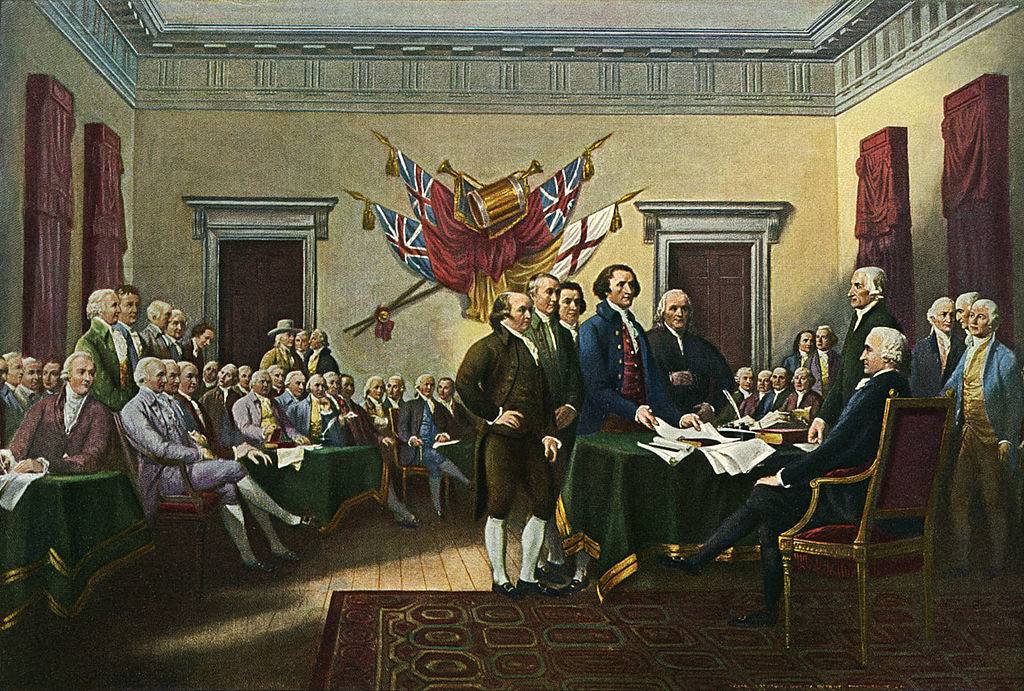
    Even though most of us may not admit it, slavery and racial questions were at the heart of America's beginnings. John Adams said 40 years after 1776 that getting all 13 colonies to unite against Great Britain was quite difficult and unheard of in all of history. He essentially suggested that he and the other members of the Continental Congress performed a miracle. However, it covered up the work that he and his colleagues had been doing for years prior to the American Revolution.
    Recently, a new debate has been sparked over the role of race in American history, and the most scrutinized part of that history is the founding of this nation. As it turns out, leaders of the revolution were quite concerned about the British inciting slave rebellions all over the South once the war began. They began to put words like "treachery" and "instigated insurrection" into everyone's mouths. Finally, when the drafted the Declaration of Independence in 1776, the very last crime that King George was accused of involved enslaved and native populations joining King George against the Americans.
    Thomas Jefferson had written a passage about the slave trade, condemning it as an evil, cruel violation of humanity. However, the Continental Congress eliminated nearly the entire section, but retained the small part about domestic insurrections. They said that the King had attempted to bring natives from the frontier into the war, and by avoiding this, the patriots were in the right.
    Patriot leaders had found the one thing that all the colonies could agree on: racism. They mobilized these fears and prejudices to bring the nation together, but this would root the same in the American Republic.

Thursday, July 1, 2021

Time: Supreme Court Upholds Arizona Voting Restrictions in Another Blow to Voting Rights Act

By Madeleine Carlisle and Sanya Mansoor

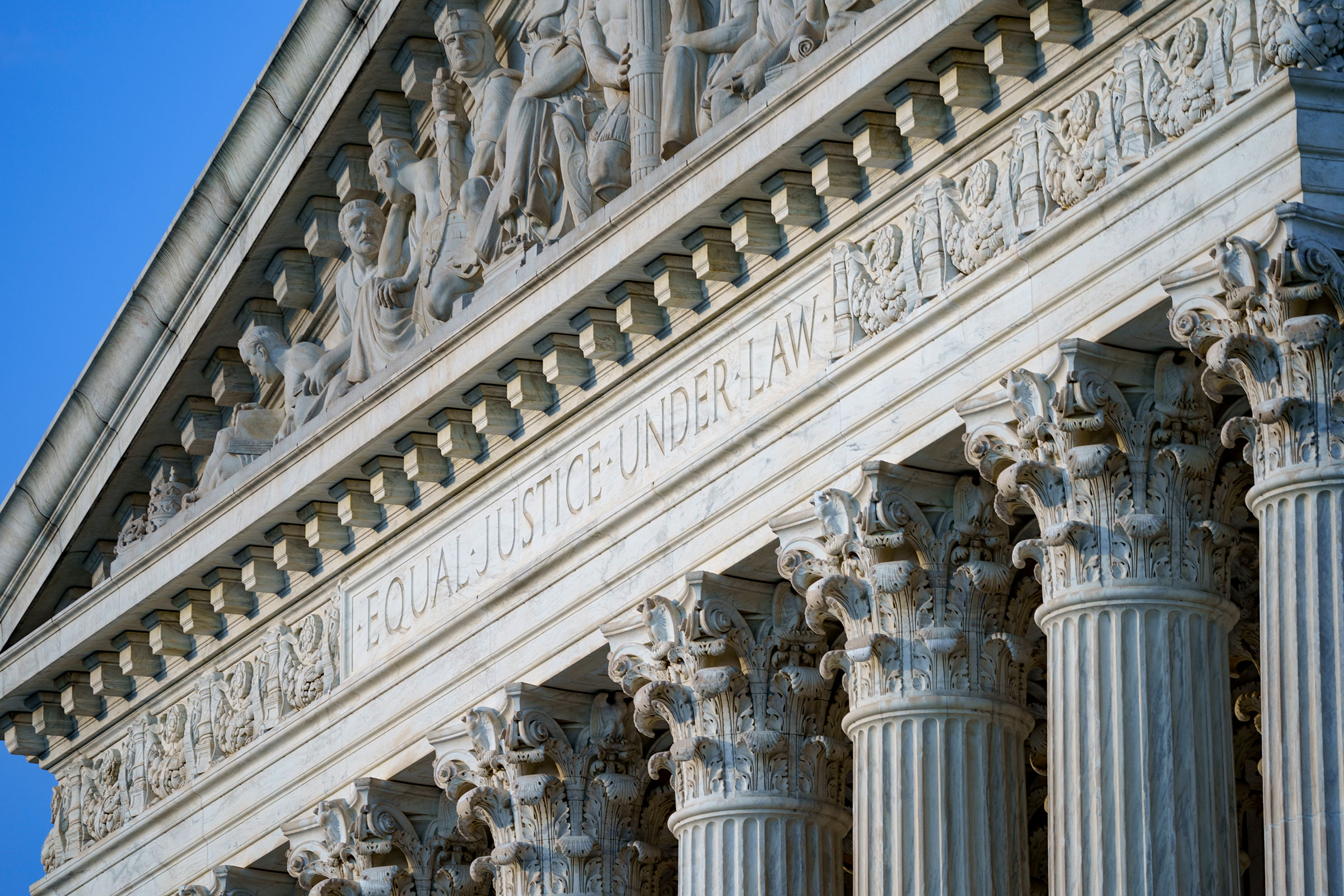
    On Thursday, the Supreme Court ruled that two controversial voting rights laws from Arizona do not violate the Voting Rights Act (VRA), weakening the landmark ballot. It was split along conservative/liberal lines, with Justice Samuel Alito writing for the 6-3 majority.
    The case, brought by the Democratic National Committee in 2016, claimed that two Arizona laws that ban ballot collection and require ballots cast in the wrong precincts to be thrown out discriminate against minorities. A federal appeals court had ruled in favor of the DNC in 2020, which was overturned by the Supreme Court.
    Since President Trump spread rumors about voter fraud in the 2020 election, a slew of Republican states have introduced similar voting restrictions, many of which experts say violate minority rights. This ruling affected Section 2 of the VRA, and a previous ruling had effectively eliminated Section 5 as well. The new ruling set out new "guideposts" for courts to use in the future, including weighing the size of the discriminatory impact of a given law, as well as what other options voters have to cast a ballot, both standards Brnovich and the Arizona GOP had argued for.
    Justice Elena Kagan wrote the dissent, saying that many new voting laws have still served to discriminate against minorities, and the VRA is still very important. Fortunately, the ruling does not completely eliminate the VRA, but it certainly makes it much harder to prosecute.
    The White Hosue released a statement saying that it was disappointed in the Supreme Court's decision, and called on legislators to pass more laws protecting voting rights.