Sunday, October 18, 2020

Apple's new Apple Silicon Macs could be released on November 17

Sources: 9to5Mac, MacRumors

    At WWDC 2020, Apple announced that it would be transitioning away from Intel x86 chips to its own Apple Silicon, the same ARM-based CPUs already in its iPad and iPhone lineups. It said it would be announcing the first Mac with these processors by the end of this year. Some expected it to be released at the October 13th event alongside the new HomePod Mini and iPhone 12 series. New Twitter leaks by Jon Prosser have stated that Apple will announce a November 17th event on the 10th. A separate Bloomberg report had previously floated a date in November for the ARM event. There is also controversy as to which Macs will be the first to get the new processors. Some are hoping that the discontinued 12-inch MacBook Pro will be revived, and others think it will be a 13-inch MacBook or an iMac.
    If you recently got an Intel MacBook, don't worry (too much). Apple has said it will keep supporting Intel-based computers for "years to come", and I will write another article explaining this.

Read about the first Apple Silicon, M1.

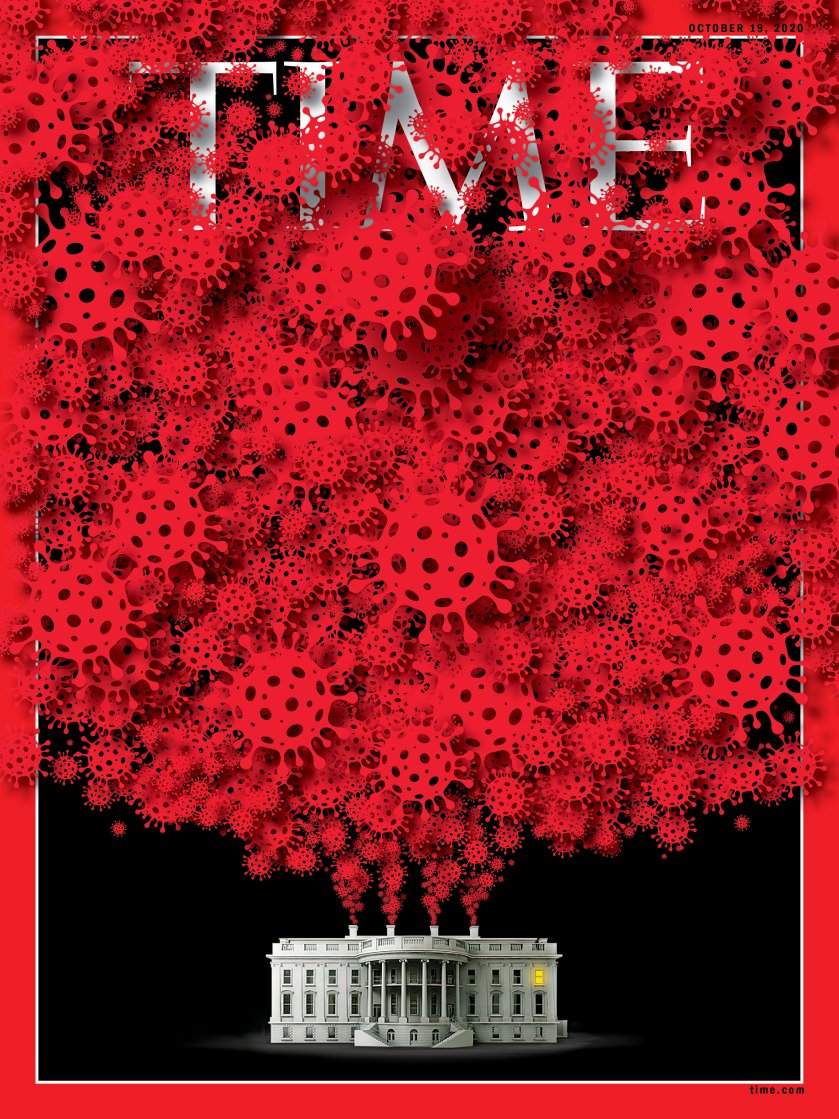
Time: America’s unequal economic recovery

By Alana Abramson and Abby Vesoulis

    On October 2nd, the Payroll Protection Program ended. Thousands of workers were laid off as small businesses ran out of what little savings they had and big corporations stopped receiving relief funding.
    During the pandemic, the wealth of American billionaires has soared with the stock market while 22 million workers lost their jobs in the same time span. Now, there are still 11 million fewer jobs than in February, and it has largely affected people along gender and racial lines. 7% of whites were jobless last month, compared to more than 10% of Blacks and Hispanics, and 4 times as many women became unemployed than men.
    This is largely due to the ineffectiveness of Congress and the White House. The divided chambers of Congress failed to reach an agreement on a bipartisan stimulus package after the first $2 trillion in March, and the White House has rejected any proposed plans, with Trump blatantly telling Republicans not to agree to anything earlier this month before reversing course as the pandemic worsened. On the other hand, the Federal Reserve has had no qualms about pumping money into the stock market. Jobs are still disappearing and people are being evicted as the protections from the March deal expired in August, and the stimulus checks in April weren't nearly enough.
    Part of this is due to Washington's distance from the rest of the country. Most politicians on Capitol Hill aren't broke, and neither are their friends, making it hard for them to grasp the magnitude of the economic recession. In the meantime, all the furloughed workers are in freefall without a safety net.

Saturday, October 17, 2020

TedEd: The infinite life of pi

A TedEd by Reynaldo Lopez

If you were to measure the parts of a circle, how would you do it? The radius and diameter can simply be measured with a ruler, and the circumference would be a bit more complicated, perhaps requiring a tape measure. But there is actually a very important relationship between the circumference and diameter. The ratio of the two is what is known as pi. Although it is unknown when this relation was first discovered, we can see evidence of it going back 4,000 years. It can be found in ancient Greek, Babylonian, Chinese, and Indian texts, and is even believed to have been used in building the pyramids. Mathematicians estimated it by inscribing polygons in circles, but we will never be able to get an exact value for it. This is because pi is an irrational number, or cannot be expressed as the ratio of two whole numbers. So in decimal form, pi is an endless series of digits starting with 3.14159. For everyday usage, we write it as π instead of an infinite string of numbers, and there are even world records for memorizing the most numbers. Pi is used in all calculations involving circles, and it can also be used for curves and oscillations like clocks and music. In statistics, it is used in the calculation of a normal distribution curve, and it has been used in physics for the Hadron Collider and proof of the wave-particle duality of light. In fact, it has even been used to calculate the total density of our universe!

The New Yorker: Why Facebook Can't Fix Itself

By Andrew Marantz

    When Facebook was founded in 2004, there were few regulations in place to determine what was allowed on the platform and what was not. The general signal that the first content moderators received a few years later was to trust their gut instincts. Eventually, a list called the Implementation Standards was created to assist the growing number of moderators. A watered-down version of this document is on Facebook's Community Guidelines page.
    Facebook has always considered itself a neutral platform and therefore resisted calls for more effective censorship. However, the many bouts of bad press because of its shortcomings have left it relatively unscathed. And in fact, many former employees and insiders have found that no action is being taken to improve Facebook's moderation standards. For example, several employees left Facebook after offensive or degrading posts by influential politicians were flagged by moderators but reversed by Facebook's so-called "experts". They also say that numerous memos and presentations were given to top executives, to no avail. For example, Facebook did nothing about Trump's false political ads and rude posts about police brutality against African Americans even as Youtube and Twitter flagged similar content.
    On the other hand, we have seen these same posts go down in a matter of weeks whenever Facebook gets bad publicity from the media. A profile created by a nearly militant British political party that was anti-Muslim was repeatedly flagged by moderators but never removed until they incited real-world violence, which was clearly against Facebook's protocols.
    Of course, censoring content could also lead to accusations of suppressing conservatives. But analysts have found that conservative content often dominates Facebook's top posts in terms of interactions. The bottom line is, as many have seen, Facebook's algorithm, which automatically draws viral content up, is flawed, and the company has no plans to change that because it would likely result in large revenue losses if banned and flagged accounts decide to move against it.