Sunday, June 27, 2021

GHLC at JHU: Dr. Connie Hoe

Video currently not available

Dr. Connie Hoe, MSW, PhD, Assistant Professor, International Health Department, Health Systems Program, Johns Hopkins Bloomberg School of Public Health, presents on Industry Inference with Public Health Policies.

Industry Interference in Public Health Policy:

People involved in policy making
    Political elite
    The State
    Nonstate actors
    Advocacy groups

Companies like tobacco promote policies detrimental to health

Commercial determinants of health: strategies and approaches used by the private sector to promote products and choices that are detrimental to health
Dynamics of commercial determinants: drivers, channels, outcomes

WHO FCTC adopted a resolution to protect policies from tobacco companies

Tobacco industry tactics: good image, influence, legal challenges

Control tactics: scientific evidence, exposing tactics, advocacy, alliances

Case study: Phillippines

Low-income country, high tobacco and alcohol usage

Sin Tax Reform Law
    Indexed tobacco and alcohol taxes to inflation
    Incremental revenues earmarked for health

The Global Burden of Road Traffic Deaths

Drunk driving laws important - not many countries have them
More investments and lobbying necessary

Saturday, June 26, 2021

National Geographic: What is a heat dome? Deadly hot weather descends on Pacific Northwest.

By Sarah Gibbens

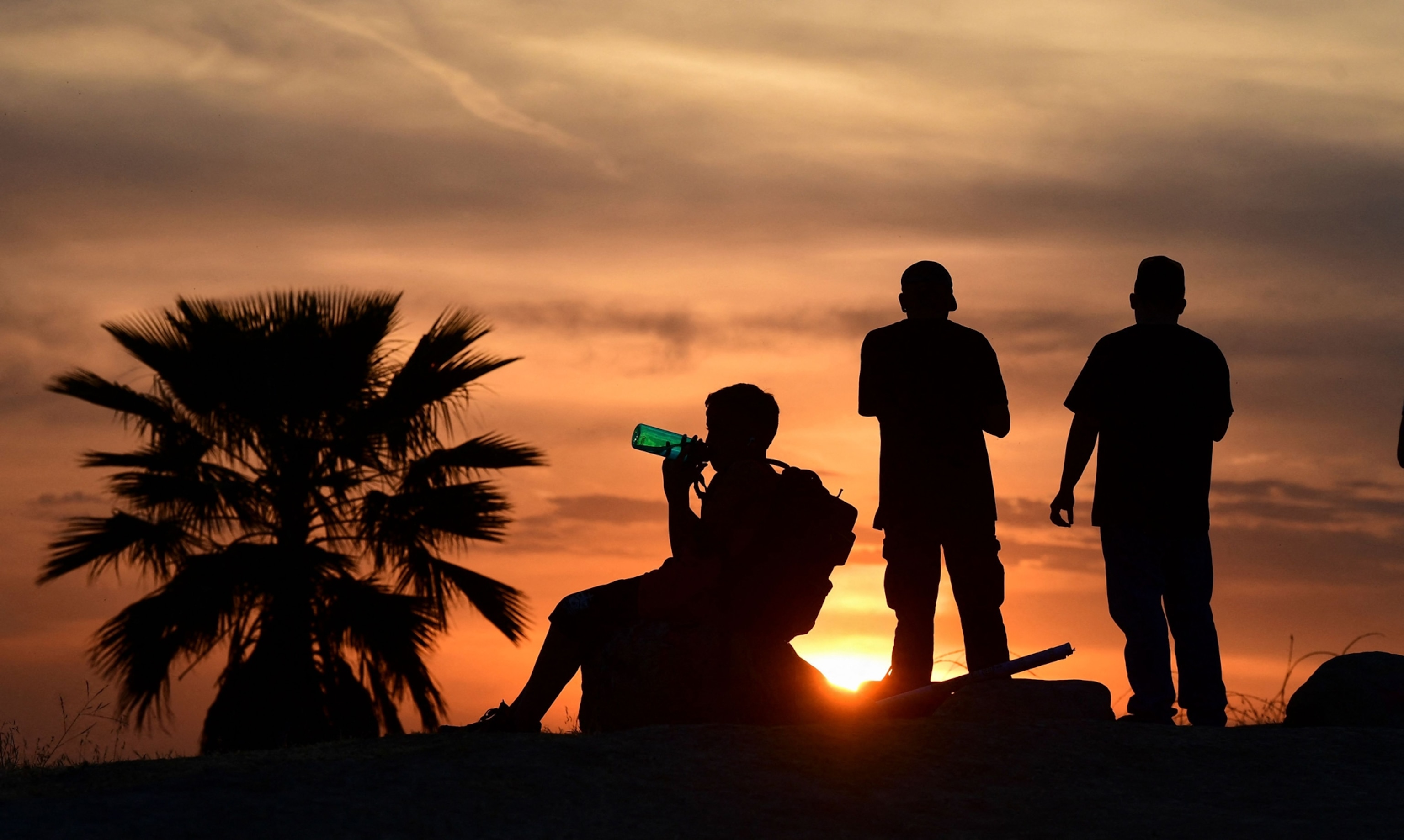
    Residents across the Pacific Northwest are bracing for a heatwave as health warnings went up all across the region. It's the latest in what is an alarming trend of increasing temperatures. A heat dome is a high-pressure region in the atmosphere that traps heat over a certain area. Because of a La NiƱa weather pattern, waters this year in the eastern Pacific are cool, while those in the west are warmer. This creates dense, warm winds that go into the jet stream and end up over the U.S. West Coast. The current heat dome has already set record temperatures, and another one is predicted to occur in mid-July.
    Scientists say that climate change is one major factor in the increase in heat domes, not just in the U.S. but around the world, even in Russia's Arctic Circle. Especially in dry areas, heat waves can be self-perpetuating, because there are already droughts, which exacerbate heat even more.
    In areas with especially high temperatures, city officials are open public venues with cooling as designated cooling centers, where people without air conditioning at home can come to rest and cool off. Officials also say that the very young and old are at most risk, and people with neighbors who live alone should check on them.

Friday, June 25, 2021

National Geographic: ‘Dragon Man’ skull may be new species, shaking up human family tree

By Maya Wei-Haas

    In the 1930s, people in northeast China found a skull. But it wasn't just any old skull. It was massive, well preserved, with a mish-mash of different features. Obviously knowing that this was an important find, the person who found it tossed it down a well where it was recently rediscovered. Several studies have determined that it is the skull of a man who died around 146,000 years ago, and one has even claimed that it should be named its own species: Homo longi.
    The reason for all the commotion is its array of both modern and archaic features. The skull is squat and wide, and its one remaining tooth has three roots, which are all features commonly found in older fossils. However, it also has delicate cheekbones that are low on the face, which looks more like us. When researchers ran algorithms to try to give it a place on the hominins tree, the resulting location was closer to our own species, Homo sapiens, than the Neanderthals.
    Still, not all scientists agree that it warrants a new species. Some say that the odd characteristics are unique to the individual, or that it should be group under the Denisovans. Whatever the case is, the discovery shows that as we make more discoveries, evolutionary trees will only get more complicated.

Thursday, June 24, 2021

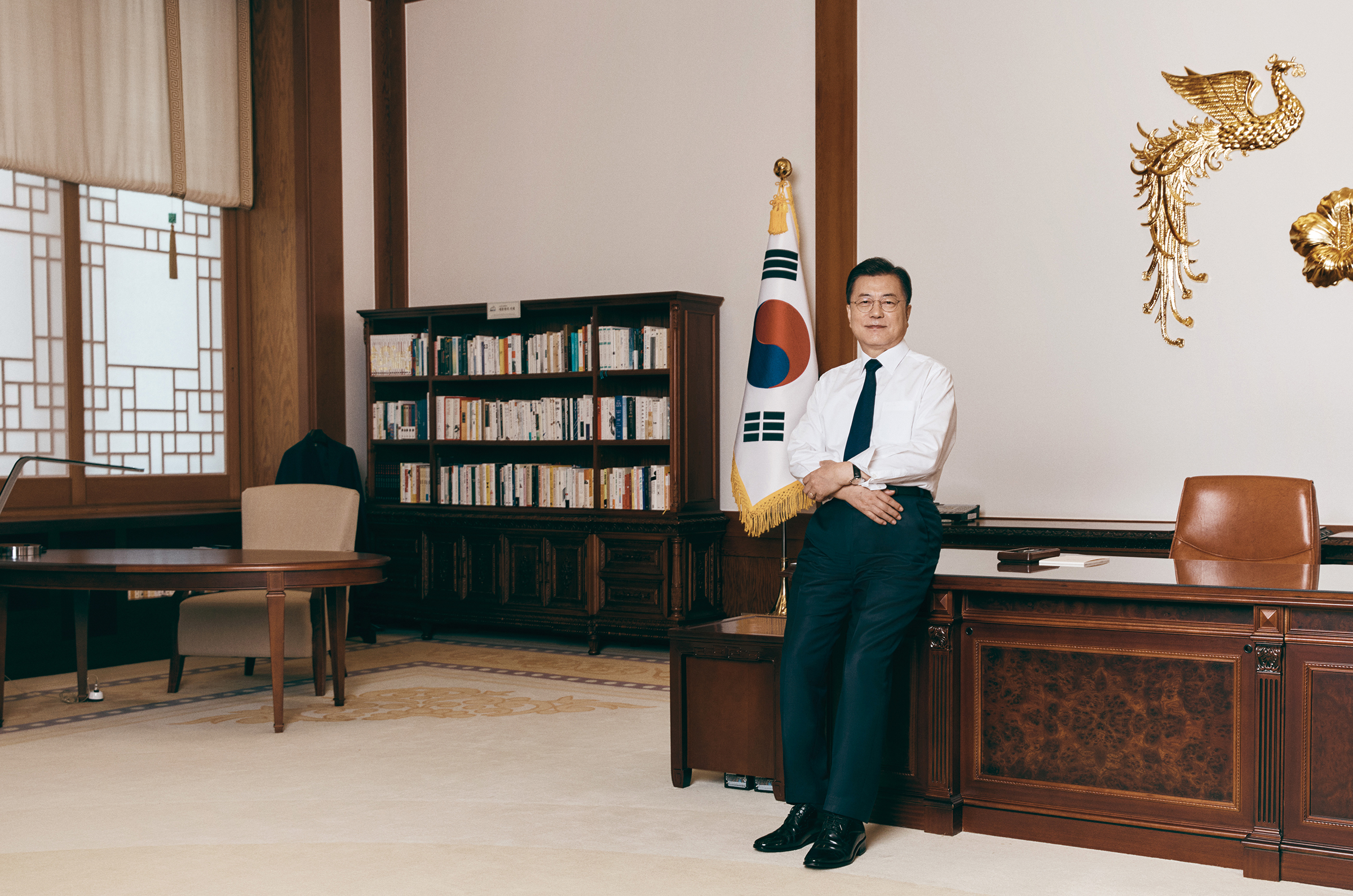
Time: South Korean President Moon Jae-in Makes One Last Attempt to Heal His Homeland

By Charlie Campbell

    2018 was a year in which the Korean peninsula stepped back from the brink of war and entered into negotiations for the first time in years. After threats of "fire and fury" from Trump, South Korean President Moon Jae-in invited a North Korean delegation to the 2018 Winter Olympics in Pyeongchang, and a total of 5 summits were held. However, after Singapore, progress stalled. Talks in Hanoi ended with no agreements, and things escalated pretty quickly from there, with Trump focusing more on domestic issues and North Korea once again becoming antagonistic. Because Moon is barred from serving more than one term, he knows that now is the time to act. Now, this picture has played out several times since the cease-fire of the Korean War: talks will stall, the sides will part, and any agreements will soon be ripped up by an incoming administration. In addition, North Korea has said it will only make concessions once sanctions are removed, which is a leverage point Washington is not willing to give up easily.
    So what will become of this last chance? Biden recently met up with Moon and the pair signed several new deals, as well as releasing a statement that they will continue to coordinate in matters concerning the DPRK. Considering that both Seoul and Washington have progressive leaders in office, it could also be an opportunity for North Korea, and they seem to have recognized this, the state-run media releasing a report that Kim Jong-un is preparing for dialogue.
    But even as President Moon looks to leave his legacy, it also seems to be deteriorating. A recent poll showed that his approval ratings are down, and his fixation on foreign affairs seems to have drawn supporters away. Many are concerned that he is trying too hard to be close to the North Korean dictator, and South Korea's vaccination rates are faltering.
    People have tried and failed for 3 decades to solve the issue. "That might, after all, be Moon’s true legacy—the grim realization that if he couldn’t fix things, perhaps nobody can."